print, paper, engraving
#
portrait
#
pencil drawn
#
aged paper
# print
#
book
#
light coloured
#
old engraving style
#
paper
#
15_18th-century
#
engraving
#
realism
Dimensions: height 206 mm, width 168 mm
Copyright: Rijks Museum: Open Domain
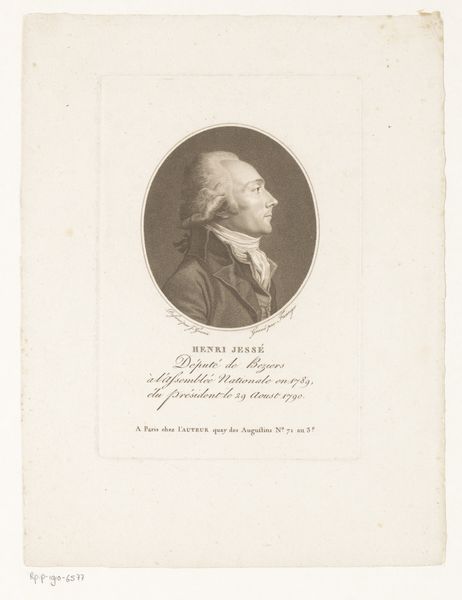
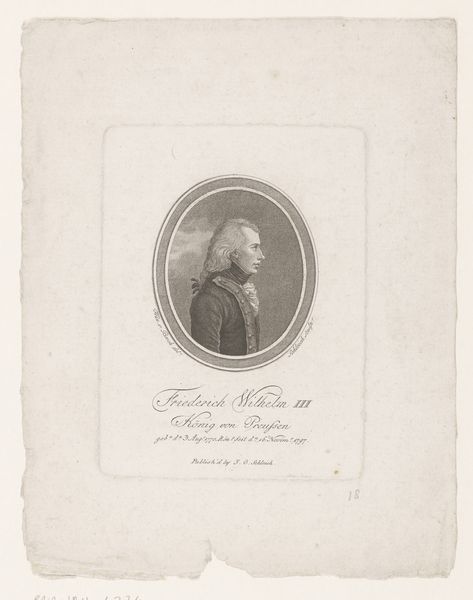
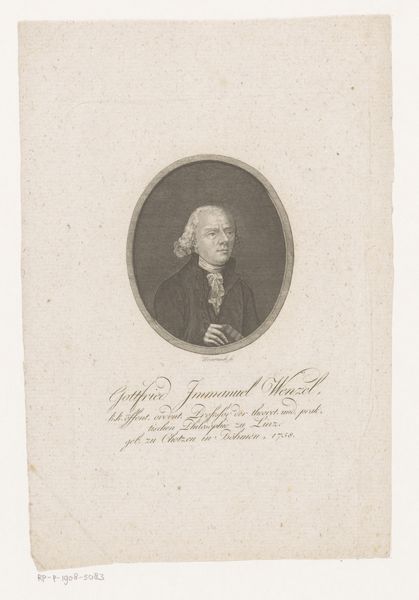
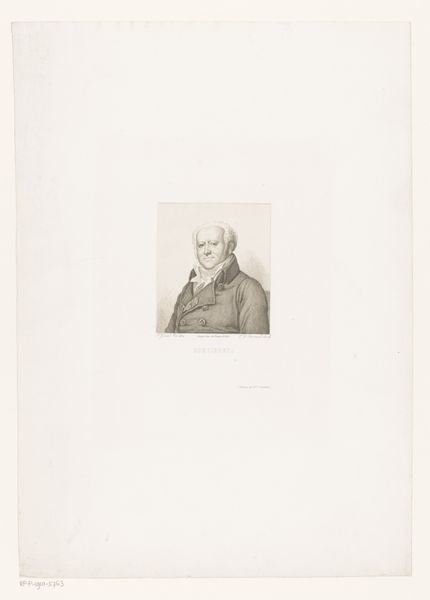
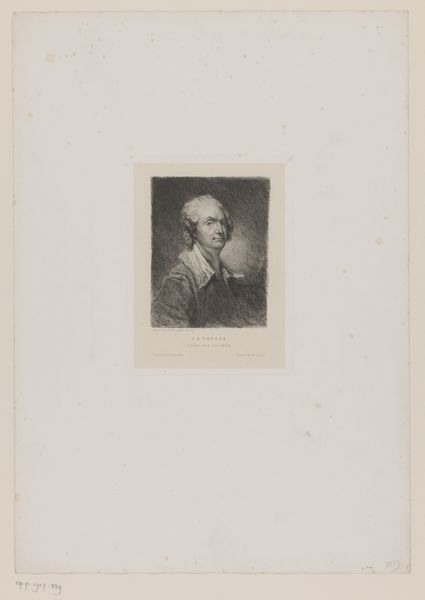
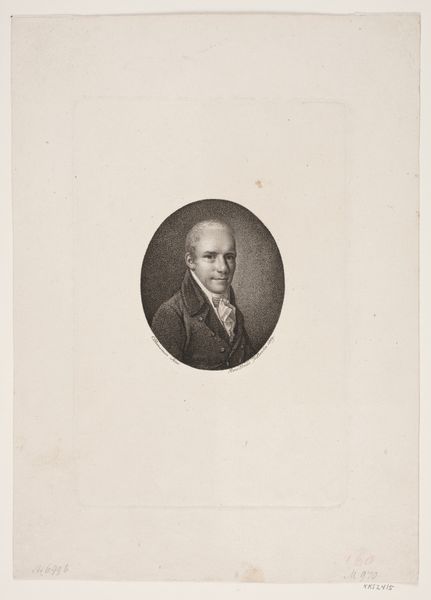
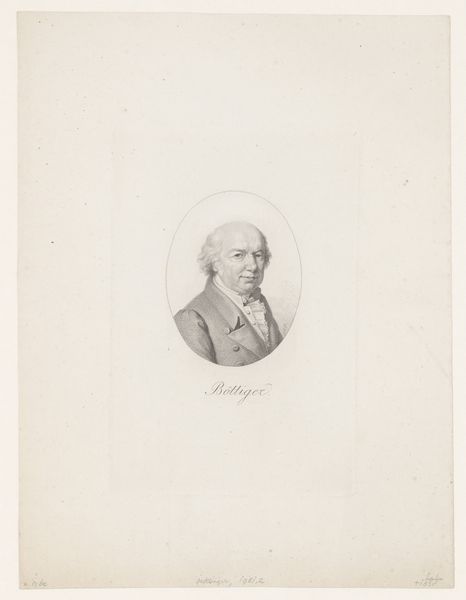
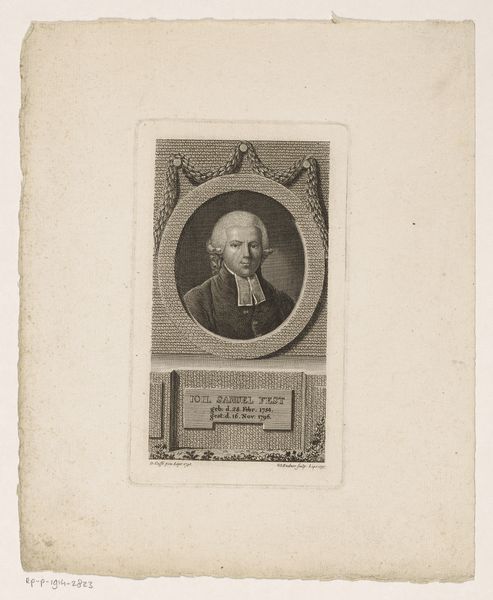
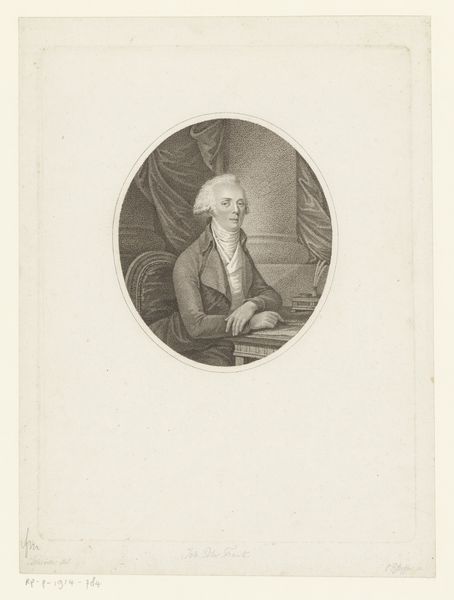
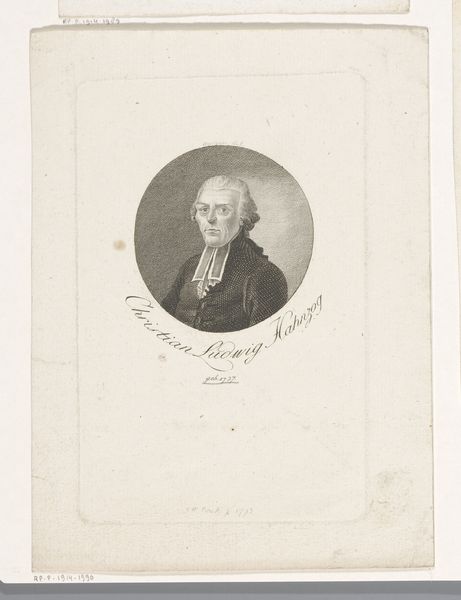
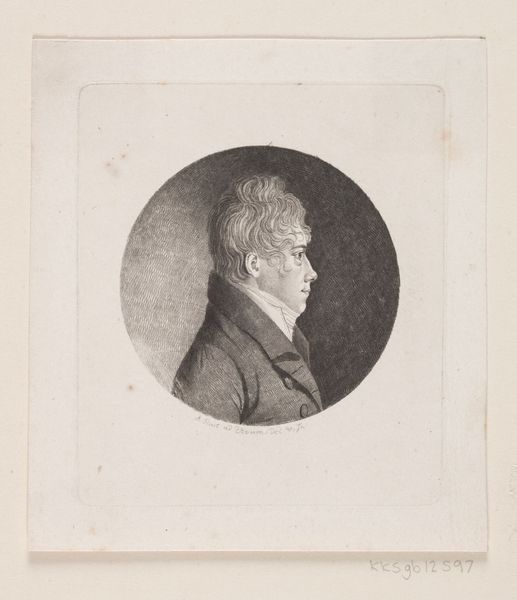
This portrait of Dietrich Wilhelm Soltau was made by Johann Conrad Mayr, likely in the late 18th or early 19th century. It's an etching, a printmaking process where lines are incised into a metal plate using acid, then inked and pressed onto paper. Look closely, and you’ll see the intricate network of fine lines that create the image. This wasn't a quick process, but a labor-intensive one, demanding skilled hands to manipulate the acid and control the depth and texture of the lines. Etchings like this were a means of circulating images and ideas more widely, catering to a growing middle class with an appetite for knowledge and culture. The very act of reproducing Soltau's likeness through this relatively accessible medium speaks volumes about his status as a translator of English texts. It suggests the rising importance of intellectual pursuits and the democratization of knowledge during this period. The portrait itself becomes a commodity, a symbol of Soltau's contribution to the burgeoning world of print culture and the exchange of ideas.
Comments
No comments
Be the first to comment and join the conversation on the ultimate creative platform.
 Collect
 React
React Comment
More like this