print, paper, engraving
portrait
neoclacissism
paper
engraving
Dimensions: height 175 mm, width 133 mm
Copyright: Rijks Museum: Open Domain
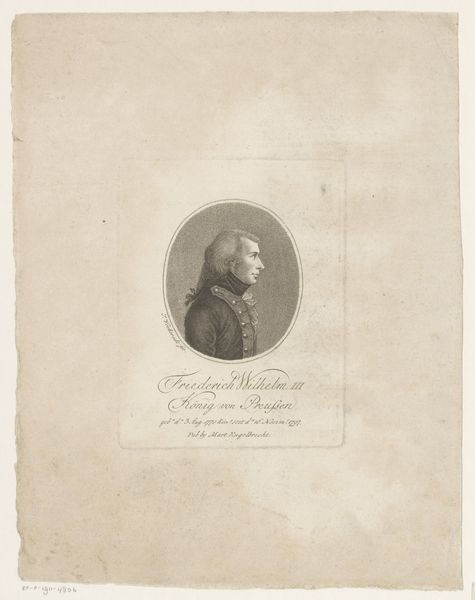
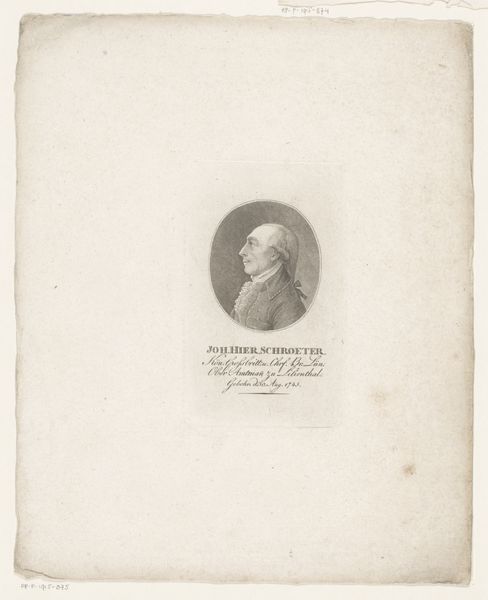
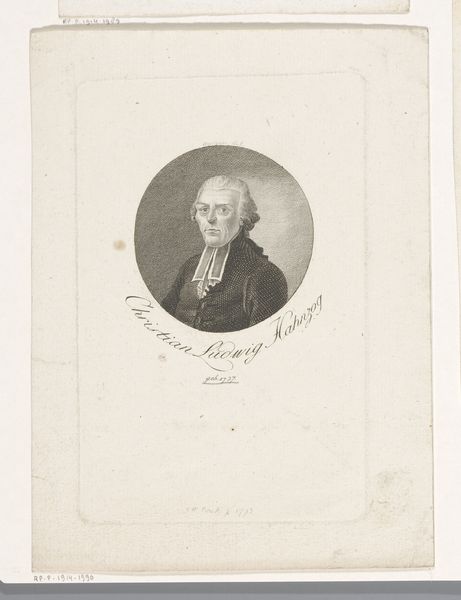
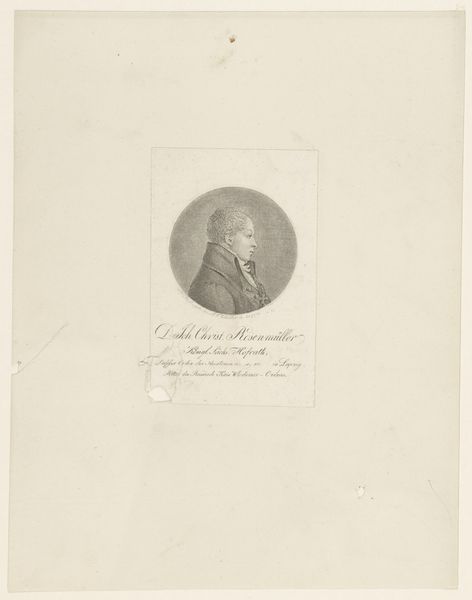
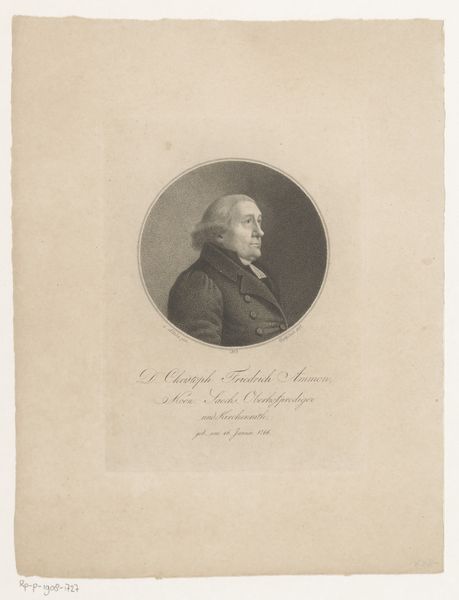
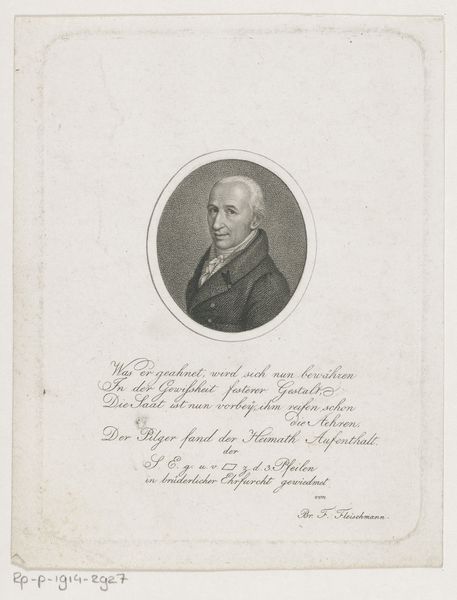
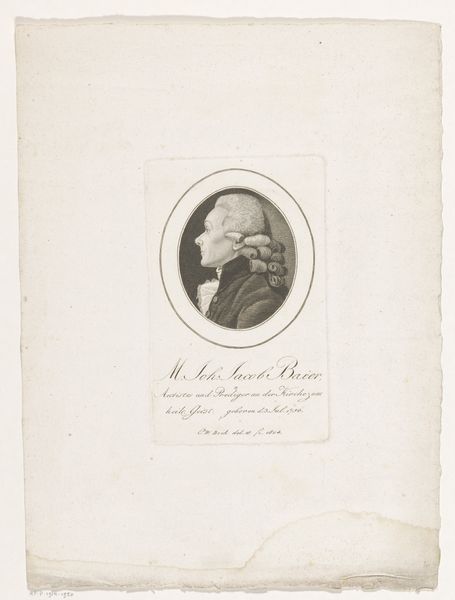
Curator: Here we have Johann Carl Schleich’s "Portret van Friedrich Wilhelm III van Pruisen," a print made between 1797 and 1842. It's an engraving on paper. Editor: There's something so coolly austere about it. It's like the visual equivalent of a crisp, starched collar – power contained within strict lines. Curator: That crispness likely reflects the influence of neoclassicism, an aesthetic valuing clarity and order, but let's dig into the material processes. Schleich utilized engraving, meticulously incising lines into a metal plate, likely copper, and then using that plate to transfer the image onto paper. Consider the labor, the skilled hand... Editor: The profile view, enclosed in that oval frame, immediately reads like a classical cameo. Profiles carry inherent symbolism, right? They represent idealized versions, historical continuity. It's designed for widespread consumption to shape perception. Curator: Absolutely. But it's more than that. The print medium speaks to the democratization of images and thus of power during this era. Think about the social impact: portraits like this would have been relatively accessible, spreading an image of Prussian authority to the masses through printmaking networks. Editor: Yes, and I think, culturally, the choice of profile suggests enduring legacy. It’s designed to connect him to a lineage of leaders, emphasizing his status and power. See how his gaze is directed off into the distance? Curator: A distance possibly manufactured in a studio and reshaped across thousands of impressions. These prints weren't just hanging in palaces; they were entering homes and businesses, shaping the cultural landscape and even influencing public opinion through their materials. Editor: It reminds me of that strange weight historical figures take on. When you see an image like this replicated so often you think about all the political baggage. Curator: Well, thinking about how these images circulated allows us a wider view of Prussia and print culture. Editor: Examining the enduring resonance of images is often about this blend, historical understanding and lingering emotional effects.
Comments
No comments
Be the first to comment and join the conversation on the ultimate creative platform.
 React
React Comment