About this artwork
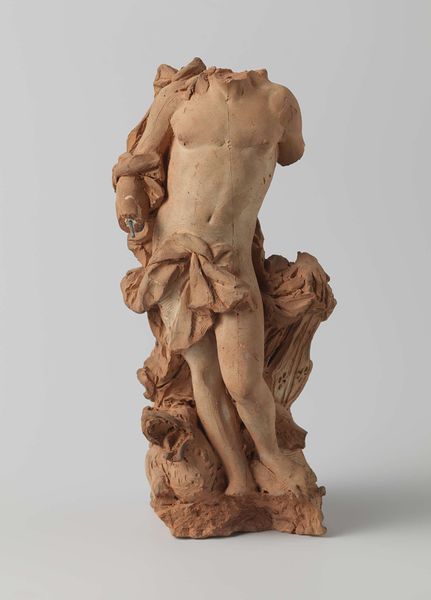
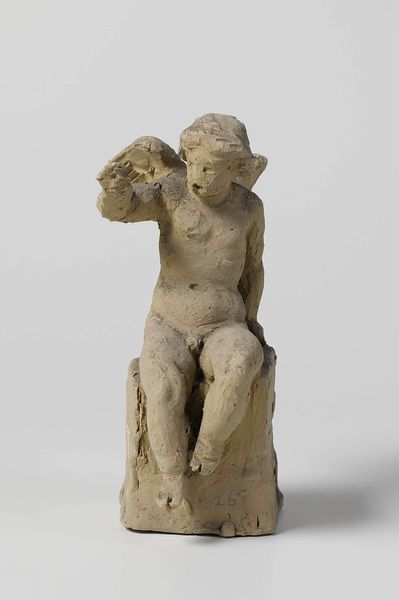
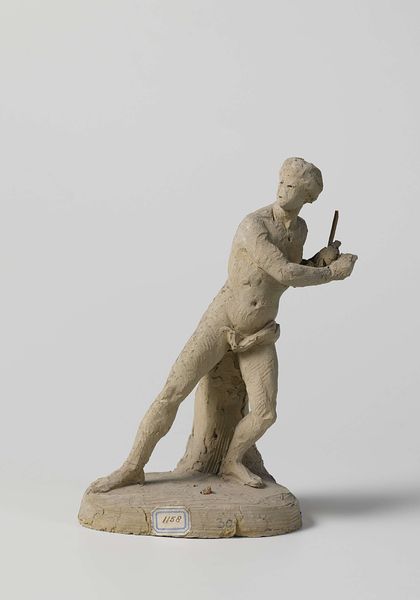
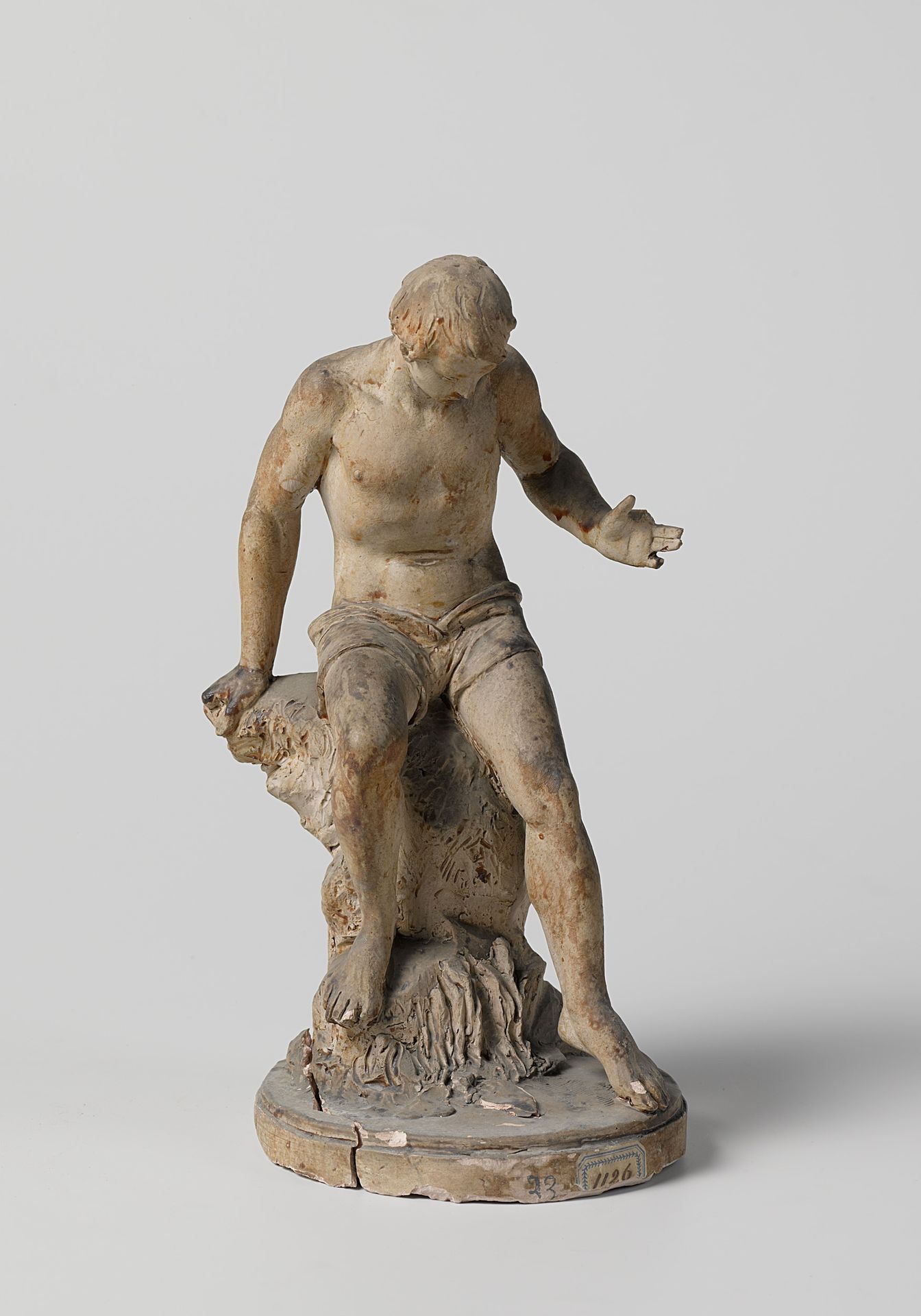
This is Eugène Lacomblé’s, ‘Base and parts belonging to a statue of a youth,’ though the date of its making remains unknown. Lacomblé, born in Belgium in 1828, lived through a time of significant social change and revolution. The nude figure is an interesting choice. Historically, nude sculptures often represented idealized forms, frequently male, embodying power, heroism, and classical ideals. In the context of 19th-century societal norms around modesty, the male nude could both challenge and reinforce gendered expectations, drawing from classical traditions while also inviting a different kind of gaze. The lack of specific historical or mythological markers leaves the interpretation open. What does it mean to present a seemingly ordinary young man in a state of undress? The figure’s somewhat downcast gaze evokes a sense of introspection, hinting at vulnerability beyond the ideal form. Is it a representation of the artist's perception of masculinity, or a commentary on the gaze itself? The figure invites contemplation on the complexities of identity and representation.
Voetstuk en onderdelen behorend bij een beeld van een jongeling
1875

Artwork details
- Medium
- sculpture, wood
- Dimensions
- height 0.7 cm, diameter 10 cm, height 8.7 cm, width 2.5 cm, depth 2.1 cm
- Copyright
- Rijks Museum: Open Domain
Tags
Comments
Share your thoughts
About this artwork
This is Eugène Lacomblé’s, ‘Base and parts belonging to a statue of a youth,’ though the date of its making remains unknown. Lacomblé, born in Belgium in 1828, lived through a time of significant social change and revolution. The nude figure is an interesting choice. Historically, nude sculptures often represented idealized forms, frequently male, embodying power, heroism, and classical ideals. In the context of 19th-century societal norms around modesty, the male nude could both challenge and reinforce gendered expectations, drawing from classical traditions while also inviting a different kind of gaze. The lack of specific historical or mythological markers leaves the interpretation open. What does it mean to present a seemingly ordinary young man in a state of undress? The figure’s somewhat downcast gaze evokes a sense of introspection, hinting at vulnerability beyond the ideal form. Is it a representation of the artist's perception of masculinity, or a commentary on the gaze itself? The figure invites contemplation on the complexities of identity and representation.
Comments
Share your thoughts