About this artwork
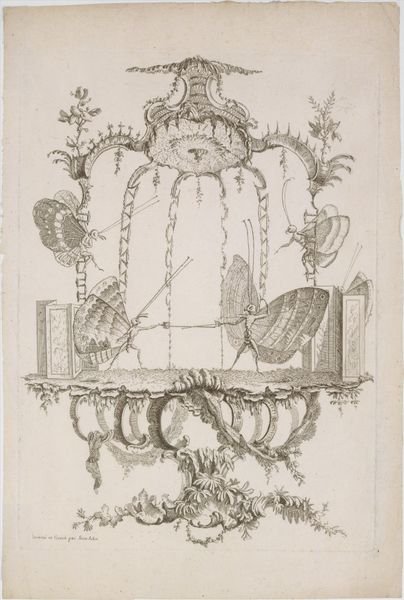
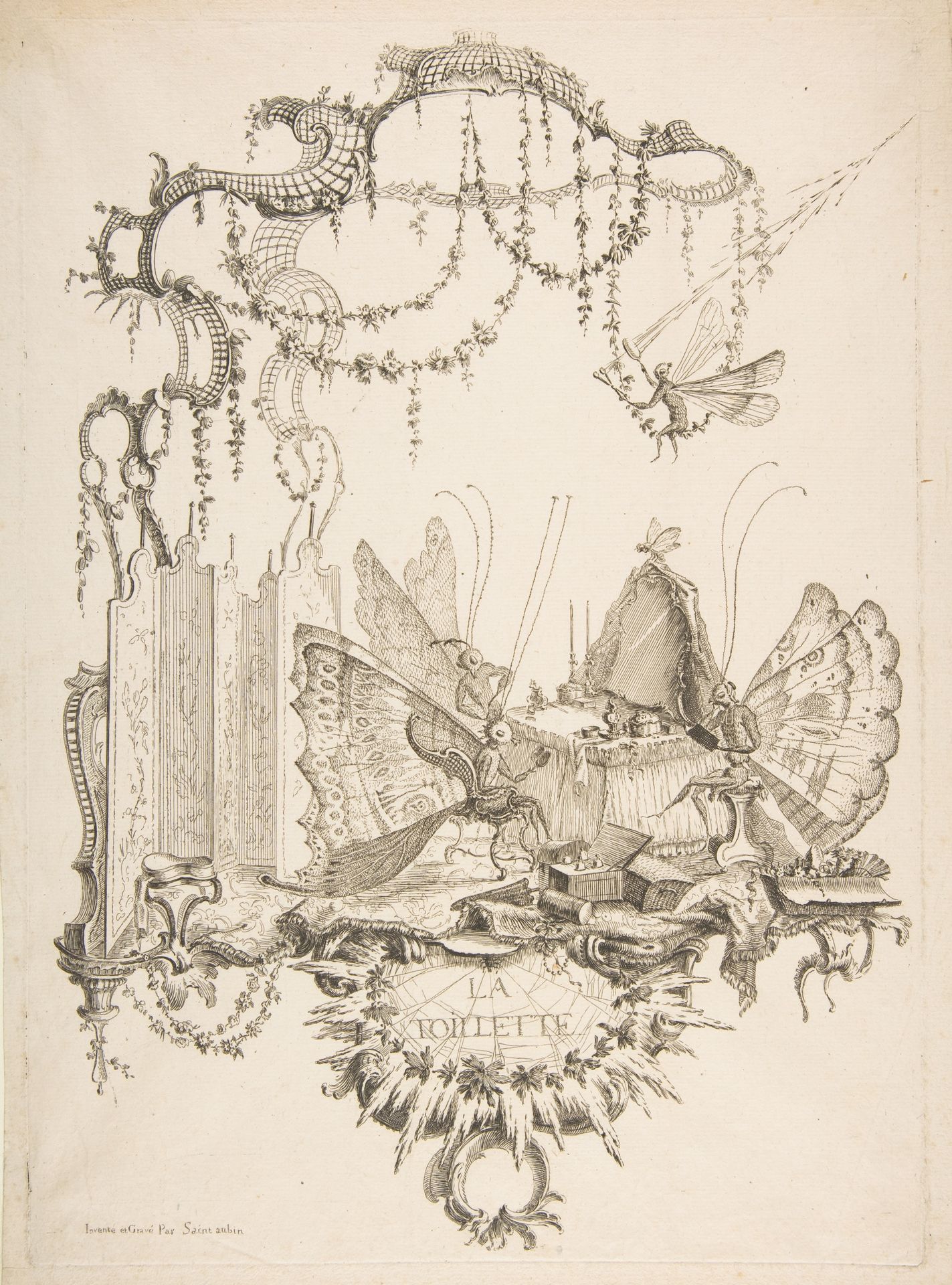
This is "The Toilet" created by Charles Germain de Saint-Aubin, a copperplate print portraying a scene of butterflies in a boudoir. Here, butterflies stand in for humans at their toilette, or dressing table. The butterfly, from ancient Greece to the present, is an enduring symbol of metamorphosis, the soul, and even frivolity. Note how Saint-Aubin plays with this symbolism, placing these delicate creatures in a setting of human vanity. Consider the visual echoes of the psyche myth, where Psyche, represented with butterfly wings, undergoes trials to reunite with her love, Eros. The butterflies here, however, seem more concerned with mirrors and cosmetics, a transformation of a different sort. The butterfly's dance with self-image is a powerful, recurring motif, reminding us of our own fragile, ever-changing identities. The image pulls us into a complex, subconscious dialogue about beauty, transformation, and the enduring power of symbols across time.
The Toilet (La Toilette), from Essai de Papilloneries Humaines par Saint Aubin
1751 - 1765

Charles Germain de Saint-Aubin
1721 - 1786
The Metropolitan Museum of Art
Metropolitan Museum of Art, New York, NYArtwork details
- Medium
- drawing, print, engraving
- Dimensions
- plate: 13 1/16 x 9 3/8 in. (33.2 x 23.8 cm) sheet: 15 1/2 x 10 1/2 in. (39.4 x 26.6 cm)
- Location
- Metropolitan Museum of Art, New York, NY
- Copyright
- Public Domain
Tags
Comments
Share your thoughts
About this artwork
This is "The Toilet" created by Charles Germain de Saint-Aubin, a copperplate print portraying a scene of butterflies in a boudoir. Here, butterflies stand in for humans at their toilette, or dressing table. The butterfly, from ancient Greece to the present, is an enduring symbol of metamorphosis, the soul, and even frivolity. Note how Saint-Aubin plays with this symbolism, placing these delicate creatures in a setting of human vanity. Consider the visual echoes of the psyche myth, where Psyche, represented with butterfly wings, undergoes trials to reunite with her love, Eros. The butterflies here, however, seem more concerned with mirrors and cosmetics, a transformation of a different sort. The butterfly's dance with self-image is a powerful, recurring motif, reminding us of our own fragile, ever-changing identities. The image pulls us into a complex, subconscious dialogue about beauty, transformation, and the enduring power of symbols across time.
Comments
Share your thoughts