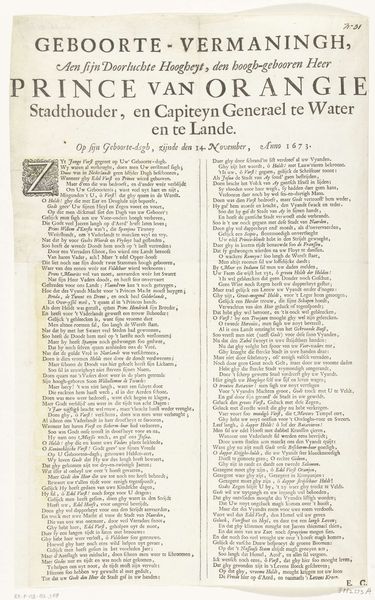
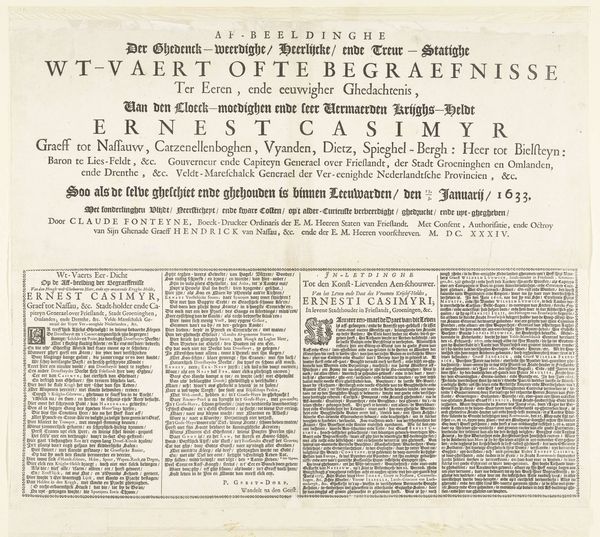
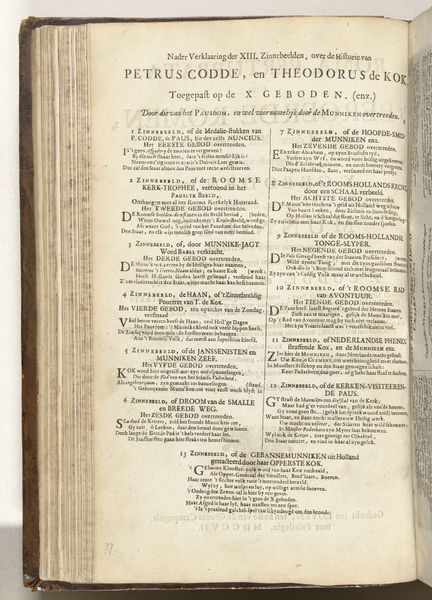
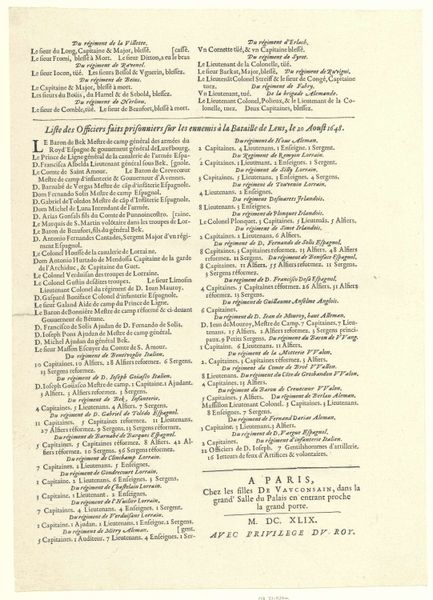
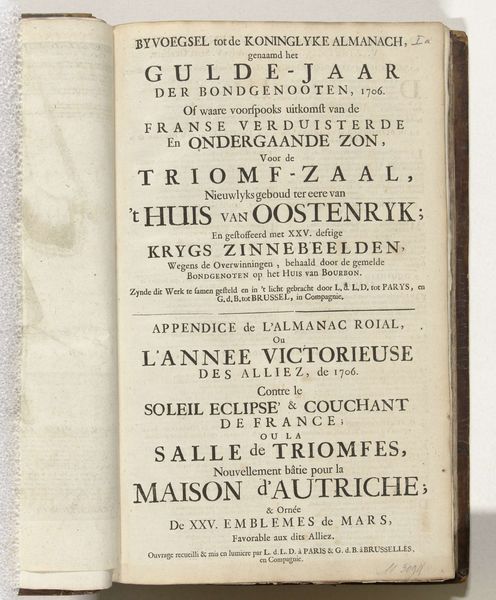
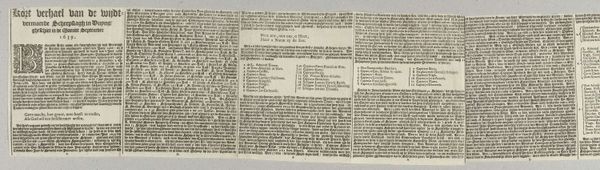
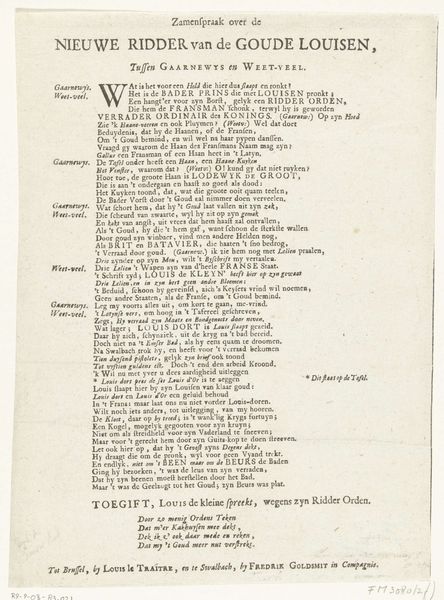
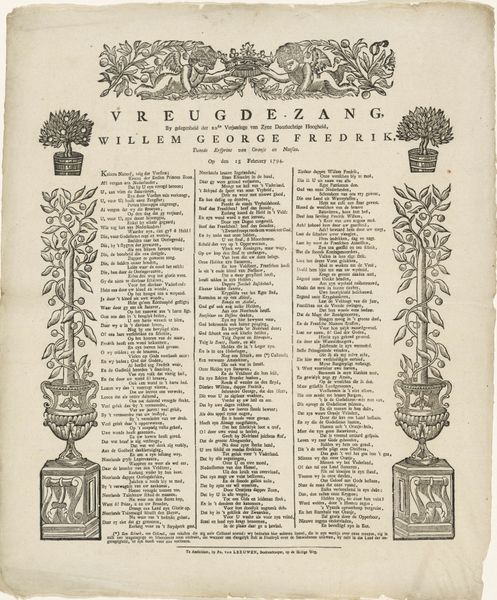
Tekstblad bij de prent met de strijd tussen Vastenavond en Vasten in de context van de Spaanse Successieoorlog, 1707 1707
0:00
0:00

abrahamallard
Rijksmuseum
graphic-art, print, textile, paper, typography
#
graphic-art
#
baroque
#
dutch-golden-age
# print
#
textile
#
paper
#
typography
Dimensions: height 315 mm, width 365 mm
Copyright: Rijks Museum: Open Domain
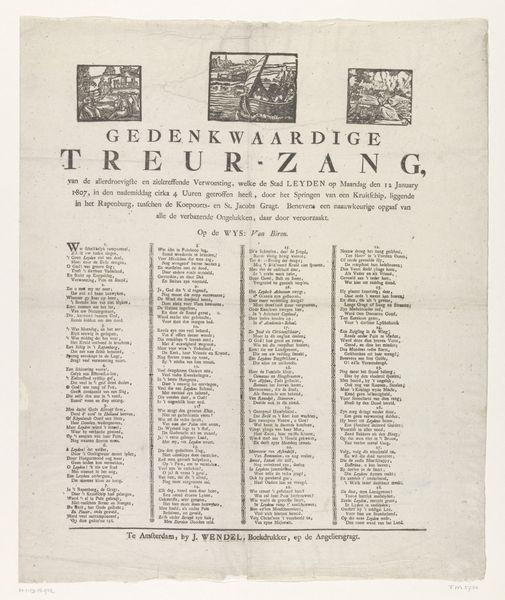
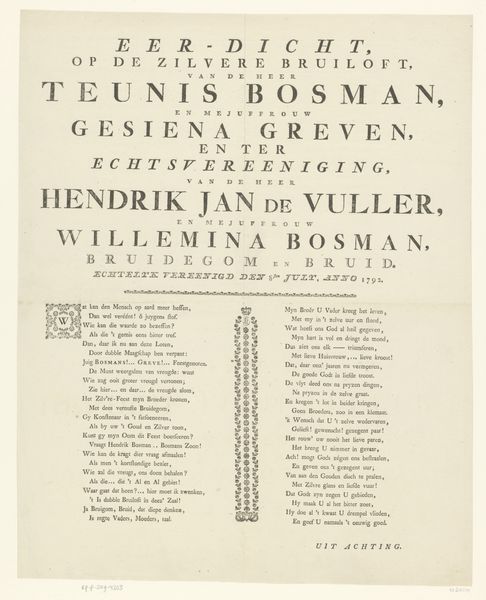
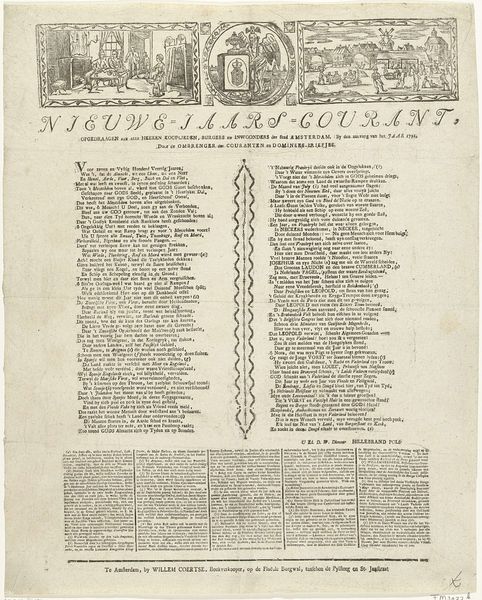
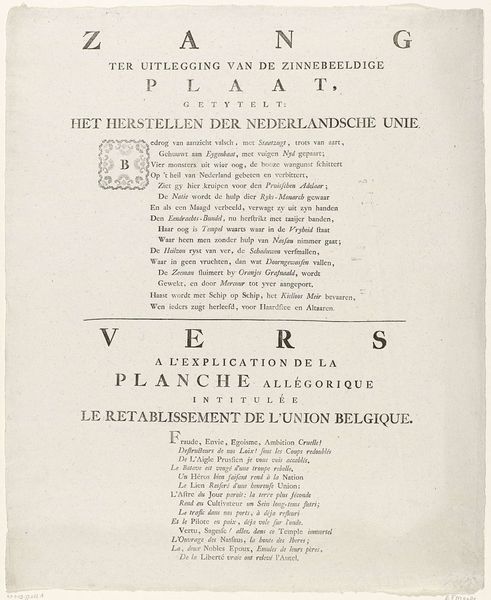
Editor: This is a text page from 1707, a printed page actually, created by Abraham Allard. The title translates to something like "Bellona's Victory Praise for the Allies, or Shrove Tuesday's Triumph Over the Enemy-Compelled Lent." It feels incredibly dense, just a wall of text, and I'm struggling to understand its purpose. How should we interpret a piece like this? Curator: This "wall of text" offers us a glimpse into the socio-political landscape of the time, particularly the Dutch perspective during the War of the Spanish Succession. Consider it less as a piece of art for aesthetic consumption and more as a form of public address. What function did printed materials like this serve? Editor: Propaganda, maybe? A way to sway public opinion? Curator: Precisely! These broadsides, pamphlets, and illustrated texts were key in shaping public perception of events. The text presents a very particular, biased, view of the conflict and the celebrations surrounding it, framing "Shrove Tuesday" as a triumph over the "Enemy-Compelled Lent." This framing constructs not just an allegory, but actively chooses sides, doesn't it? Editor: Absolutely. So it is a piece that takes a firm stand? I suppose this answers questions regarding public functions of the arts that were prominent in Dutch golden-age works. I suppose this informs ideas about museums exhibiting materials such as this print as artworks. Curator: The Dutch Golden Age and even the period after were important periods in Dutch history that inform artistic representations. Considering what we've discussed today about this text, what have we come to consider the role and value of a print like this now, today? Editor: I get it! Now I have to consider it in the context of cultural commentary about political strife. Thank you.
Comments
No comments
Be the first to comment and join the conversation on the ultimate creative platform.
 Collect
 React
React Comment
More like this