About this artwork
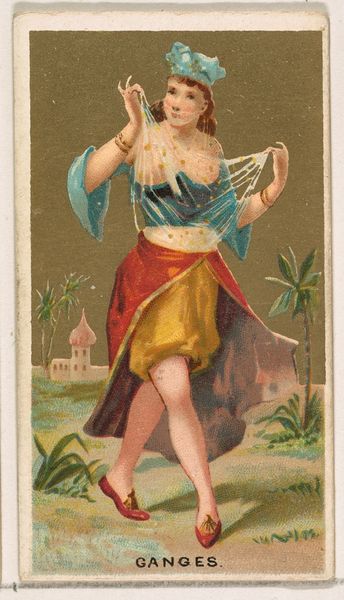
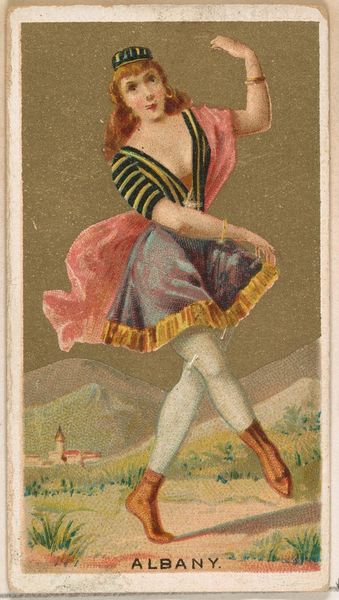
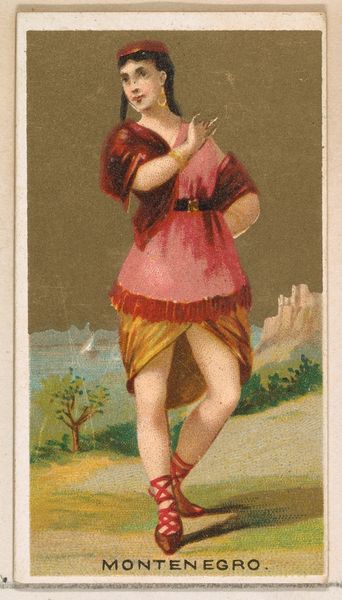
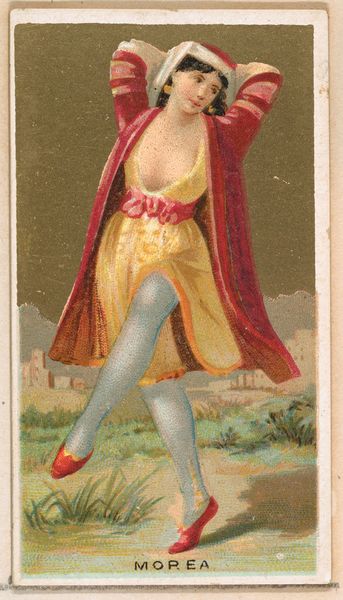
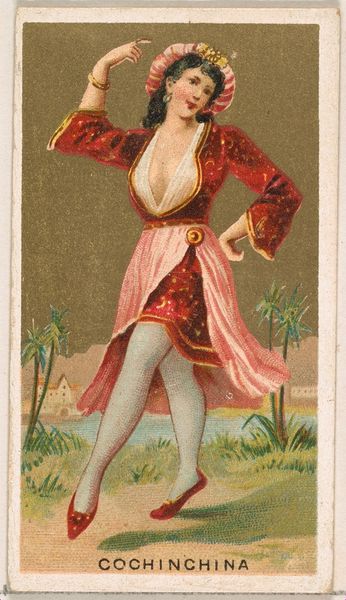
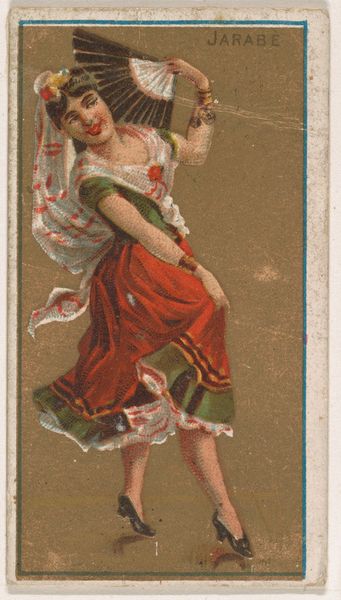
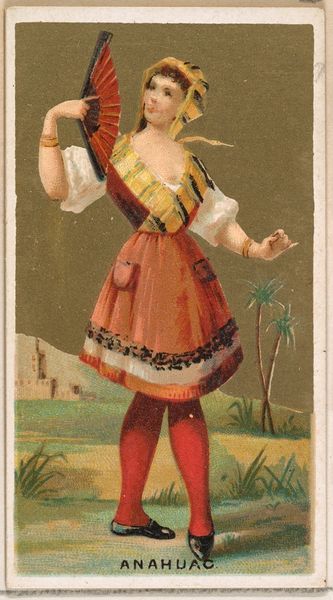
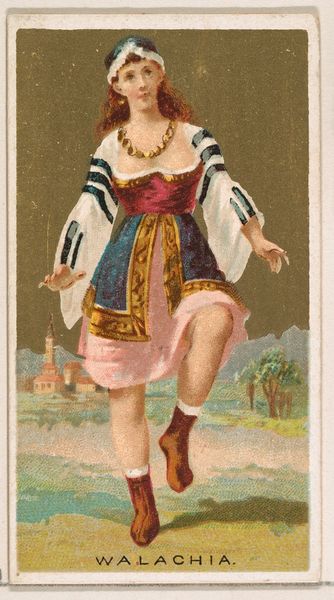
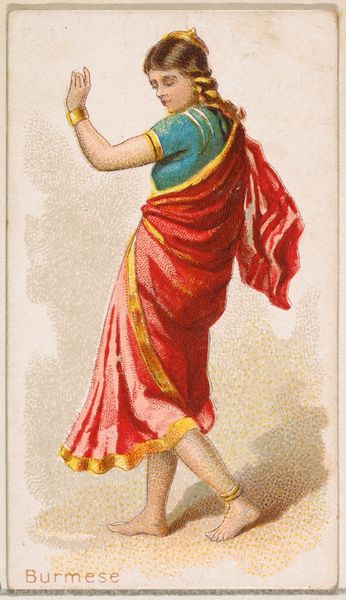
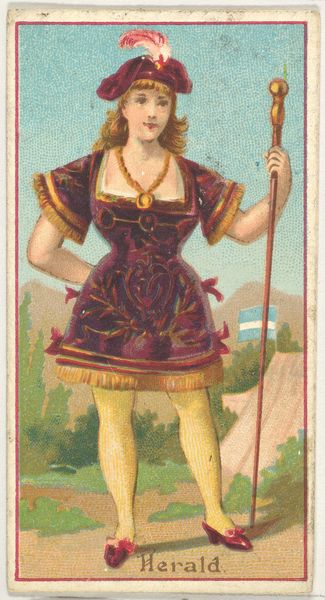
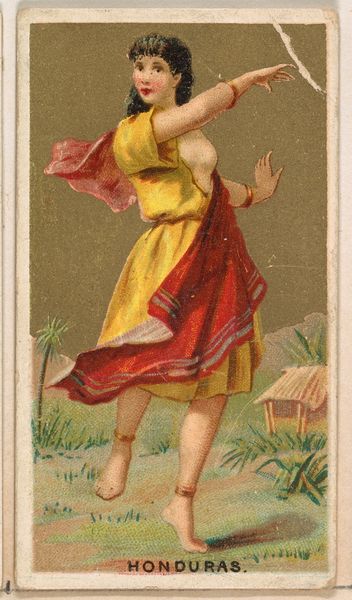
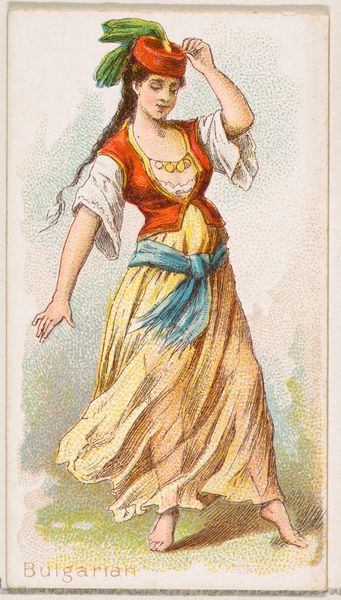
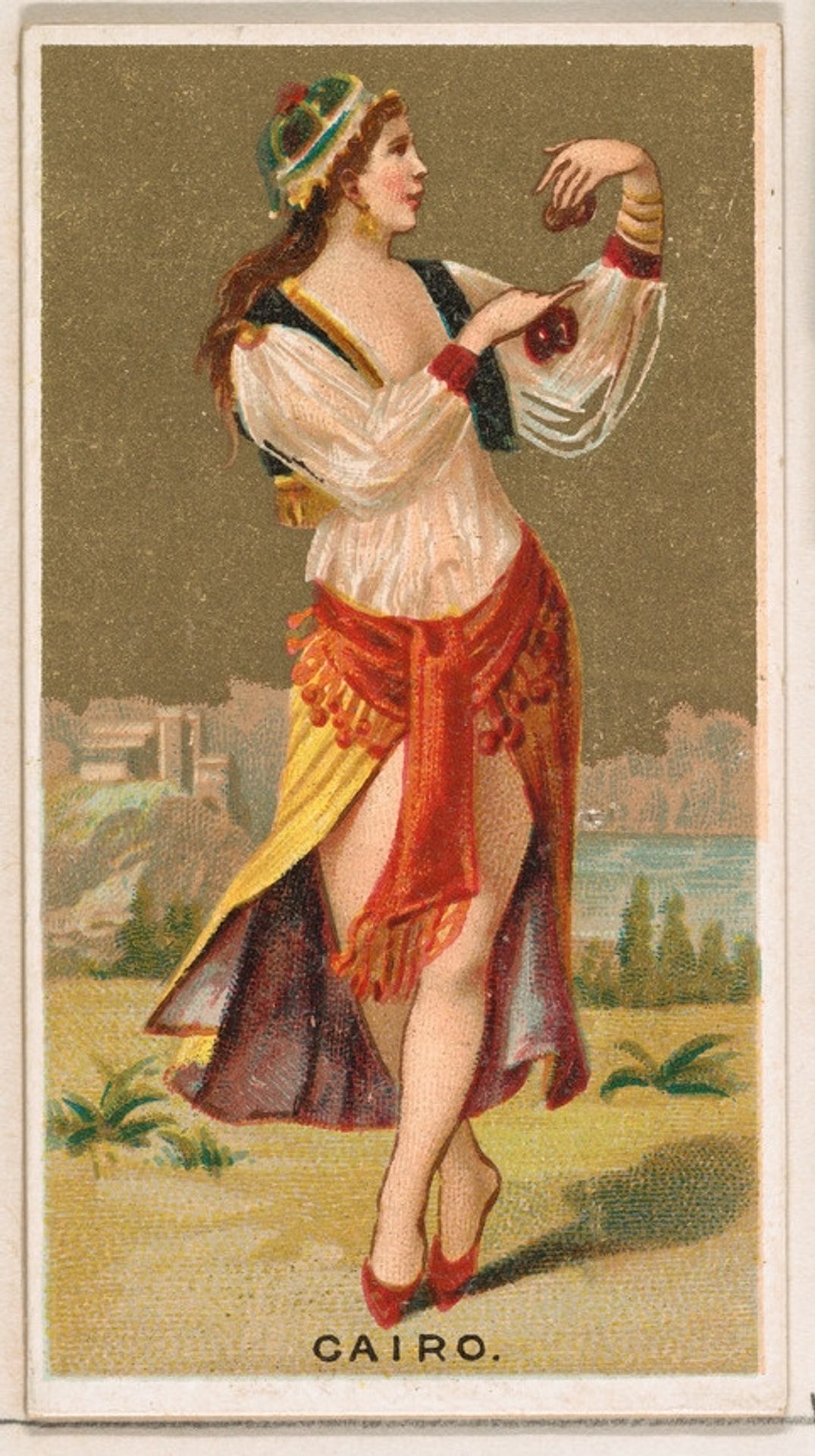
This is a lithograph trade card titled 'Cairo, from the Dancing Girls of the World series' made by the Wm. S. Kimball & Co. During the late 19th century, there was a surge in Orientalism in Western art, with the romanticized and often exoticized representation of Middle Eastern and North African cultures. This card, while seemingly innocuous, reflects a broader cultural dynamic where non-Western cultures were viewed through a lens of fantasy and Western perception. The image depicts a woman in what is intended to be perceived as traditional Egyptian attire. It caters to the Western gaze and reinforces stereotypes. What does it mean to see a culture distilled into a single image on a commercial card? It is both a celebration and an appropriation, reflecting the complex and often contradictory ways in which different cultures intersect and influence one another. How do you feel about cultural representation when it is used to promote a product?
Cairo, from the Dancing Girls of the World series (N185) issued by Wm. S. Kimball & Co.
1889

William S. Kimball & Company
@williamskimballcompany
The Metropolitan Museum of Art
Metropolitan Museum of Art, New York, NYArtwork details
- Medium
- drawing, coloured-pencil, print
- Dimensions
- Sheet: 2 11/16 × 1 1/2 in. (6.8 × 3.8 cm)
- Location
- Metropolitan Museum of Art, New York, NY
- Copyright
- Public Domain
Tags
Comments
Share your thoughts
About this artwork
This is a lithograph trade card titled 'Cairo, from the Dancing Girls of the World series' made by the Wm. S. Kimball & Co. During the late 19th century, there was a surge in Orientalism in Western art, with the romanticized and often exoticized representation of Middle Eastern and North African cultures. This card, while seemingly innocuous, reflects a broader cultural dynamic where non-Western cultures were viewed through a lens of fantasy and Western perception. The image depicts a woman in what is intended to be perceived as traditional Egyptian attire. It caters to the Western gaze and reinforces stereotypes. What does it mean to see a culture distilled into a single image on a commercial card? It is both a celebration and an appropriation, reflecting the complex and often contradictory ways in which different cultures intersect and influence one another. How do you feel about cultural representation when it is used to promote a product?
Comments
Share your thoughts