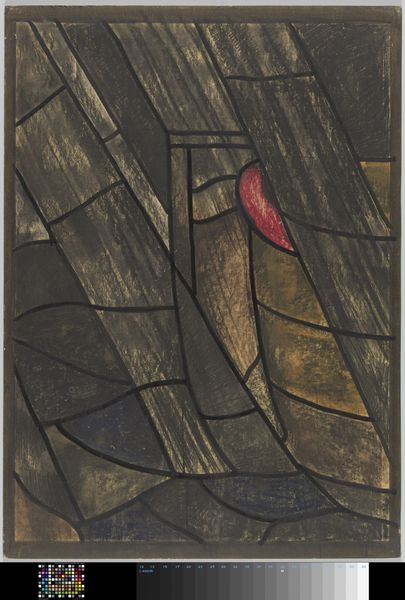
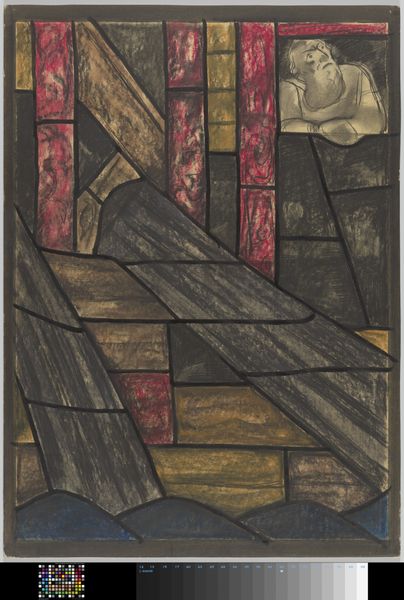
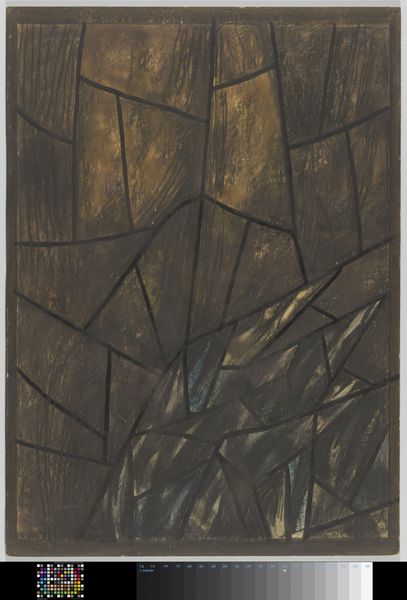
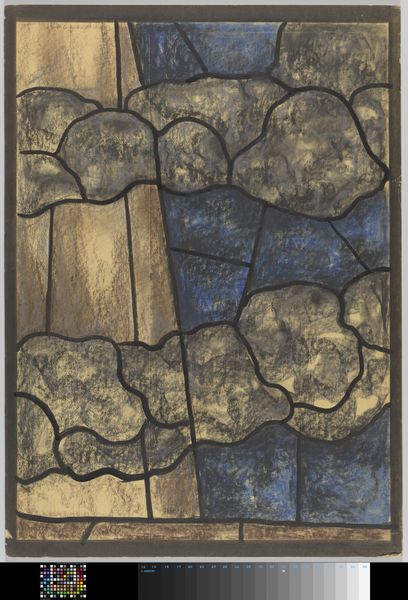
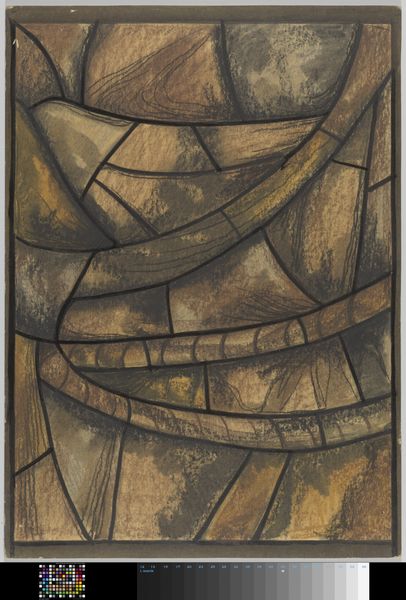
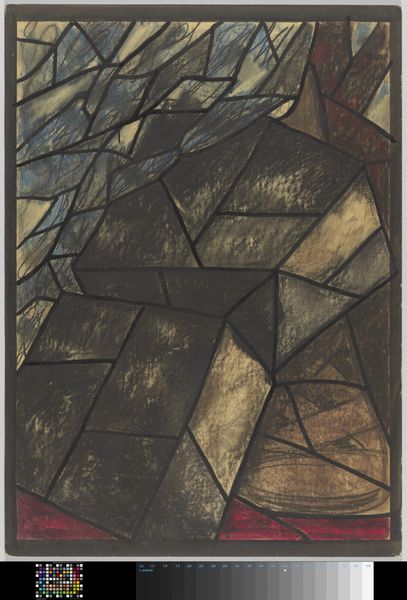
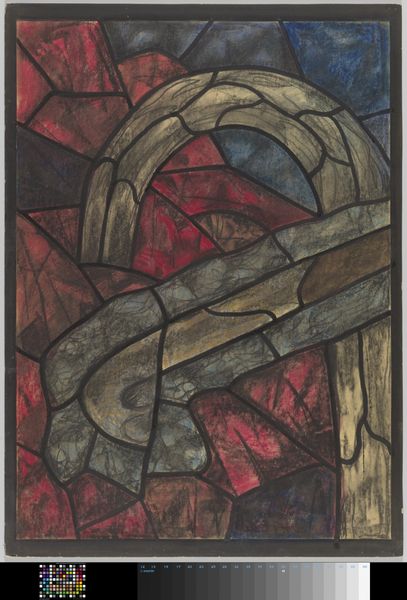
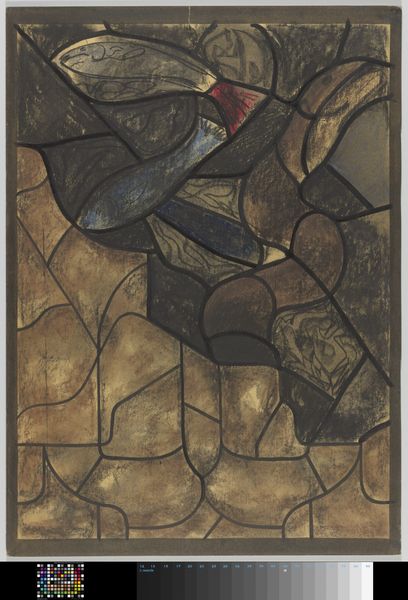
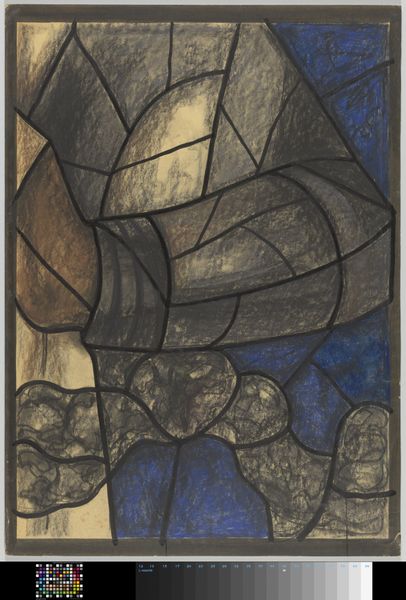
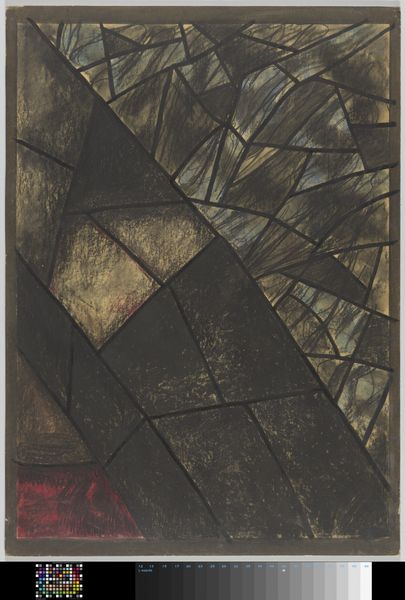
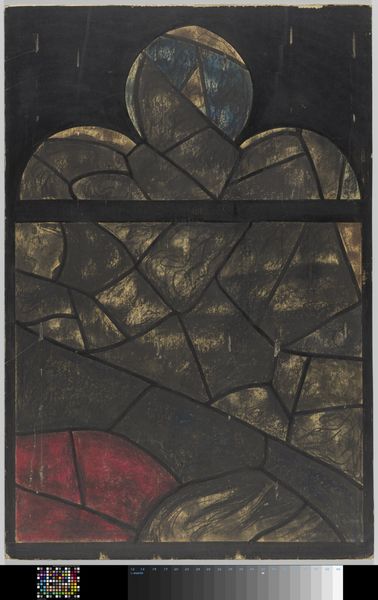
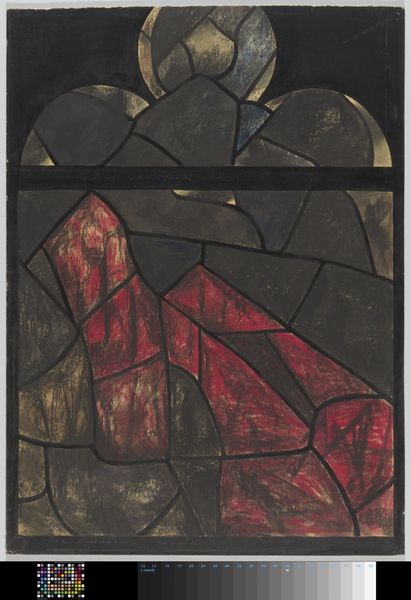
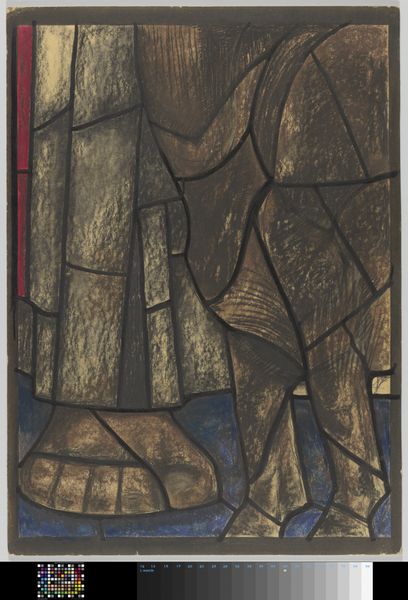
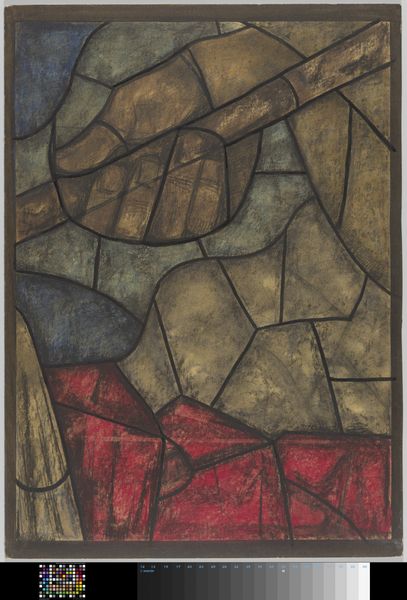
Ontwerp voor raam in het Noordertransept in de Dom te Utrecht c. 1934
0:00
0:00

richardnicolausrolandholst
Rijksmuseum
drawing, paper
#
drawing
#
abstract painting
#
paper
#
form
#
geometric-abstraction
#
line
#
modernism
Dimensions: height 1123 mm, width 807 mm
Copyright: Rijks Museum: Open Domain
Editor: Here we have Richard Nicolaüs Roland Holst's "Design for a Window in the North Transept of the Utrecht Cathedral," created around 1934 using drawings on paper. The stark lines and geometric shapes give it a very modern, almost fractured feel. How do you interpret this work, focusing on its form? Curator: Formally speaking, we can see Holst’s piece deconstructs and then reconstructs the expected stained glass window. Observe the lines: how they create distinct planes, guiding the eye in a non-linear fashion. Are they purely decorative or, perhaps, structural? Editor: I see that. The shapes aren't traditional for a cathedral window. They’re abstract, almost jarring against the earth-toned background. It disrupts what I’d expect. Curator: Precisely. Holst seems more interested in the interplay of shapes, and the very concept of division and the visual weight certain geometrical elements seem to generate than a cohesive representational narrative. What strikes you about the coloration of this geometrical division? Editor: It's quite muted, a blend of browns and blacks. It almost drains the color, it isn't "glass-like", I would say. What kind of relationship can we build between form and materials then? Curator: Indeed. By focusing on line, shape, and color, Holst manipulates the viewer’s perception of the work, demanding we appreciate the elements themselves rather than their representational potential. Editor: That's a really interesting point. It encourages a new perspective on how to perceive a traditional form such as the window. Curator: Indeed, I hadn't noticed until now how its material execution brings up discussions about formal values, the composition creates more than it seems. Thanks to your insights.
Comments
No comments
Be the first to comment and join the conversation on the ultimate creative platform.
 Collect
 React
React Comment
More like this