About this artwork
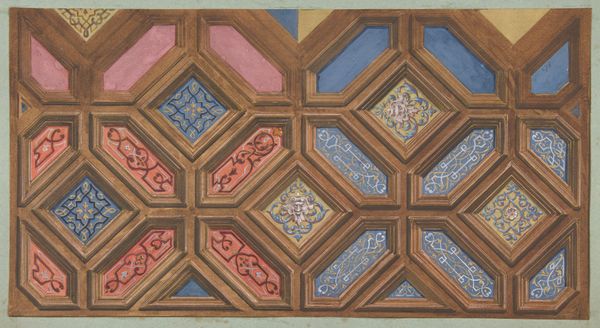
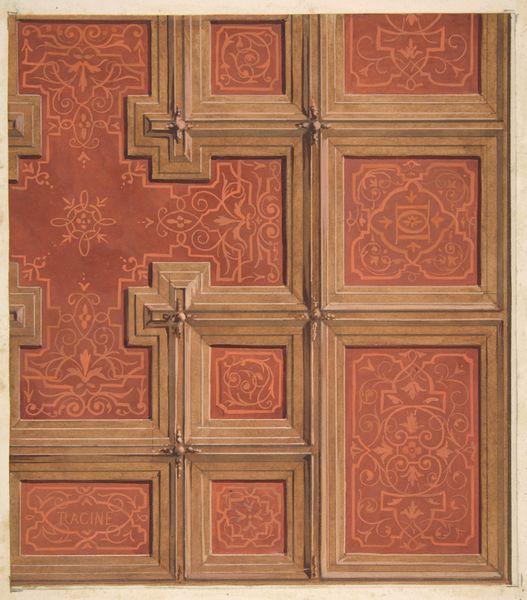
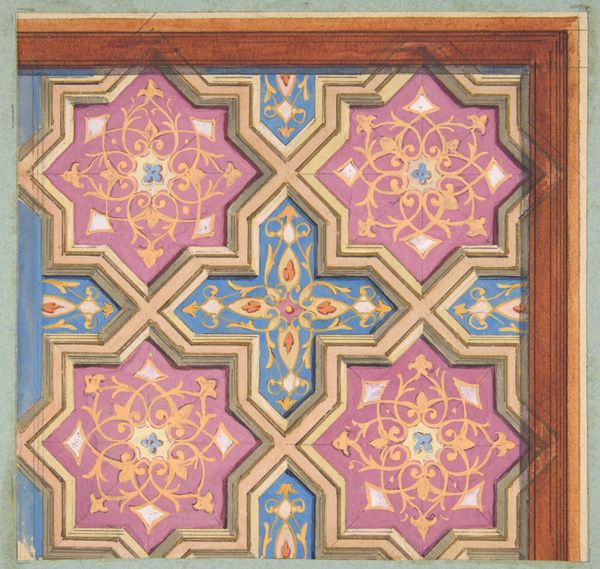
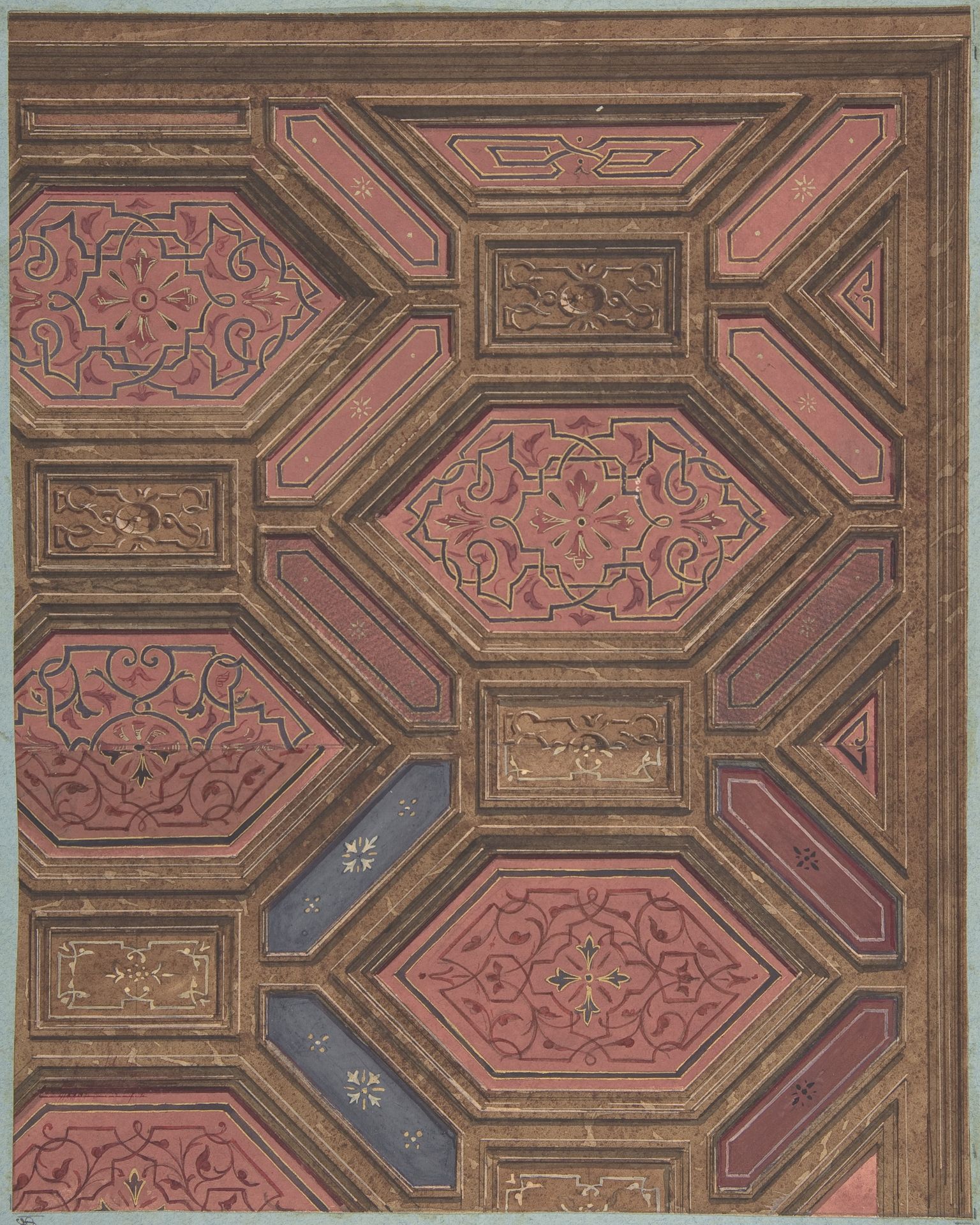
Jules-Edmond-Charles Lachaise made this design for a dining room in pen and ink, and watercolor on paper. The composition is dominated by a dense arrangement of geometric shapes—primarily octagons and rectangles—organized within a rigid grid. The color scheme is muted, with pinks and browns interspersed with occasional blues, giving a sense of subdued elegance. The structure evokes a feeling of classical order and symmetry, yet the hand-drawn quality introduces a slight imperfection, softening its formality. The decorative motifs within each shape seem to interact in a symbolic language, hinting at underlying meanings. Each choice of line, shape and color adds up to a system of signs. The drawing's overall design destabilizes a fixed perception of domestic spaces. Instead, it offers a complex interplay between form and function, suggesting that even the most familiar environments can be a source of intellectual and aesthetic exploration. Lachaise asks us to reconsider how our environment shapes our perception.
Design for Dining Room, Hôtel de Doctor Cranchi
1872

Jules-Edmond-Charles Lachaise
1897
The Metropolitan Museum of Art
Metropolitan Museum of Art, New York, NYArtwork details
- Medium
- drawing, print
- Dimensions
- 10 3/8 x 8 5/16 in. (26.3 x 21.1 cm)
- Location
- Metropolitan Museum of Art, New York, NY
- Copyright
- Public Domain
Tags
Comments
Share your thoughts
About this artwork
Jules-Edmond-Charles Lachaise made this design for a dining room in pen and ink, and watercolor on paper. The composition is dominated by a dense arrangement of geometric shapes—primarily octagons and rectangles—organized within a rigid grid. The color scheme is muted, with pinks and browns interspersed with occasional blues, giving a sense of subdued elegance. The structure evokes a feeling of classical order and symmetry, yet the hand-drawn quality introduces a slight imperfection, softening its formality. The decorative motifs within each shape seem to interact in a symbolic language, hinting at underlying meanings. Each choice of line, shape and color adds up to a system of signs. The drawing's overall design destabilizes a fixed perception of domestic spaces. Instead, it offers a complex interplay between form and function, suggesting that even the most familiar environments can be a source of intellectual and aesthetic exploration. Lachaise asks us to reconsider how our environment shapes our perception.
Comments
Share your thoughts