About this artwork
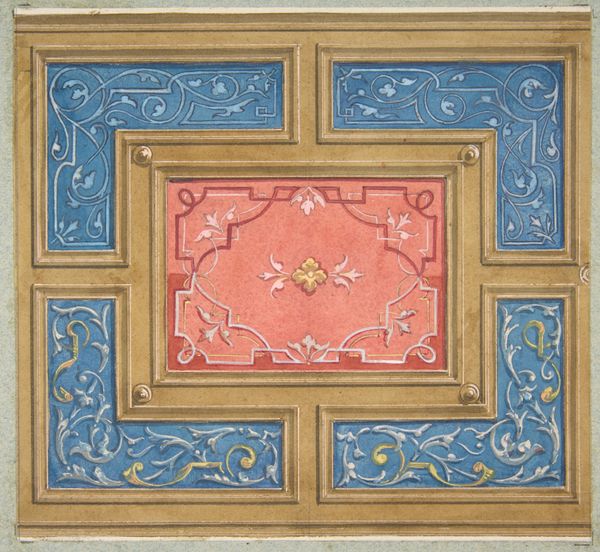
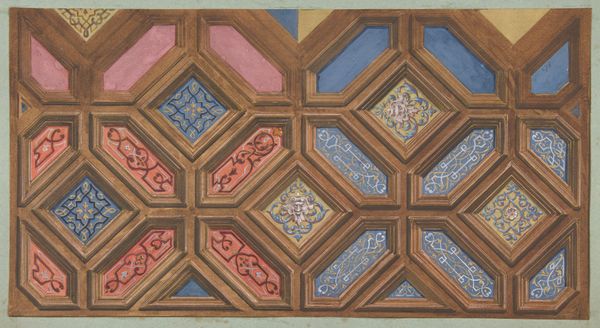
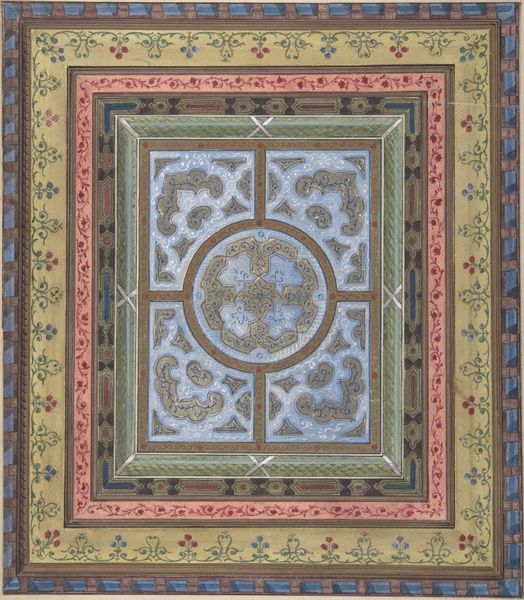
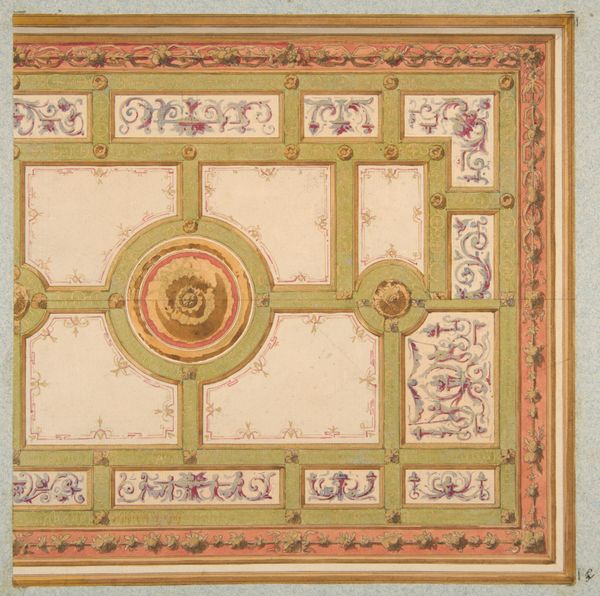
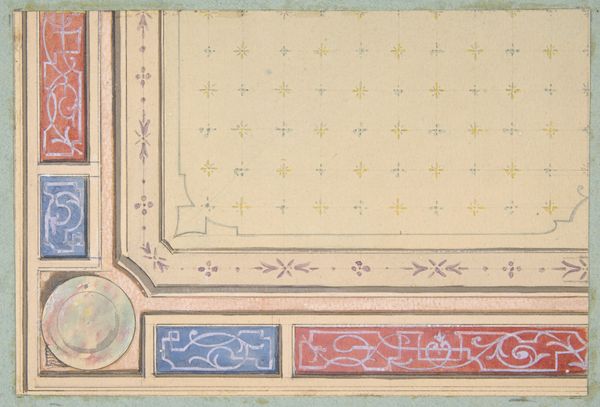
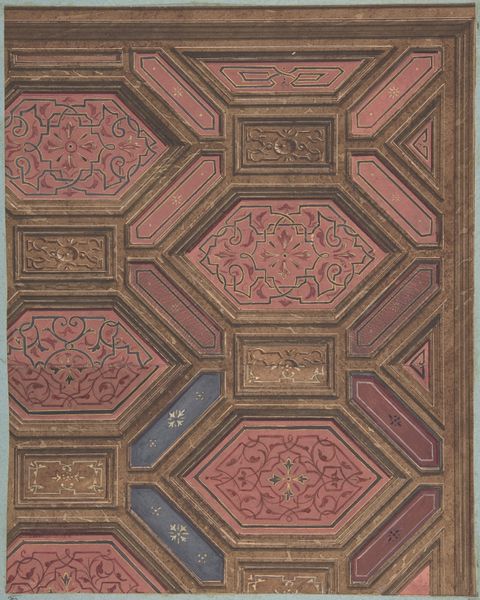
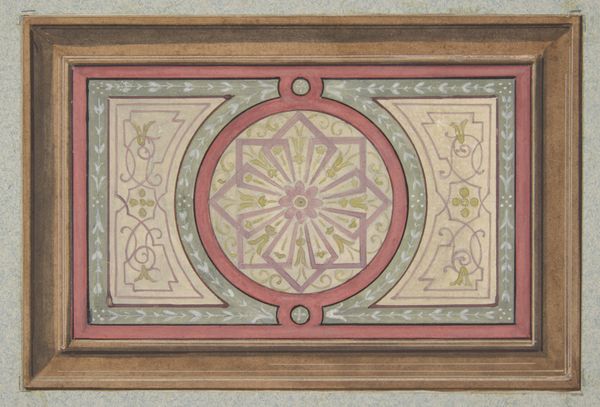
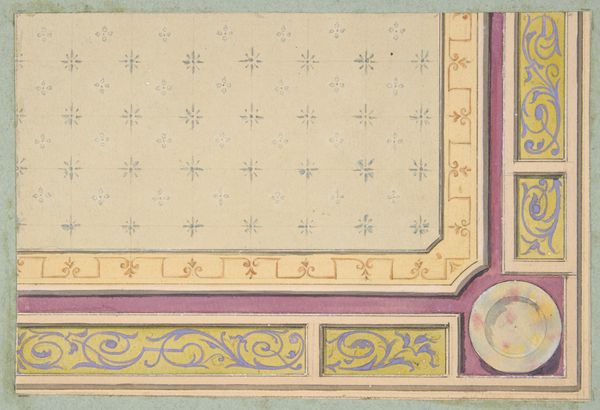
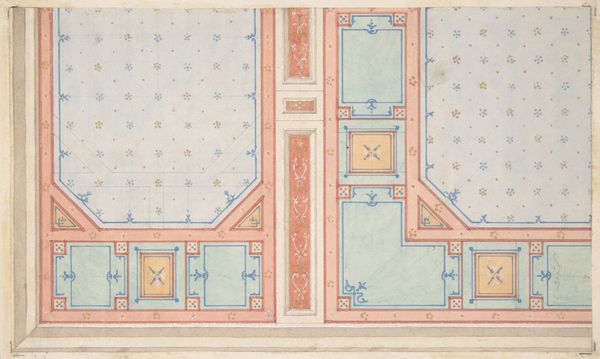
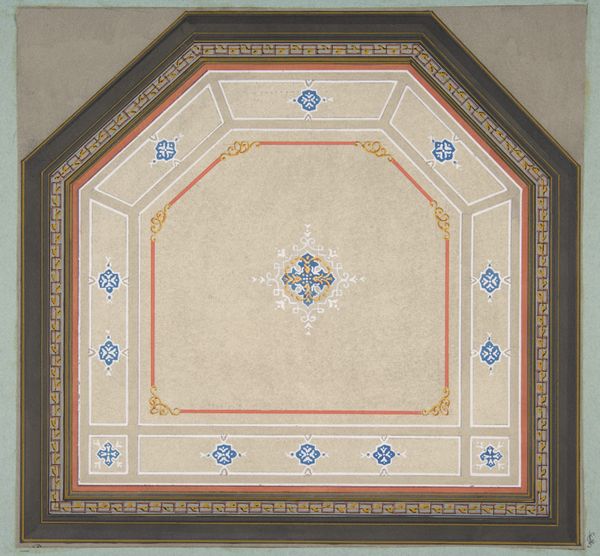
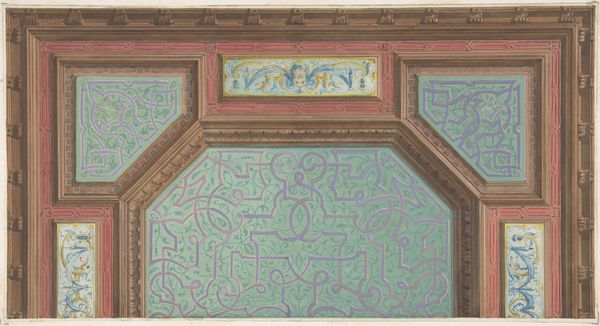
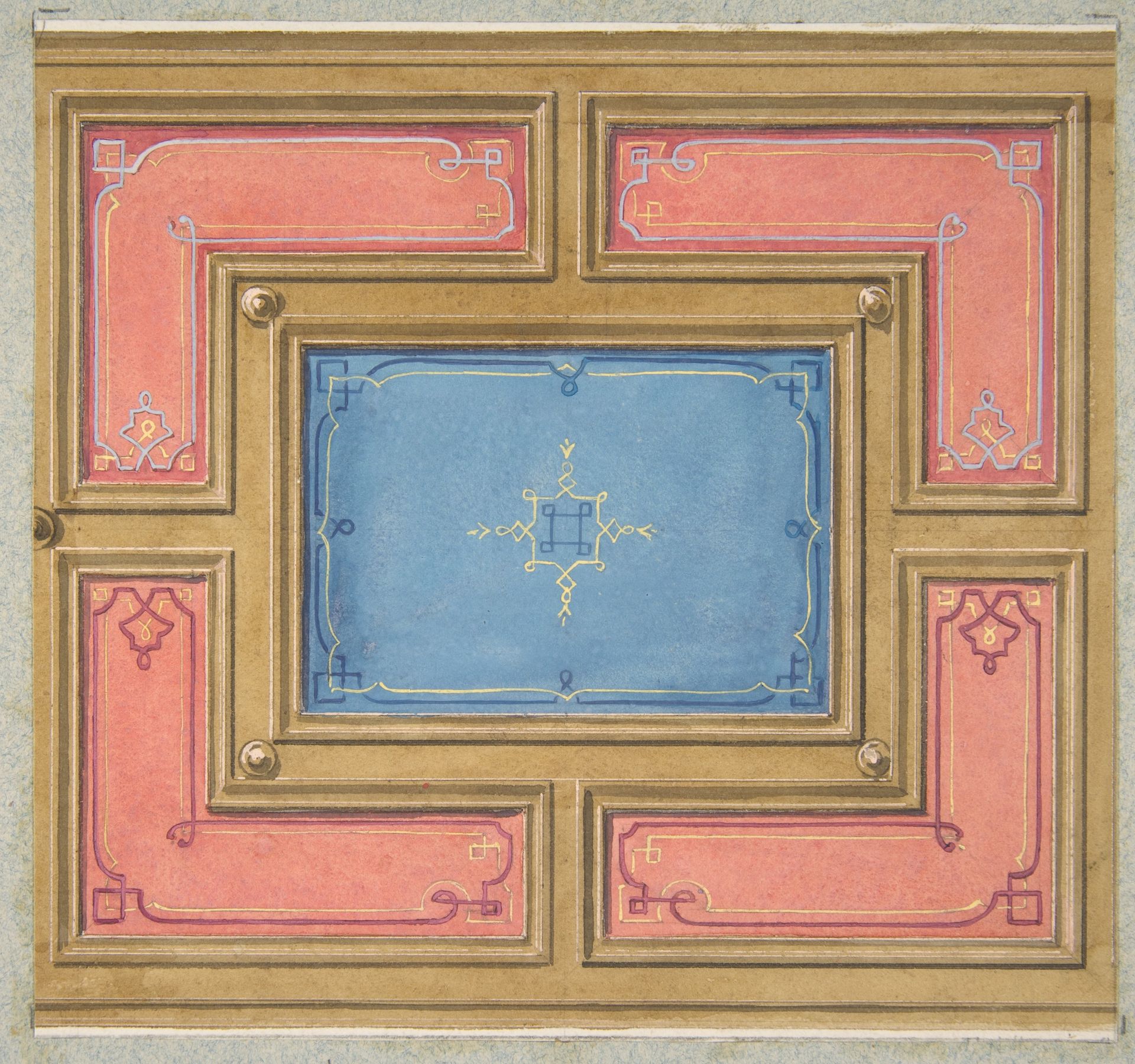
Editor: This is "Design for a Paneled Ceiling," an architectural watercolor presumably rendered by Jules-Edmond-Charles Lachaise sometime between 1820 and 1897. The palette is so appealing with the shades of blush and blue alongside the trim. It feels very formal but also surprisingly playful. How do you see this design fitting into its historical context? Curator: That's a keen observation about the interplay of formality and playfulness. I see this design as reflecting a particular moment in the 19th century where classicism was being reinterpreted. Notice the symmetry, the balance, typical features we associate with classical design, but consider what happens when those details are scaled and repeated across a room. Does it elevate everyday life, or overwhelm? Editor: That's interesting, I hadn’t considered the impact of repetition in a large space. So the context really influences our perception? Curator: Precisely. Now, imagine this ceiling in a public building versus a private home. Would the impression differ, and how might that impact the politics of the image? Remember, art often reinforces existing power structures through idealised representations, which were certainly at play during this time. Editor: It makes you wonder who this design was intended for and what kind of statement it would make. Would something like this reinforce ideas of wealth, taste and power? Curator: Exactly! And whose wealth, and whose taste? Thinking through these questions shows the crucial public role of art and how it influences broader society. Editor: This has made me realize there’s so much more to art than just aesthetics! It has opened my eyes to how design can shape or influence spaces beyond simple visual appeal. Curator: And understanding those implications allows us to better understand art's influence in cultural conversations and power structures, both at the time it was made and today.
Design for a paneled ceiling
1820 - 1897

Jules-Edmond-Charles Lachaise
1897
The Metropolitan Museum of Art
Metropolitan Museum of Art, New York, NYArtwork details
- Medium
- drawing, print, watercolor, architecture
- Location
- Metropolitan Museum of Art, New York, NY
- Copyright
- Public Domain
Tags
drawing
watercolor
tile art
classicism
architecture
Comments
Be the first to share your thoughts about this work.
About this artwork
Editor: This is "Design for a Paneled Ceiling," an architectural watercolor presumably rendered by Jules-Edmond-Charles Lachaise sometime between 1820 and 1897. The palette is so appealing with the shades of blush and blue alongside the trim. It feels very formal but also surprisingly playful. How do you see this design fitting into its historical context? Curator: That's a keen observation about the interplay of formality and playfulness. I see this design as reflecting a particular moment in the 19th century where classicism was being reinterpreted. Notice the symmetry, the balance, typical features we associate with classical design, but consider what happens when those details are scaled and repeated across a room. Does it elevate everyday life, or overwhelm? Editor: That's interesting, I hadn’t considered the impact of repetition in a large space. So the context really influences our perception? Curator: Precisely. Now, imagine this ceiling in a public building versus a private home. Would the impression differ, and how might that impact the politics of the image? Remember, art often reinforces existing power structures through idealised representations, which were certainly at play during this time. Editor: It makes you wonder who this design was intended for and what kind of statement it would make. Would something like this reinforce ideas of wealth, taste and power? Curator: Exactly! And whose wealth, and whose taste? Thinking through these questions shows the crucial public role of art and how it influences broader society. Editor: This has made me realize there’s so much more to art than just aesthetics! It has opened my eyes to how design can shape or influence spaces beyond simple visual appeal. Curator: And understanding those implications allows us to better understand art's influence in cultural conversations and power structures, both at the time it was made and today.
Comments
Be the first to share your thoughts about this work.