About this artwork
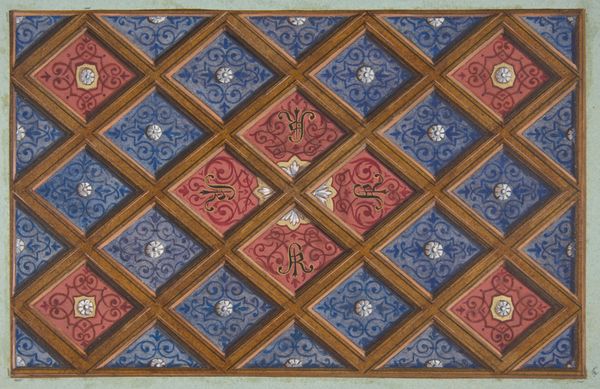
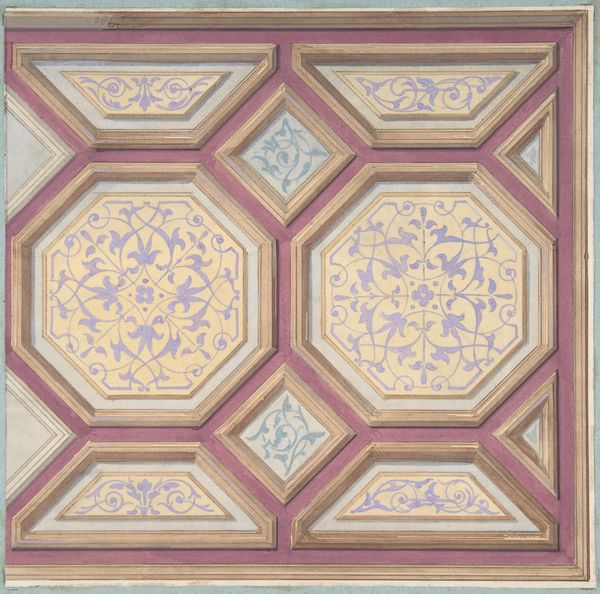
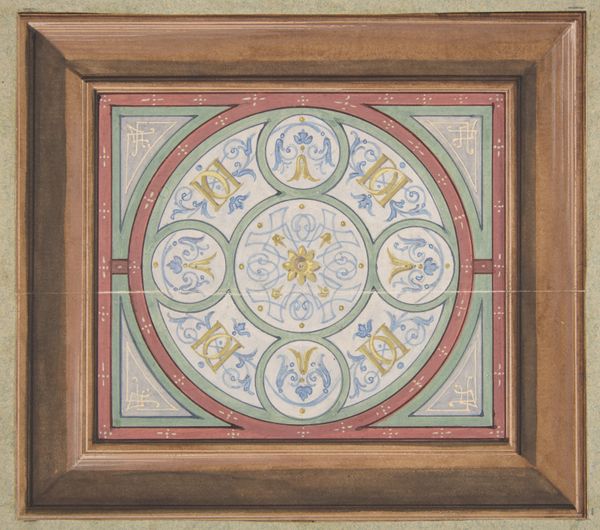
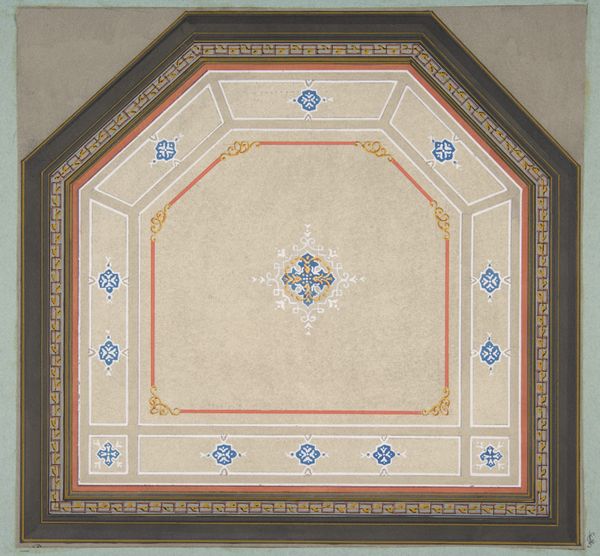
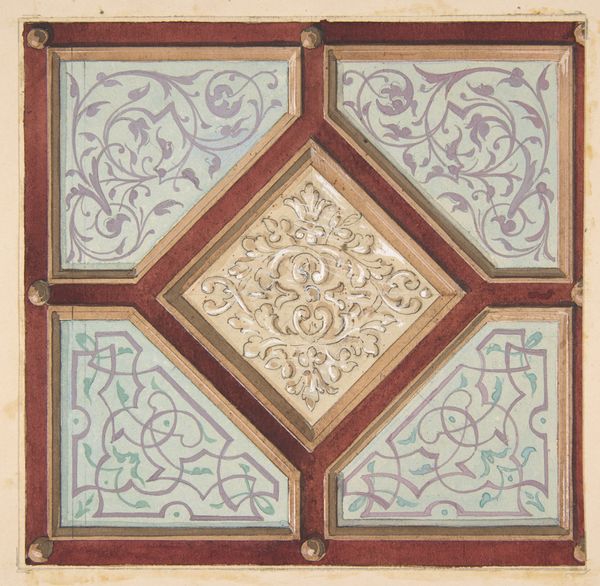
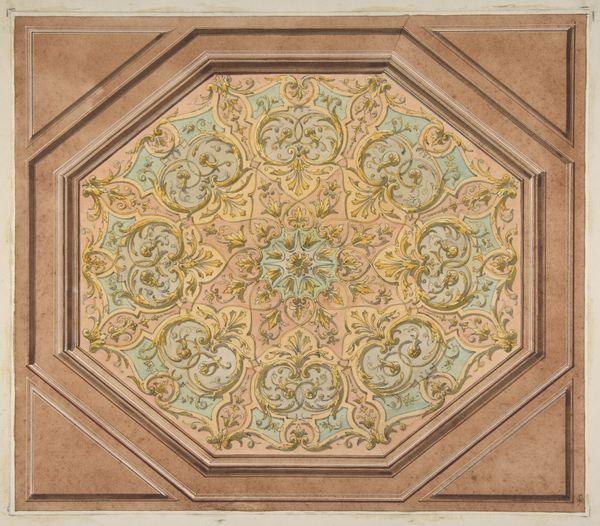
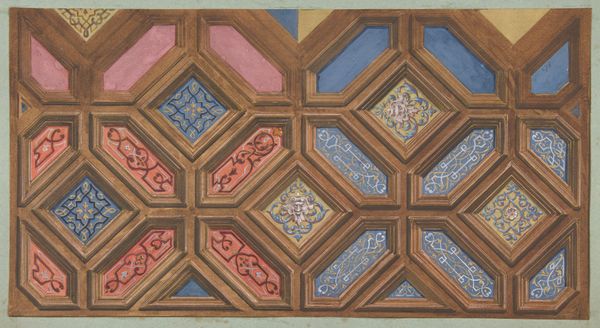
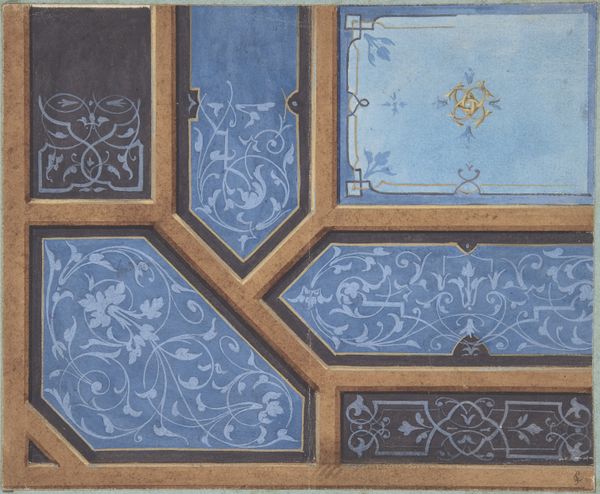
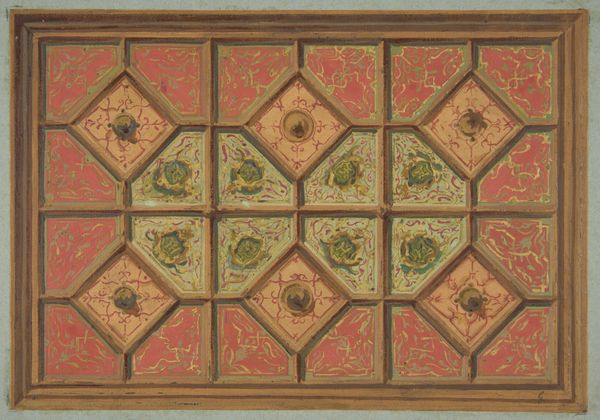
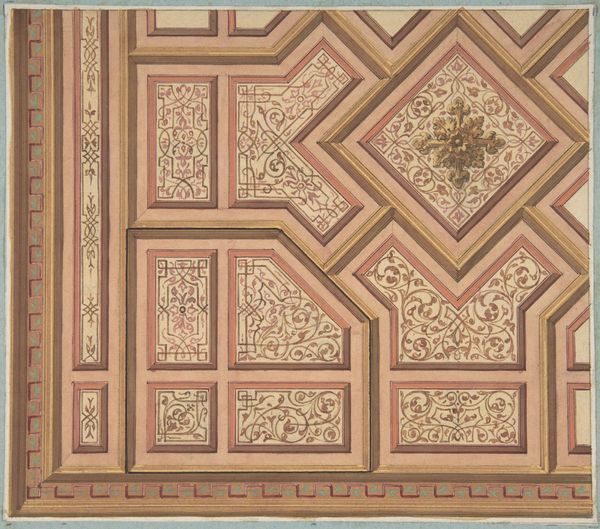
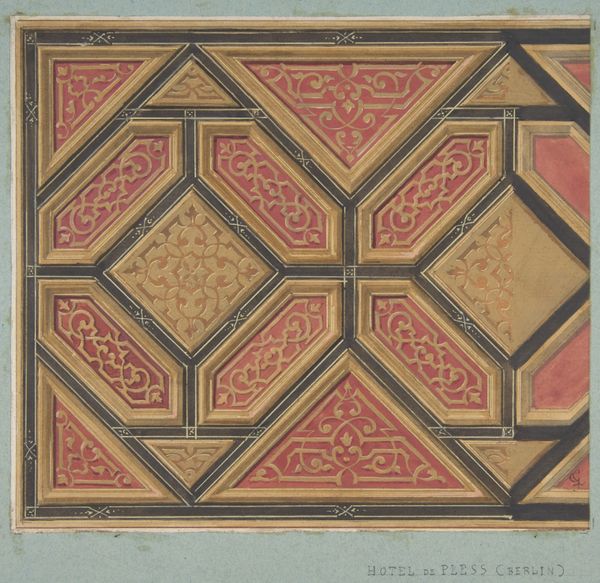
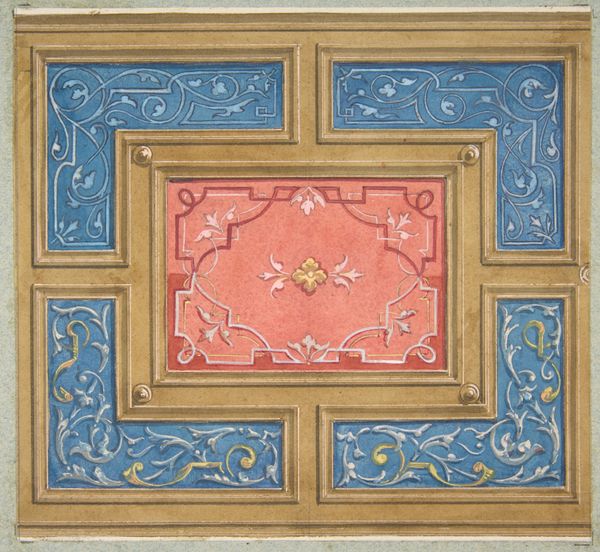
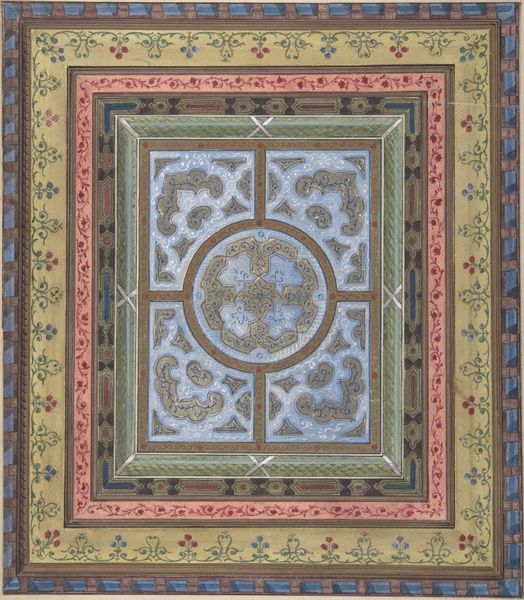
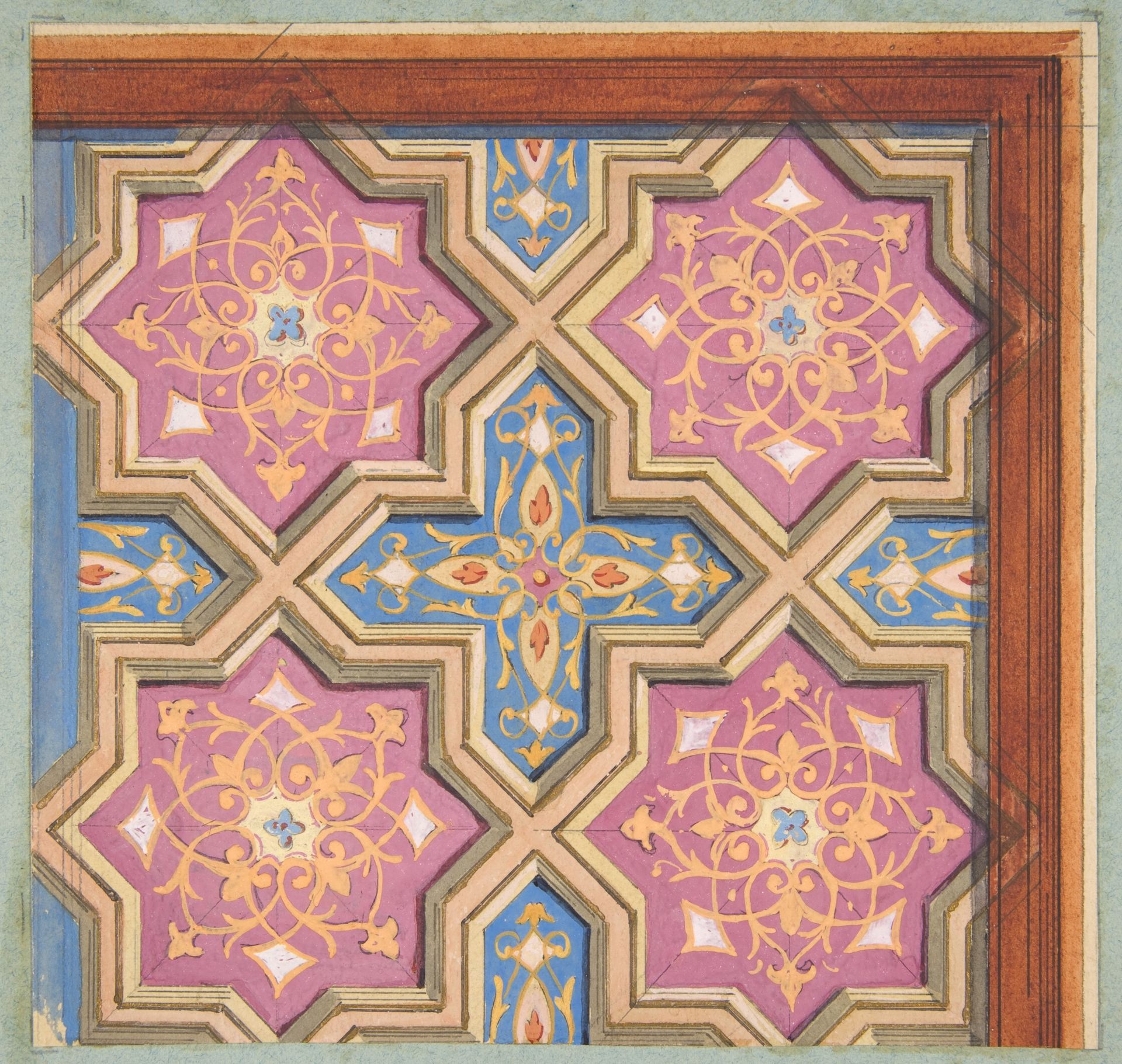
This vibrant design for a ceiling decoration was created by Jules-Edmond-Charles Lachaise. Although the exact date is unknown, Lachaise was born in 1897, so it likely comes from the early 20th century. The repeating geometric patterns are characteristic of Islamic art, specifically its use in architectural ornamentation, and the design suggests a strong awareness of non-Western artistic traditions. France, with its colonial history, would have made such forms accessible through collections and publications. Lachaise's design can be seen as part of a broader movement within Western art to find inspiration outside of its own traditions. However, this appropriation also raises questions about cultural exchange and power dynamics, and the way Western artists engage with non-Western aesthetics. To fully understand this piece, one might research the history of Islamic art in France, and the circulation of design motifs during this period. Ultimately, this ceiling design reminds us that art is always embedded in a complex web of social, cultural, and historical contexts.
Partial design for the decoration of a ceiling
1840 - 1897

Jules-Edmond-Charles Lachaise
1897
The Metropolitan Museum of Art
Metropolitan Museum of Art, New York, NYArtwork details
- Medium
- drawing, mixed-media, print
- Location
- Metropolitan Museum of Art, New York, NY
- Copyright
- Public Domain
Tags
Comments
Share your thoughts
About this artwork
This vibrant design for a ceiling decoration was created by Jules-Edmond-Charles Lachaise. Although the exact date is unknown, Lachaise was born in 1897, so it likely comes from the early 20th century. The repeating geometric patterns are characteristic of Islamic art, specifically its use in architectural ornamentation, and the design suggests a strong awareness of non-Western artistic traditions. France, with its colonial history, would have made such forms accessible through collections and publications. Lachaise's design can be seen as part of a broader movement within Western art to find inspiration outside of its own traditions. However, this appropriation also raises questions about cultural exchange and power dynamics, and the way Western artists engage with non-Western aesthetics. To fully understand this piece, one might research the history of Islamic art in France, and the circulation of design motifs during this period. Ultimately, this ceiling design reminds us that art is always embedded in a complex web of social, cultural, and historical contexts.
Comments
Share your thoughts