About this artwork
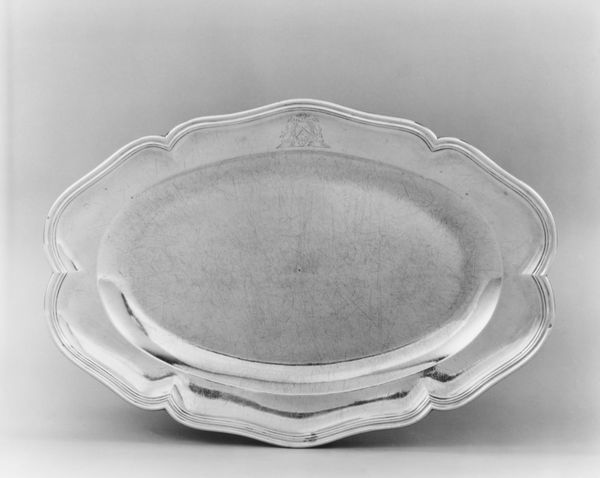
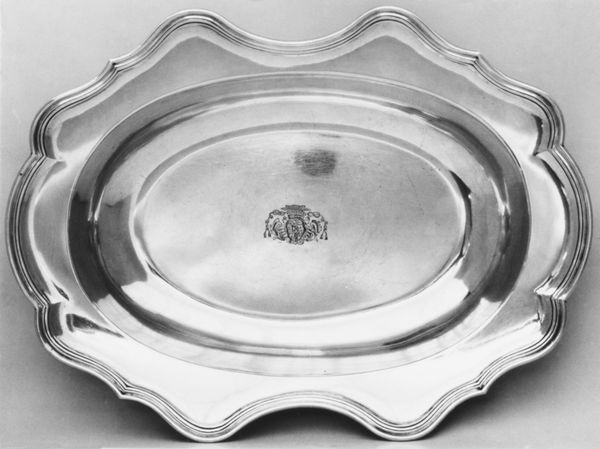
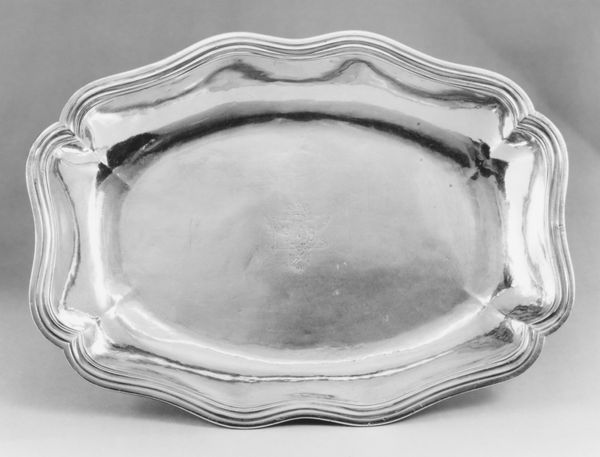
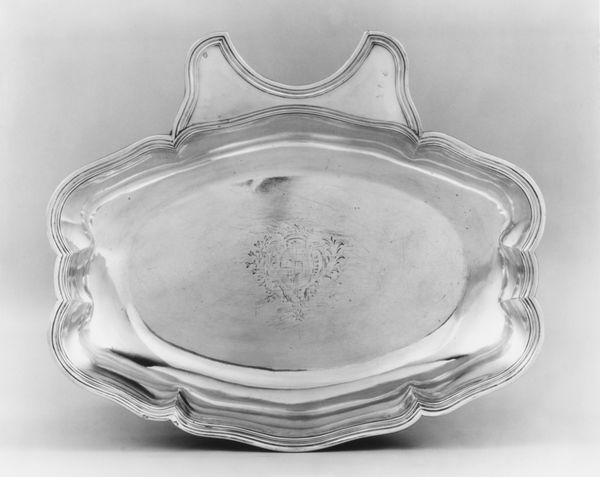
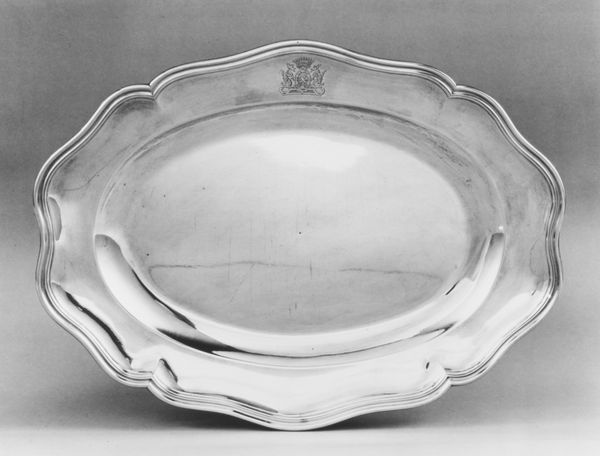
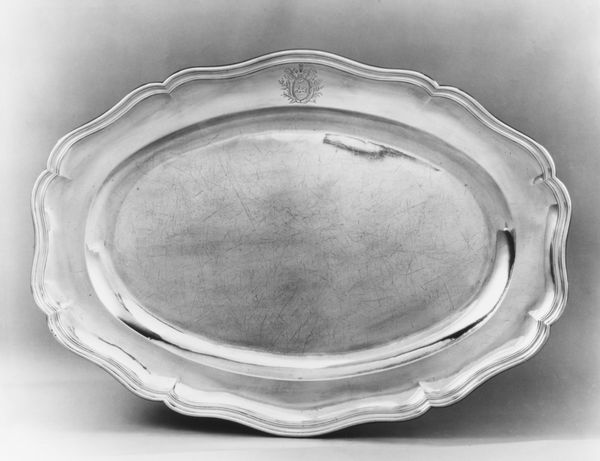
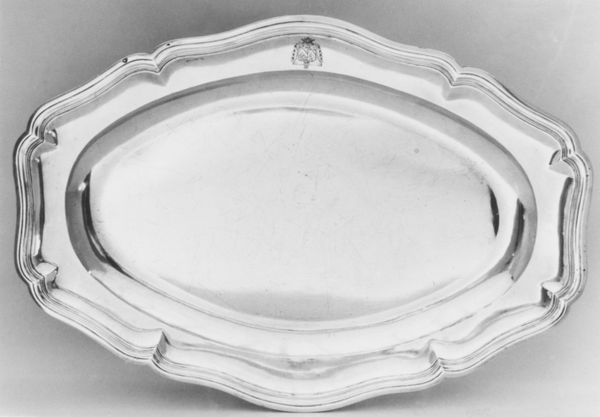
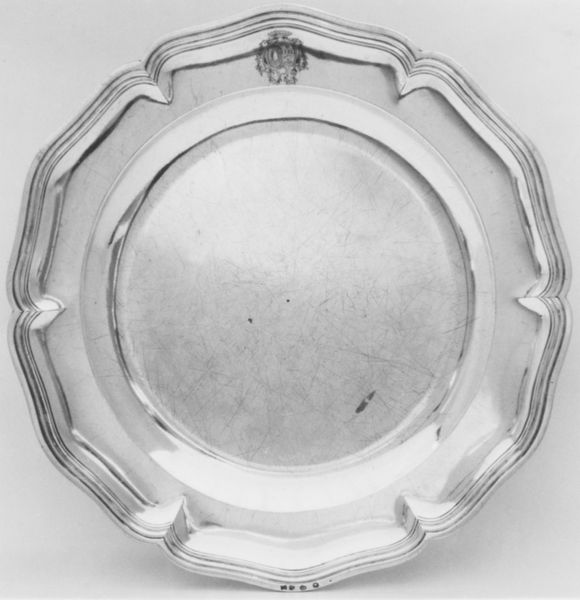
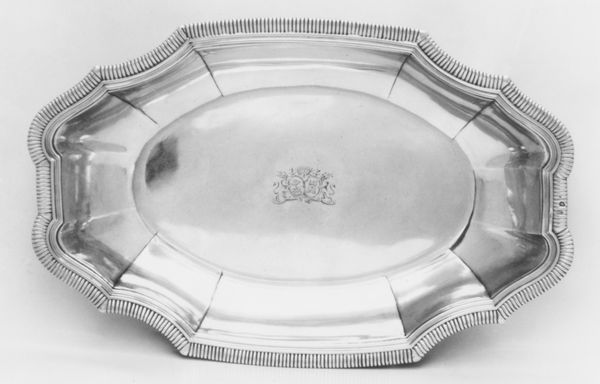
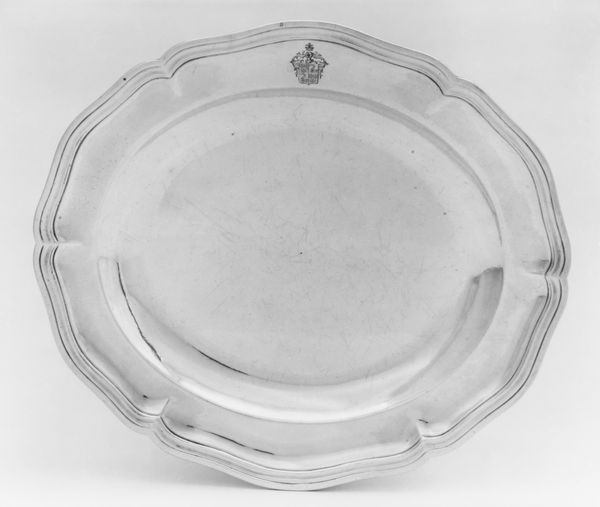
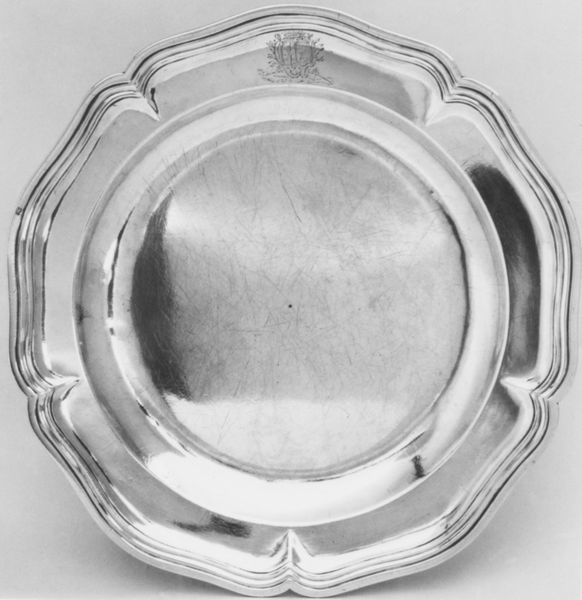
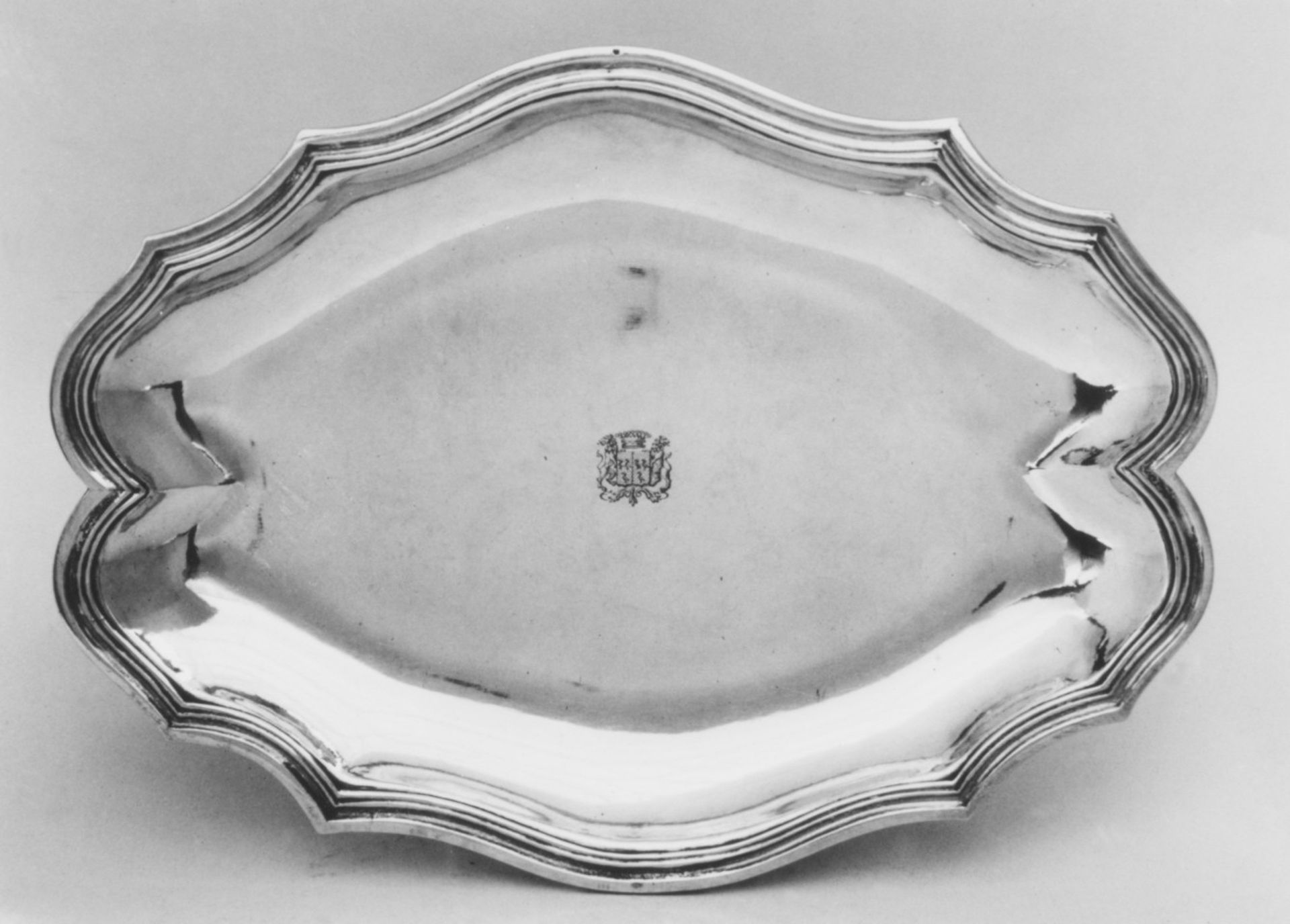
Editor: This is a silver platter, or tray, made in 1783. It's currently held at the Metropolitan Museum of Art and credited to the widow of Jean-Pierre-Elou-Louis Piette. It seems so simple, yet the craftsmanship looks amazing, especially the repeating curves along the edge. How should we interpret its artistic significance? Curator: Precisely. Note the sinuous lines, the reflective surface playing with light. This piece is an excellent example of Rococo aesthetics. How do you see the overall composition? Editor: The symmetry is definitely present, though softened by the asymmetrical curves of the rim. It makes me think of something organic, like a seashell. Curator: An astute observation. Consider the pure visual form. The piece adheres to no narrative; it makes no symbolic claim. Its value resides within the object itself. The undulating border contrasted against the flat, reflective plane creates an appealing visual rhythm. Editor: So, it's beautiful simply because of how it looks and how the materials are worked? Is there something else to decode in that small emblem at its center? Curator: Indeed. The subtle crest introduces an element of restrained ornamentation. Notice the level of craftsmanship is incredible, particularly in manipulating a rigid material to create an object that flows so smoothly, almost liquid. Do you feel the emphasis is more on its utility or its pure design? Editor: That's a good question! I'm leaning toward pure design since every edge, every curve seems so carefully thought out and flawlessly executed, utility almost comes second. Curator: Yes, that emphasis on pure design perfectly characterizes the formal achievements of this era. The essence is not symbolic, or narrative. The piece is an exploration of form. Editor: Thanks. Now, when I look at it, I see the elegant simplicity even more and the focus on form and structure rather than any historical context.
Platter or tray
1783

widow of Jean-Pierre-Elou-Louis Piette
1776 - 1790
The Metropolitan Museum of Art
Metropolitan Museum of Art, New York, NYArtwork details
- Dimensions
- Overall: 3/4 × 9 × 6 3/8 in. (1.9 × 22.9 × 16.2 cm)
- Location
- Metropolitan Museum of Art, New York, NY
- Copyright
- Public Domain
Comments
Share your thoughts
About this artwork
Editor: This is a silver platter, or tray, made in 1783. It's currently held at the Metropolitan Museum of Art and credited to the widow of Jean-Pierre-Elou-Louis Piette. It seems so simple, yet the craftsmanship looks amazing, especially the repeating curves along the edge. How should we interpret its artistic significance? Curator: Precisely. Note the sinuous lines, the reflective surface playing with light. This piece is an excellent example of Rococo aesthetics. How do you see the overall composition? Editor: The symmetry is definitely present, though softened by the asymmetrical curves of the rim. It makes me think of something organic, like a seashell. Curator: An astute observation. Consider the pure visual form. The piece adheres to no narrative; it makes no symbolic claim. Its value resides within the object itself. The undulating border contrasted against the flat, reflective plane creates an appealing visual rhythm. Editor: So, it's beautiful simply because of how it looks and how the materials are worked? Is there something else to decode in that small emblem at its center? Curator: Indeed. The subtle crest introduces an element of restrained ornamentation. Notice the level of craftsmanship is incredible, particularly in manipulating a rigid material to create an object that flows so smoothly, almost liquid. Do you feel the emphasis is more on its utility or its pure design? Editor: That's a good question! I'm leaning toward pure design since every edge, every curve seems so carefully thought out and flawlessly executed, utility almost comes second. Curator: Yes, that emphasis on pure design perfectly characterizes the formal achievements of this era. The essence is not symbolic, or narrative. The piece is an exploration of form. Editor: Thanks. Now, when I look at it, I see the elegant simplicity even more and the focus on form and structure rather than any historical context.
Comments
Share your thoughts