1640
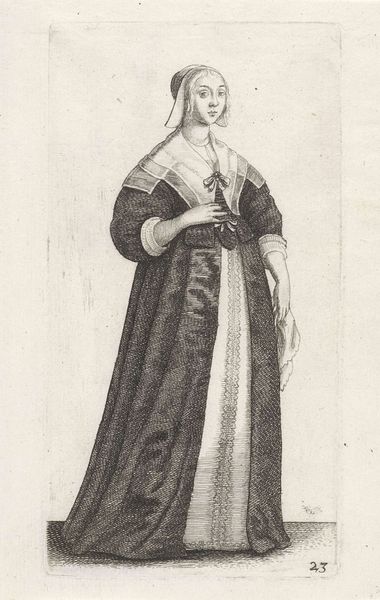
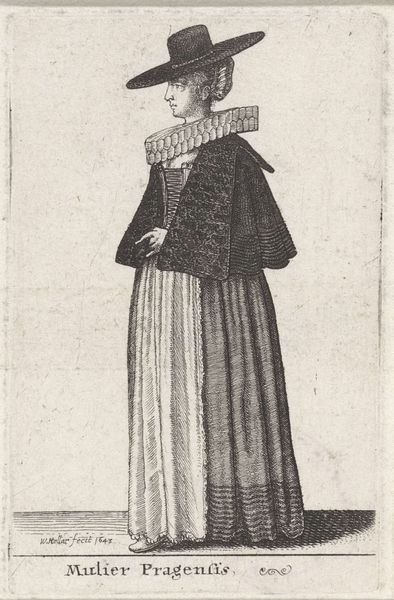
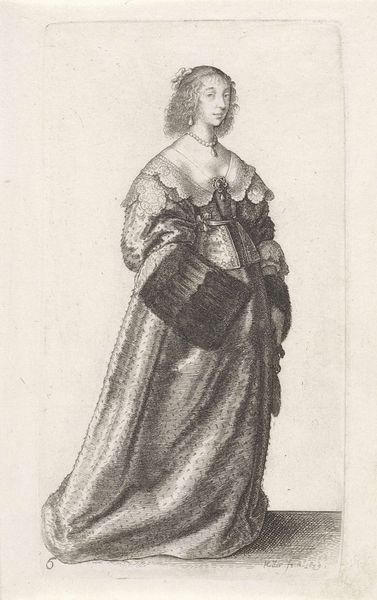
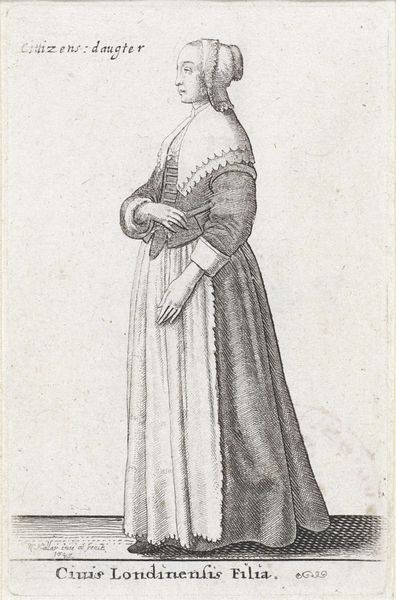
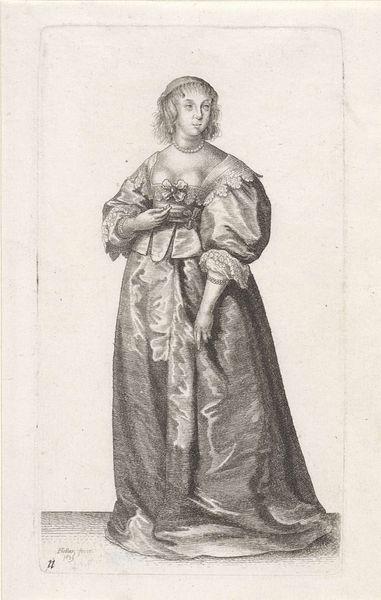
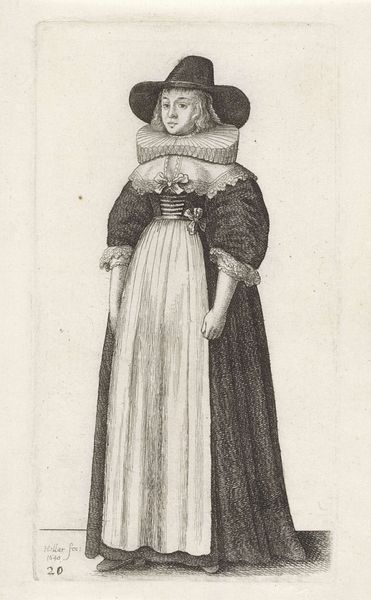
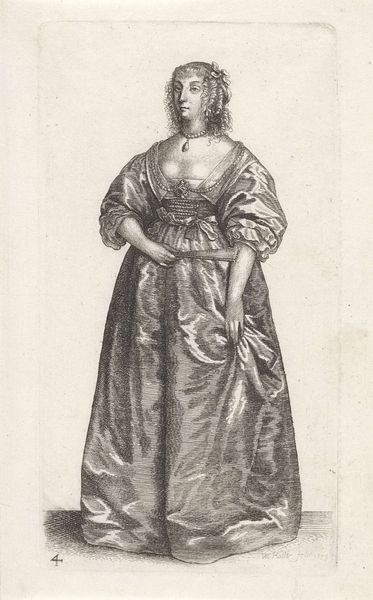
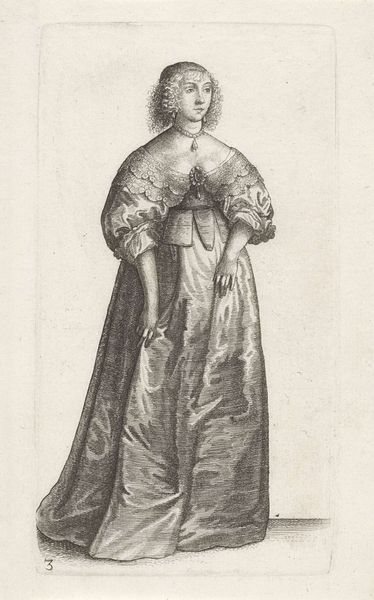
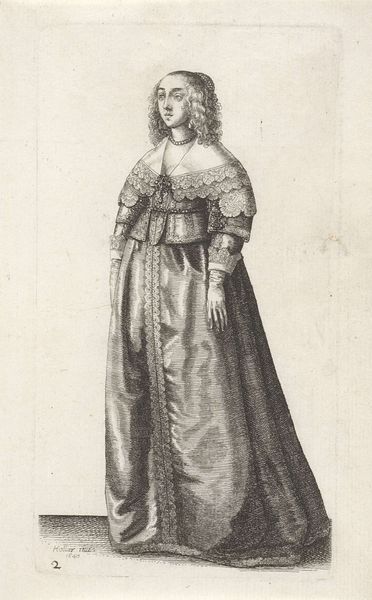
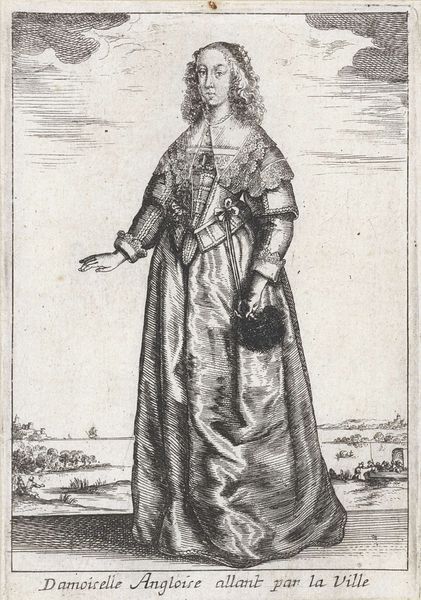
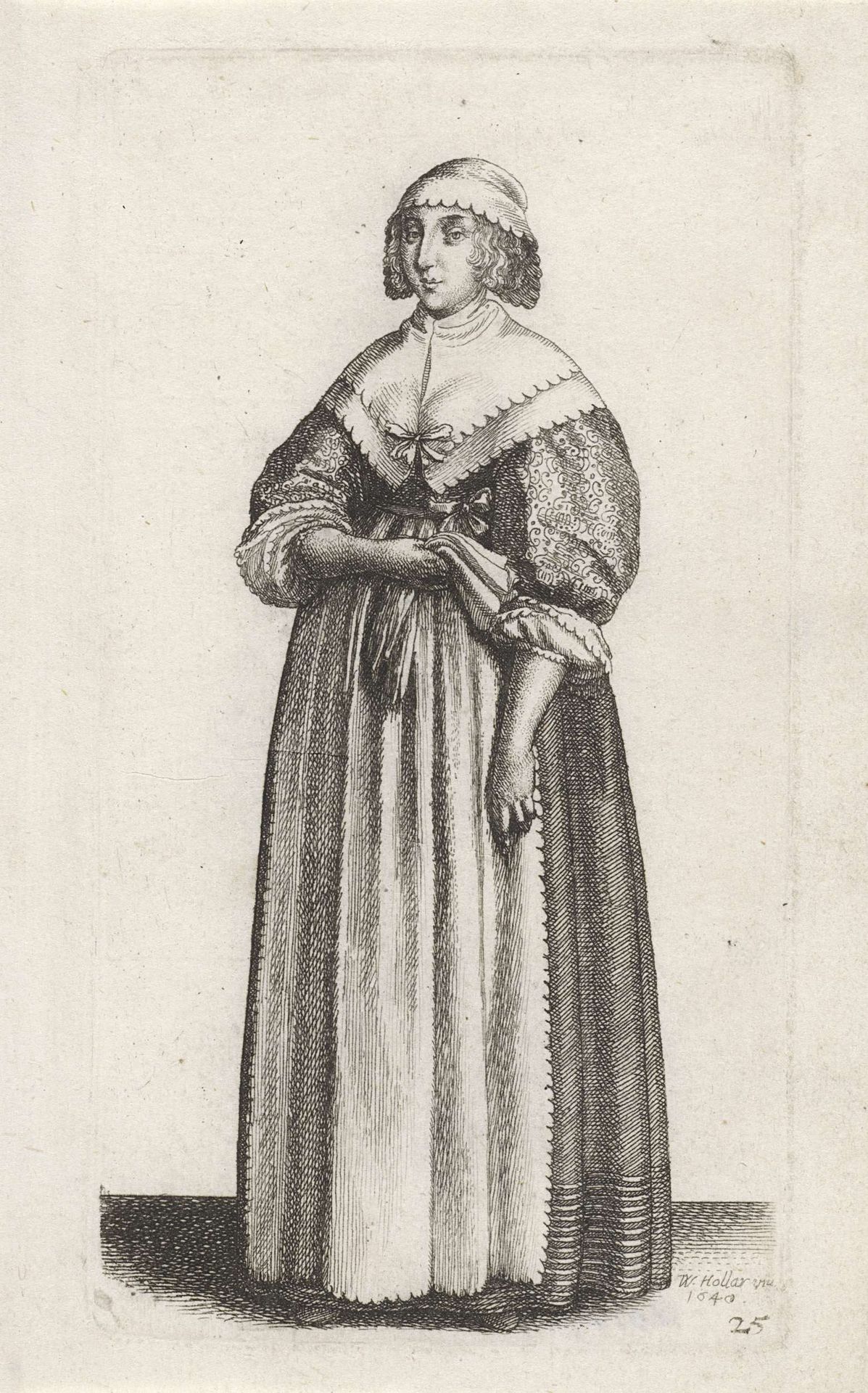
Ornatus Muliebris Anglicanus (The Clothing of English Women)

Wenceslaus Hollar
1607 - 1677Location
RijksmuseumListen to curator's interpretation
Curatorial notes
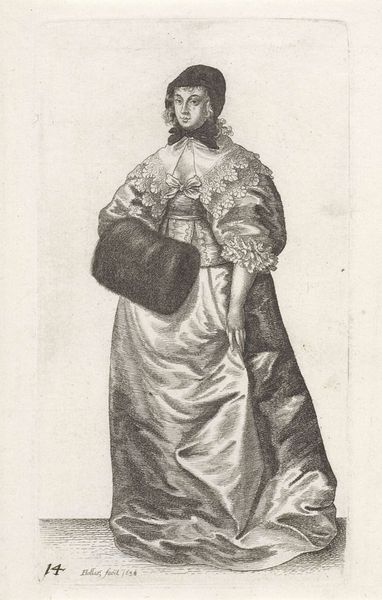
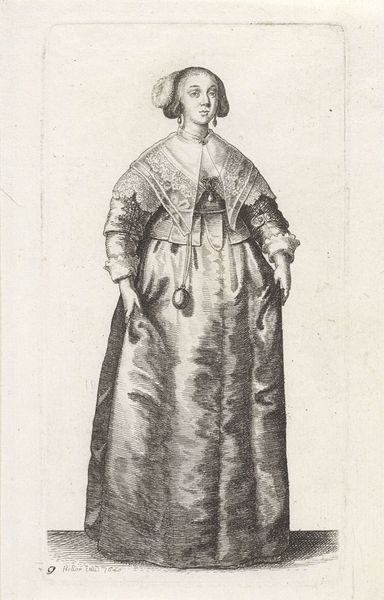
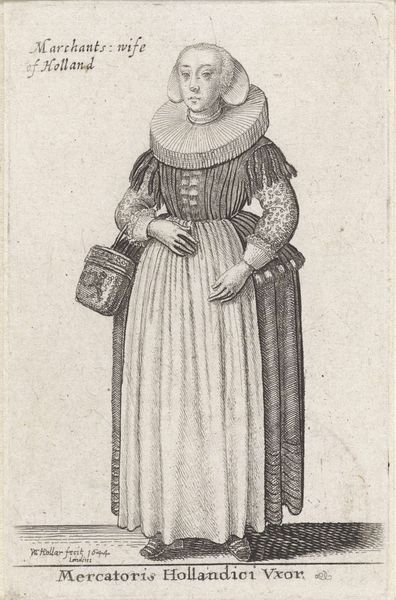
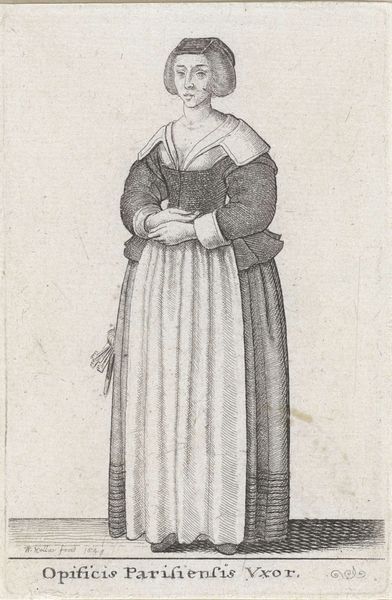
Wenceslaus Hollar created this engraving, Ornatus Muliebris Anglicanus, in 1640s England. The woman’s attire speaks volumes about her status and the cultural values of the time, but it is her gesture—hands clasped gently at her waist—that captivates. This subtle clasp echoes across centuries. We see similar gestures in ancient Roman portraiture, where it signified modesty and virtue. Consider how Renaissance painters like Raphael employed it to imbue their female figures with grace and humility. This gesture, however, is never fixed. It evolves, transforming from a symbol of virtue to one of quiet contemplation or even suppressed desire. What is the emotional weight of this recurring motif? Perhaps it taps into a collective memory, a subconscious recognition of shared human experiences. It represents restraint, decorum, and the complex interplay between inner thoughts and outward presentation, engaging viewers on a deep, subconscious level. Like a returning spirit, this gesture reappears, its meaning reshaped by the ever-changing currents of history.