About this artwork
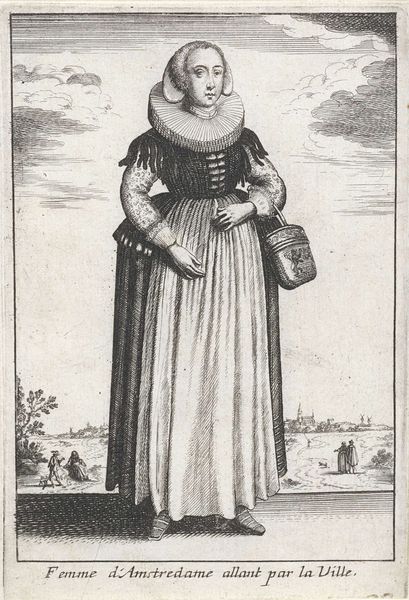
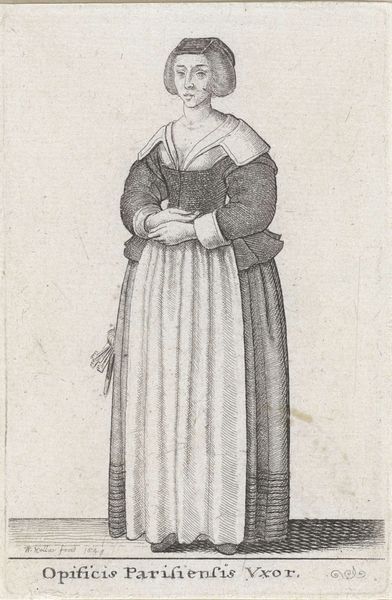
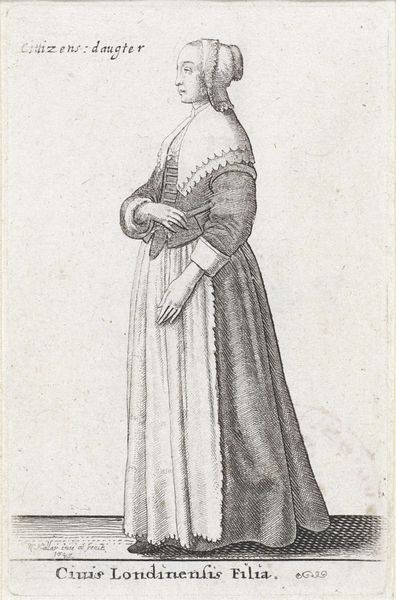
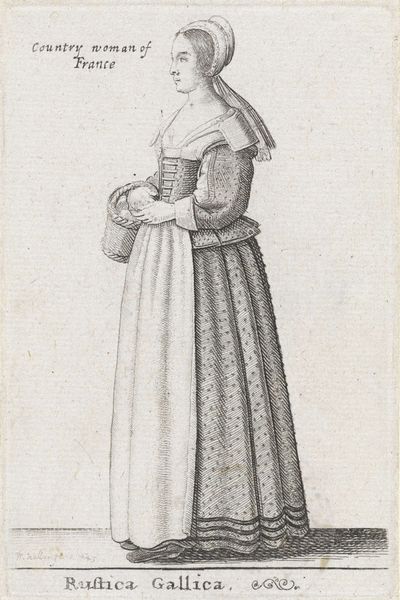
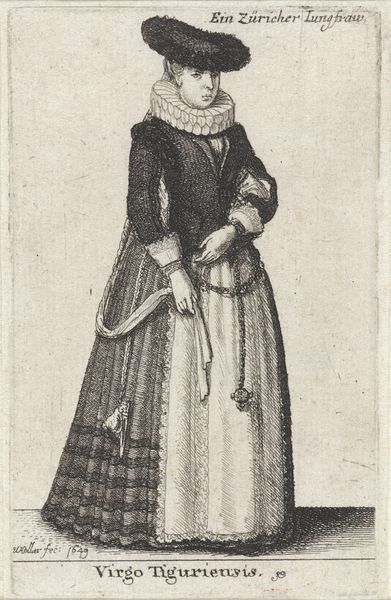
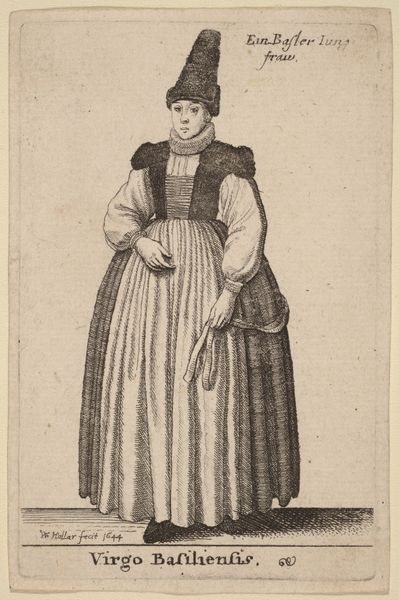
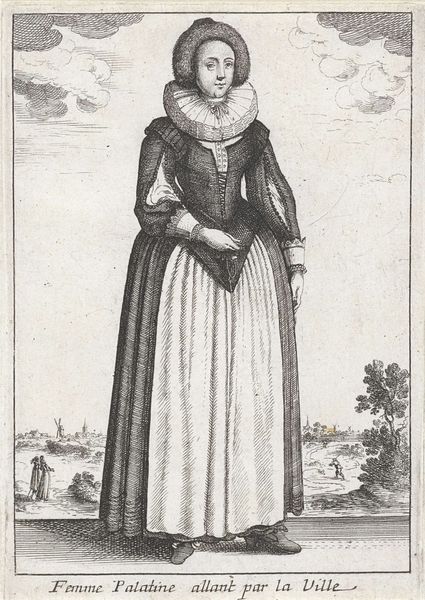
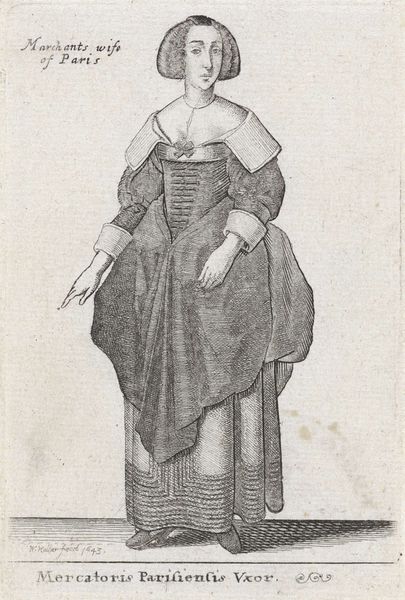
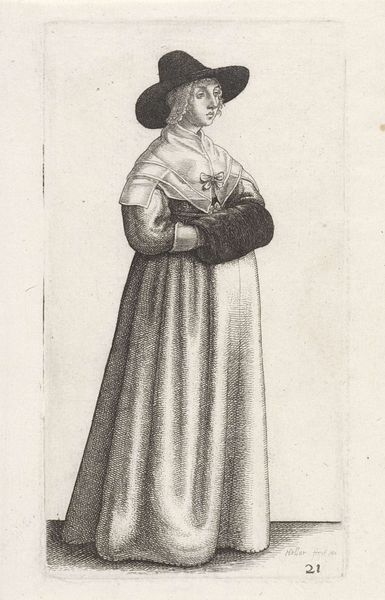
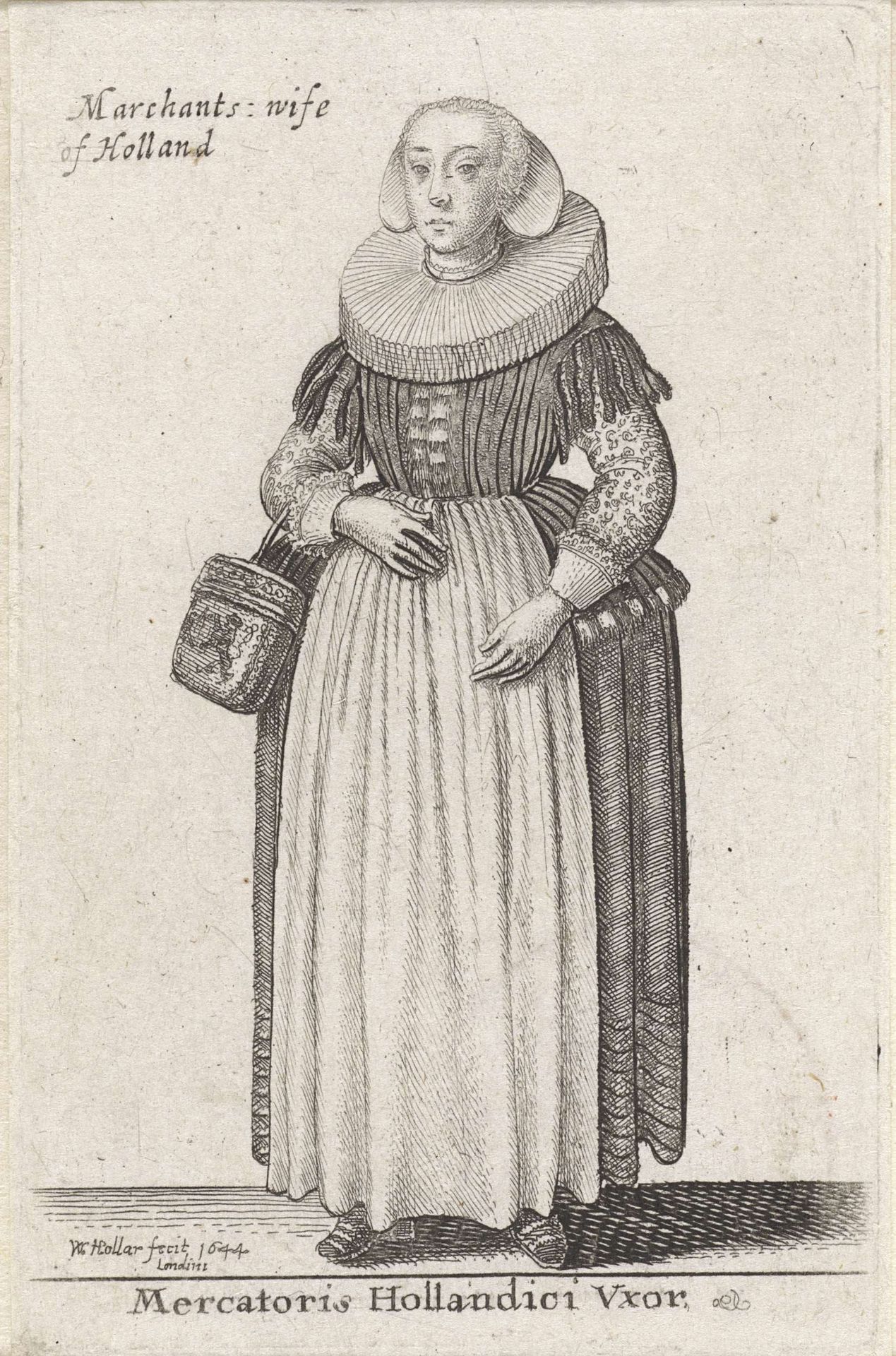
Wenceslaus Hollar made this print in 1644, using the etching process. He would have coated a copper plate with wax, drawn into it with a sharp needle, and then bathed the plate in acid. The longer the acid bit into the metal, the darker the line that would appear in the final print. Look closely, and you can see how Hollar used this process to describe the textures of the woman’s clothing. Her ruff, sleeves, and purse are all carefully delineated, suggesting fabrics of considerable value. The very act of making a print like this underscores the economic activity of the time, with merchants growing wealthy and fashion becoming ever more elaborate. Hollar himself was deeply embedded in this world, creating images that served both as records and advertisements of contemporary styles. His skillful manipulation of line transformed base metals into documents of social standing, revealing the intricate relationship between material culture and the burgeoning mercantile class.
Mercatoris Hollandici Vxor / Merchants wife of Holland 1644

Wenceslaus Hollar
1607 - 1677Location
RijksmuseumArtwork details
- Medium
- print, engraving
- Dimensions
- height 93 mm, width 60 mm
- Location
- Rijksmuseum
- Copyright
- Rijks Museum: Open Domain
Tags
portrait
dutch-golden-age
old engraving style
figuration
genre-painting
dress
engraving
Comments
No comments
About this artwork
Wenceslaus Hollar made this print in 1644, using the etching process. He would have coated a copper plate with wax, drawn into it with a sharp needle, and then bathed the plate in acid. The longer the acid bit into the metal, the darker the line that would appear in the final print. Look closely, and you can see how Hollar used this process to describe the textures of the woman’s clothing. Her ruff, sleeves, and purse are all carefully delineated, suggesting fabrics of considerable value. The very act of making a print like this underscores the economic activity of the time, with merchants growing wealthy and fashion becoming ever more elaborate. Hollar himself was deeply embedded in this world, creating images that served both as records and advertisements of contemporary styles. His skillful manipulation of line transformed base metals into documents of social standing, revealing the intricate relationship between material culture and the burgeoning mercantile class.
Comments
No comments