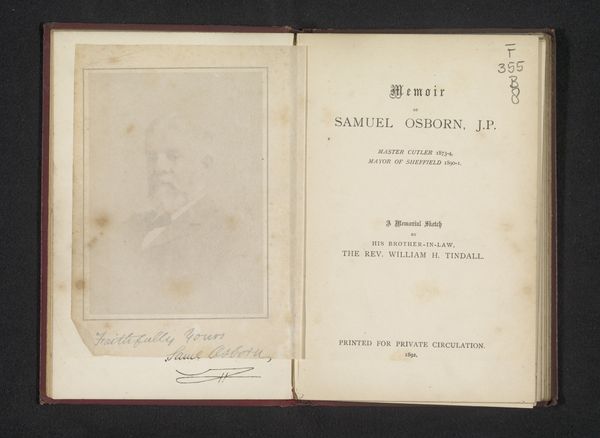
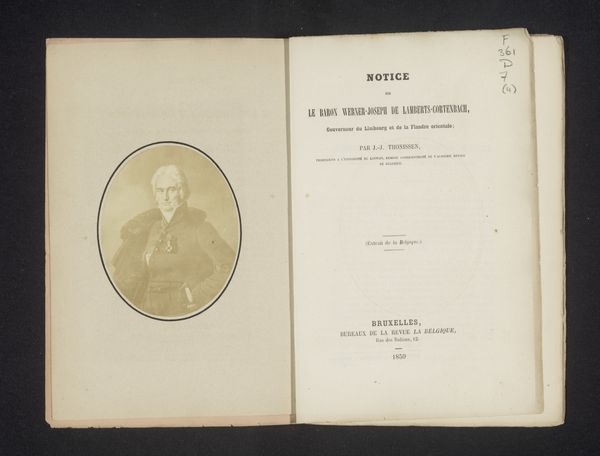
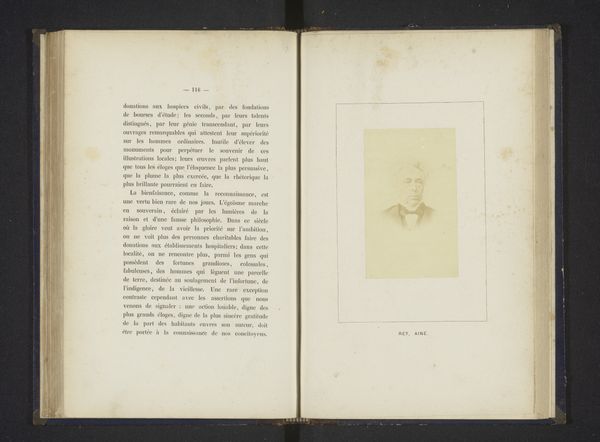
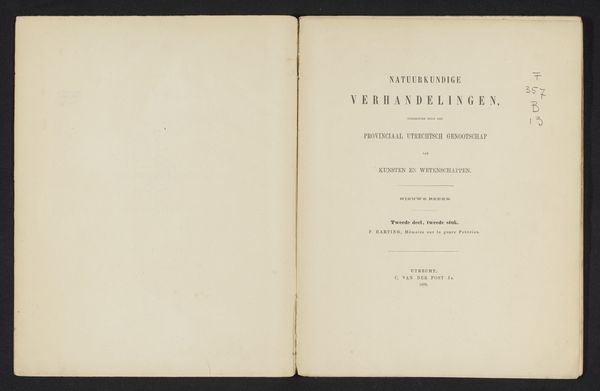
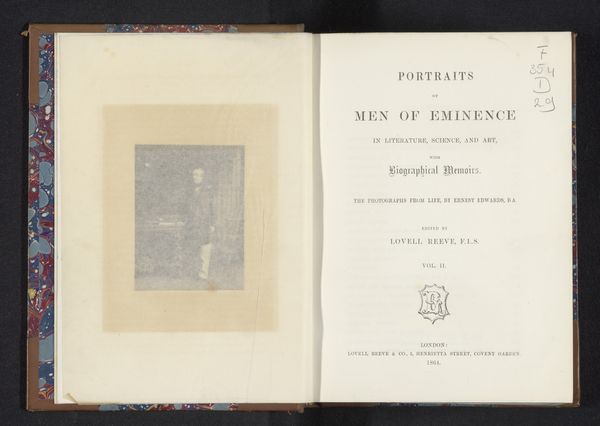
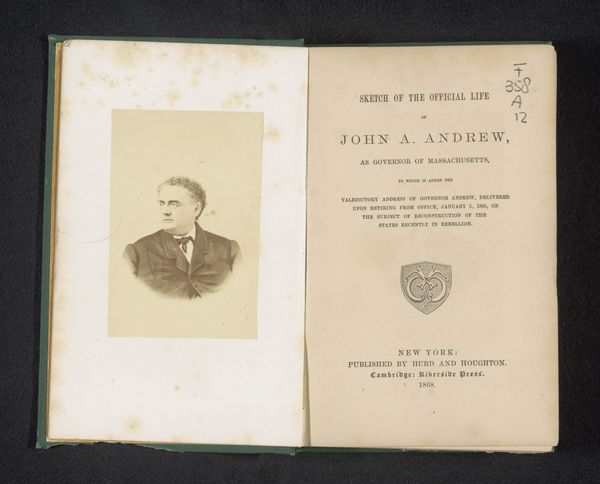
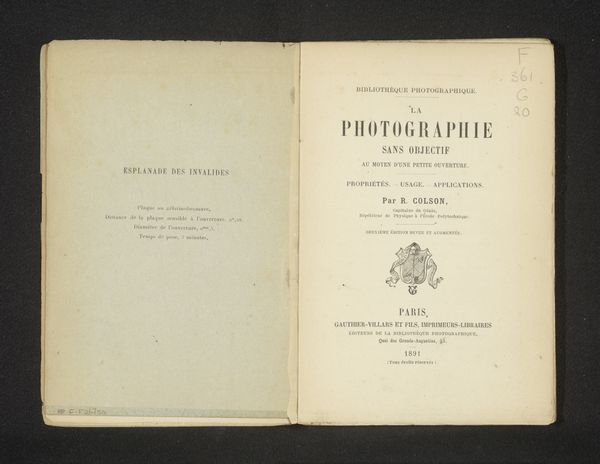
Fotoreproductie van een getekend portret van dominee Charles Forster door George Richmond before 1862
0:00
0:00

drawing, print, paper, photography, ink
#
portrait
#
drawing
# print
#
book
#
paper
#
photography
#
ink
Dimensions: height 133 mm, width 104 mm
Copyright: Rijks Museum: Open Domain
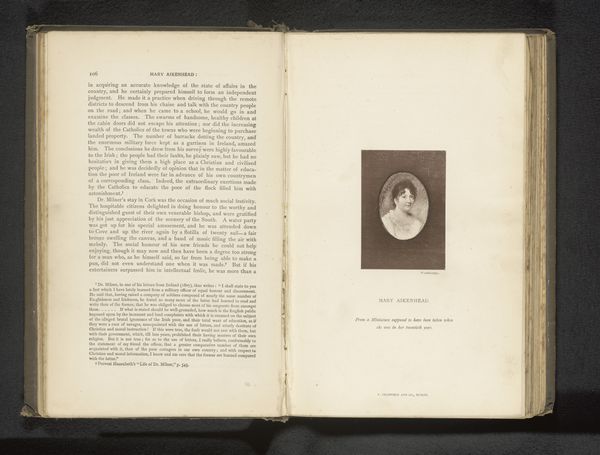
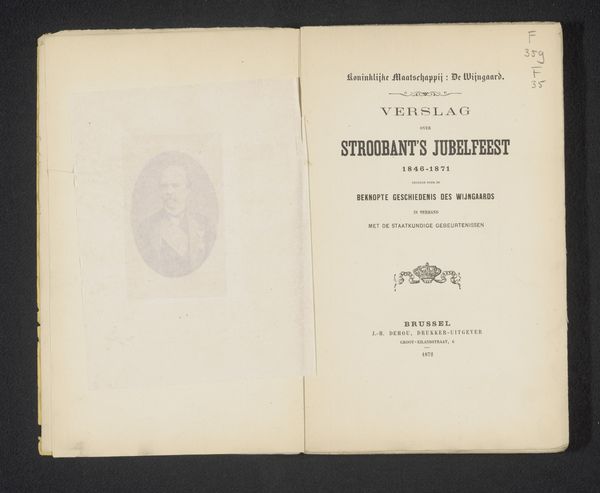
Curator: This image presents us with a book opened to reveal both a drawn portrait and the title page. The book itself, titled "Sinai Photographed", features a reproduction of a portrait of Reverend Charles Forster by George Richmond, likely created before 1862. Editor: The image has a starkness to it, doesn't it? The contrast between the crisp black text and the soft rendering of the portrait feels almost…clinical. It’s a very direct presentation, but also quite reserved. Curator: That reserve speaks to the era and function, I think. It's a photograph *of* a reproduction – layers of remove already. Consider that Forster, an Anglican clergyman, dedicated himself to deciphering the Sinaitic inscriptions. Editor: So the book served as a record of his work, then. Richmond's portrait, re-photographed, lends him a visual authority. It certainly conveys respectability, a visual reassurance of his character for his readership. Did the original drawing have this quality? Curator: I imagine so. Richmond was a highly sought-after portraitist. What interests me is the careful placement of Forster’s likeness alongside the title. Note that, while seemingly objective, photography in this period could still be manipulated to create desired impressions. The act of reproduction and placement is deliberate. Editor: The placement is significant. I keep wondering about the "why" of this reproduction and not an original photograph of the Reverend, which would have been readily available at the time. Perhaps a drawing conveyed more…gravitas? More…sanctity? The printed portrait becomes a kind of icon of Forster’s intellect and piety within the book itself. Curator: Yes, drawing carries inherent symbolic weight as the direct, tangible work of the artist's hand. The printing then spreads that association widely, imbuing Forster and his ideas with Richmond's artistic credibility and impact. This echoes throughout other religious printed materials, like icons printed in bibles, lending that sacred air. Editor: It does make one consider the politics embedded within imagery and publishing itself – whose image is circulated, and how. We get a real sense of the values that were being promoted and preserved in that time, in that way. Curator: Precisely, these subtle visual decisions reveal a great deal about how individuals and their ideas were received and promoted through print culture. Editor: Absolutely, it opens up lines of inquiry regarding religious and social identities and how they’re manufactured for public consumption, making this simple image far from passive.
Comments
No comments
Be the first to comment and join the conversation on the ultimate creative platform.
 Collect
 React
React Comment
More like this