550
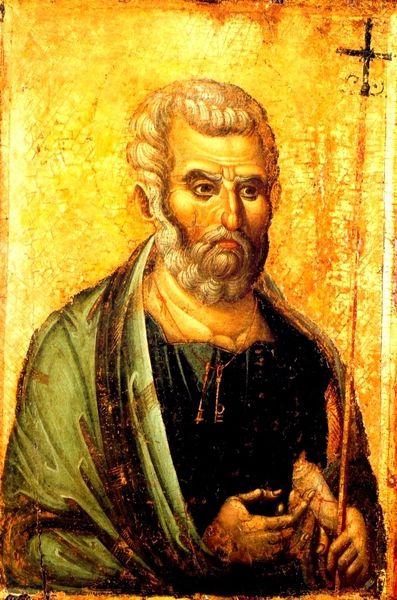
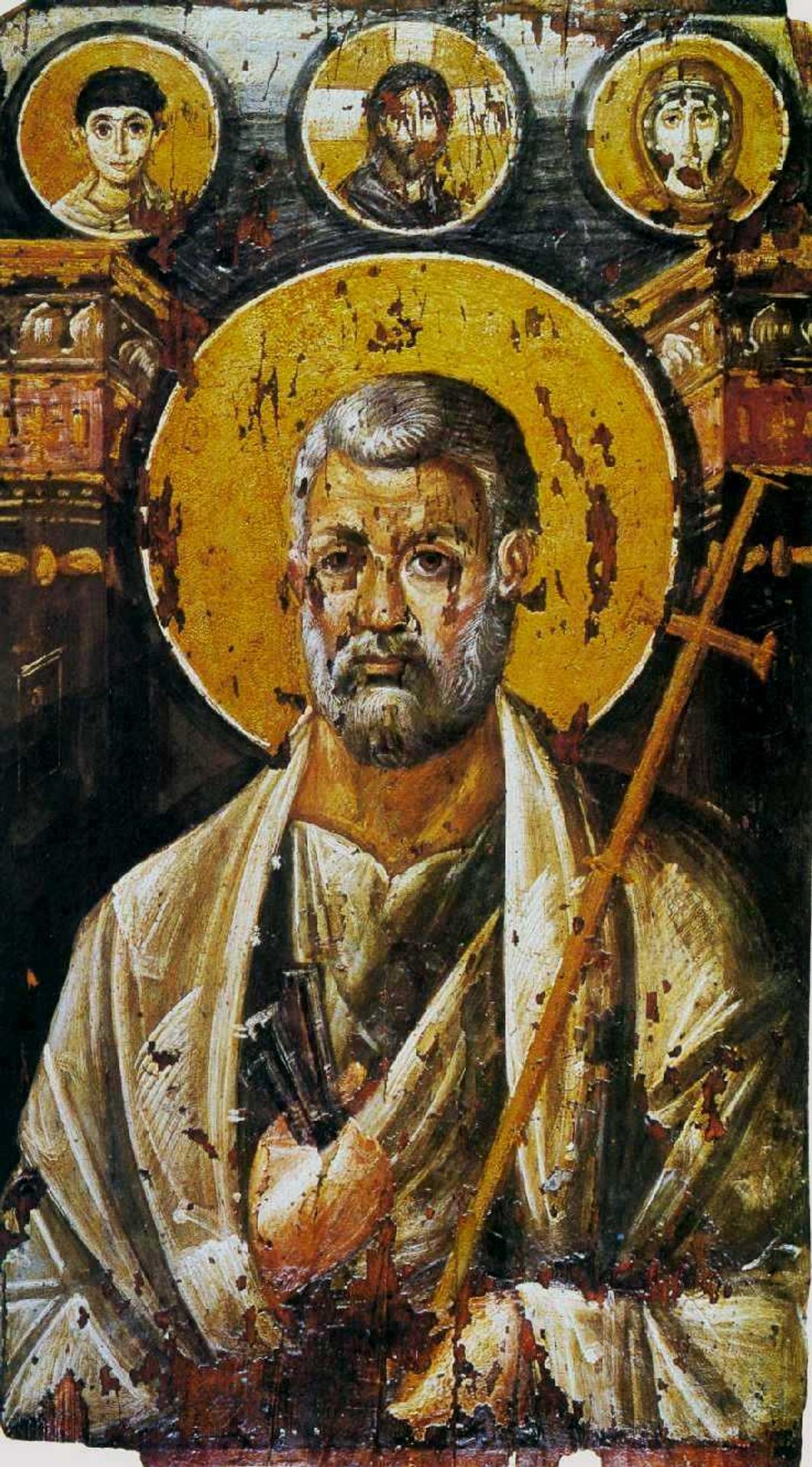
Saint Peter

Orthodox Icons
@orthodoxiconsLocation
Saint Catherine's Monastery, Mount Sinai, EgyptListen to curator's interpretation
Curatorial notes
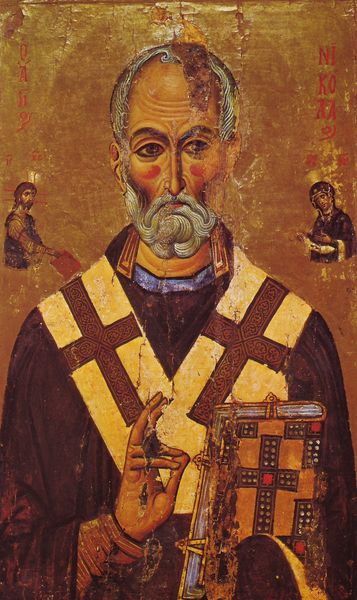
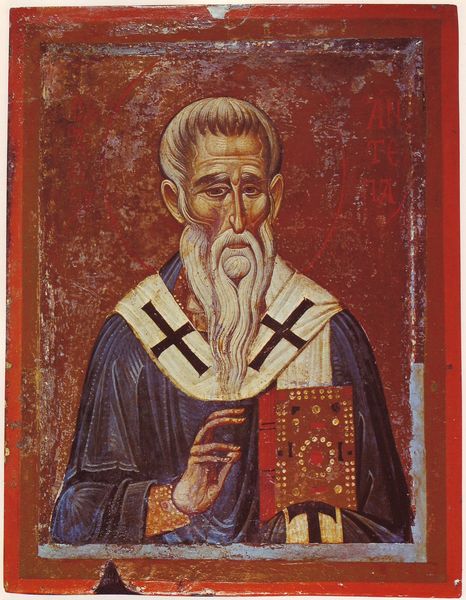
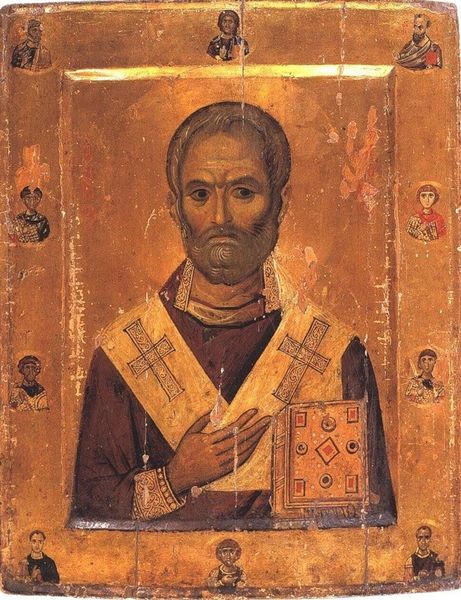
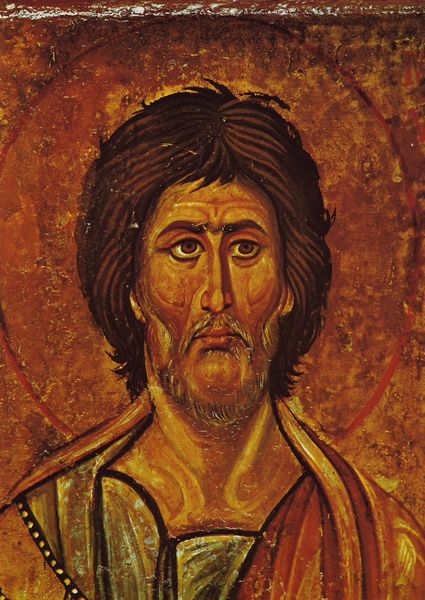
Editor: Here we have "Saint Peter," a tempera painting from around 550, found at Saint Catherine's Monastery. There's something so arresting about his gaze, it feels very direct, even across centuries. What strikes you most about this Byzantine icon? Curator: It's funny you mention the gaze. He's staring right through us, isn't he? As if he knows all our secrets and forgives them anyway! For me, it’s the layers. You have Saint Peter himself, imposing, but then look closer, above him. Those smaller figures—almost like memories or foreshadowing. Does that resonate with you? Editor: I hadn't really noticed them at first! Now I see, it almost tells a story within the portrait itself. Like glimpses into his past and future. Curator: Exactly! It's that blending of the earthly and the divine that Byzantine art does so well. And consider the location. Hidden away in a monastery for centuries. Who was meant to see this, and why? It makes you wonder about the stories it’s silently witnessed. Editor: So, it's less about a singular artistic vision, and more a reflection of a deeply held communal faith and its historical journey? Curator: Precisely! Each brushstroke is a prayer, a piece of history, a whispered secret from the desert. Don’t you think that’s part of its enduring power? Editor: Definitely! It makes the image so much more meaningful now. I won't be able to look at an icon the same way again. Curator: Isn't that wonderful? That’s the power of art; to reshape the way we see the world and each other.