
Curatorial notes
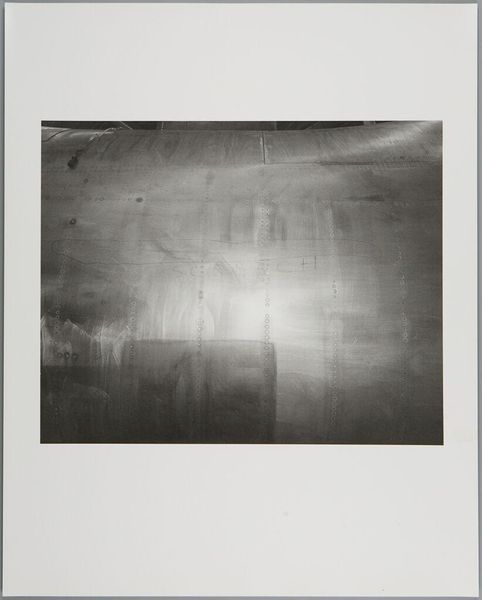
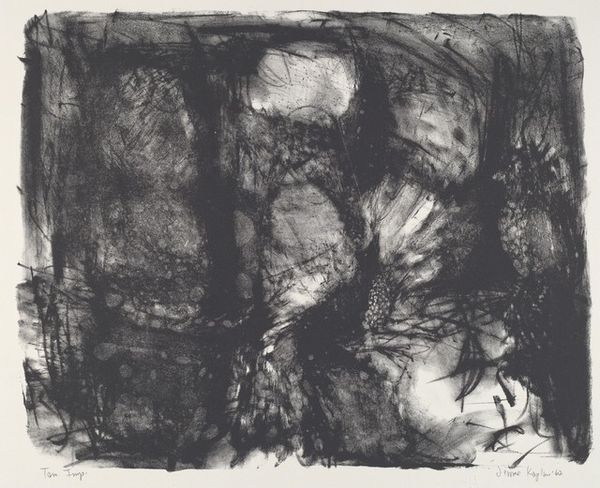
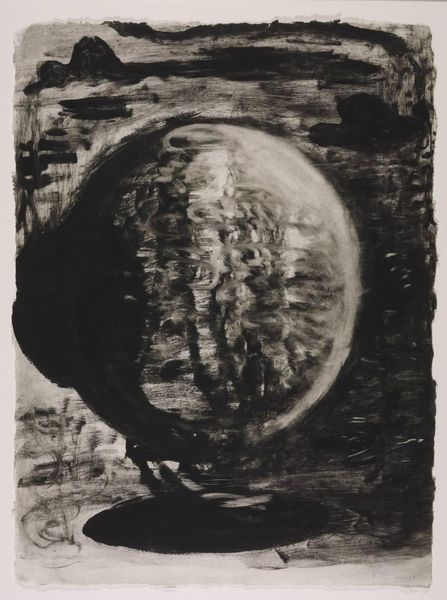
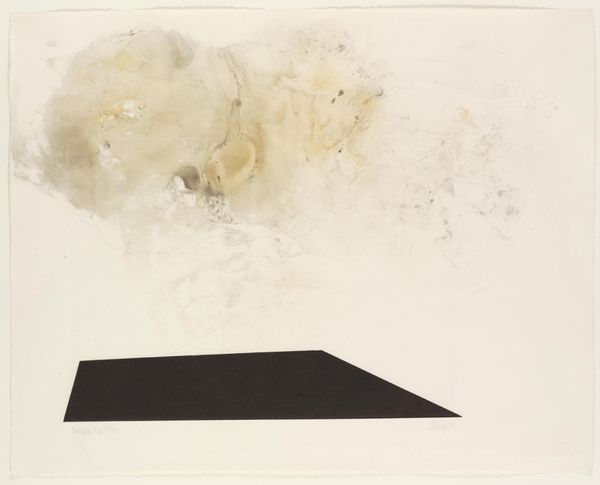
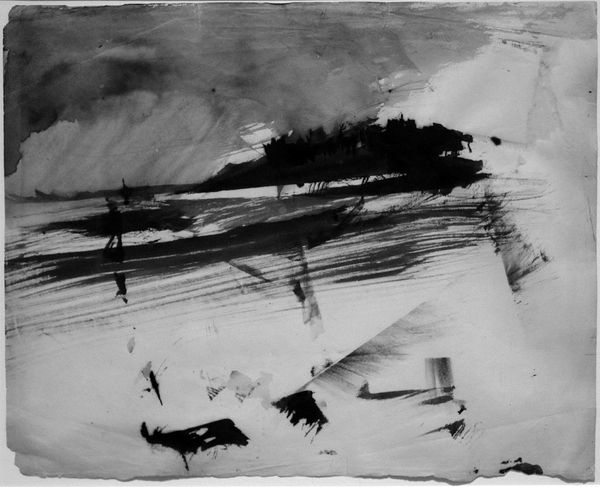
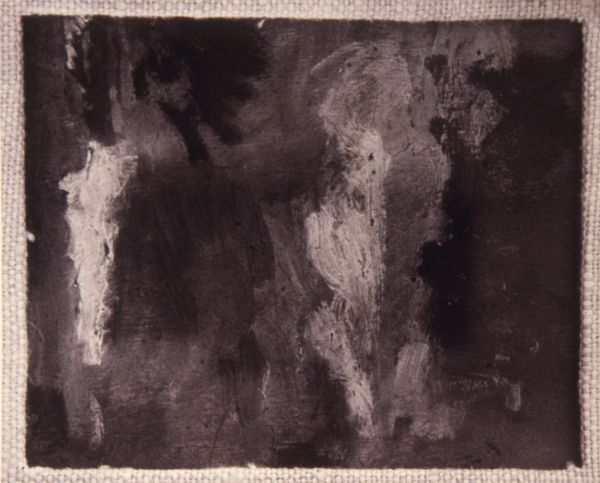
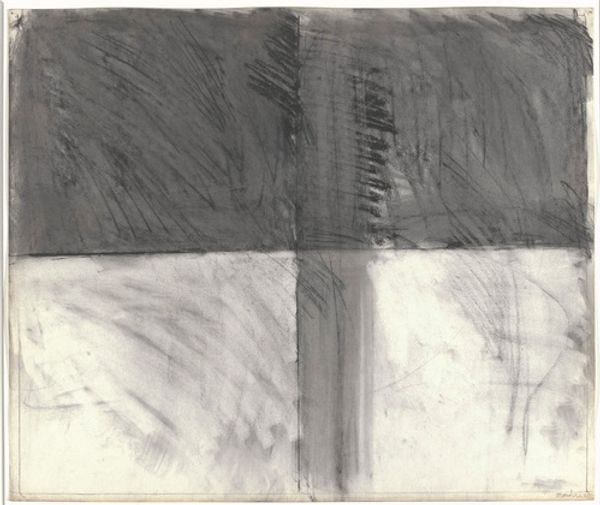
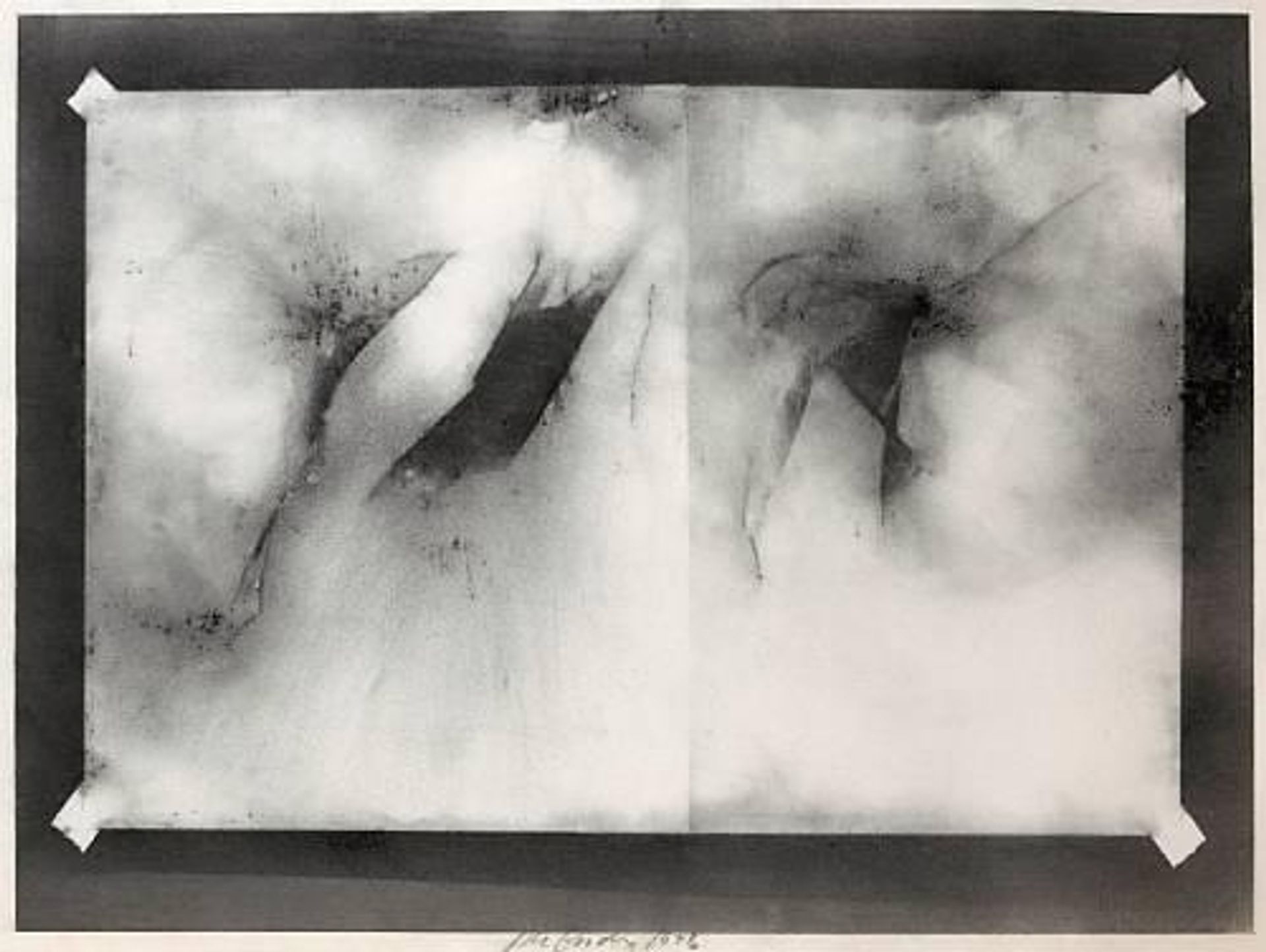
Editor: Here we have Joe Goode's "X-Ray Drawing 14" from 1976. It’s a mixed-media piece combining drawing, graphite, charcoal, and even photography on paper. It gives me a sense of ambiguity because of the blending of dark and light areas. How do you approach such an abstract piece? Curator: One can appreciate how Goode manipulates grayscale values to create dynamic spatial relationships within the picture plane. Consider the paper itself. Notice how the edges are seemingly taped to a surface, establishing an interplay between the represented space and the physical support. The taped corners remind us that we are looking at a depiction of something, not something itself. Editor: That's an interesting point, framing affects my viewing of the content. Do you think that Goode employs monochrome to better exemplify form and texture? Curator: Precisely. The restricted palette allows us to concentrate on the subtleties of the mark-making. The artist deploys charcoal and graphite to define form, as one might with preparatory sketches in life-drawing classes. Observe the contrasting use of blurred, hazy forms versus the sharply defined geometric shapes in black. Does the artist suggest a layering of the intangible on the definite? Editor: Possibly! Looking again, I see it is really about the tension of opposites—the definite with the indistinct. I wouldn’t have picked up on all of that on my own! Curator: By studying these formal aspects, a richer dialogue between artwork and observer can develop, irrespective of time and place. Hopefully, this analytical approach sparks ideas for viewers as they engage with it.