Possibly 1847
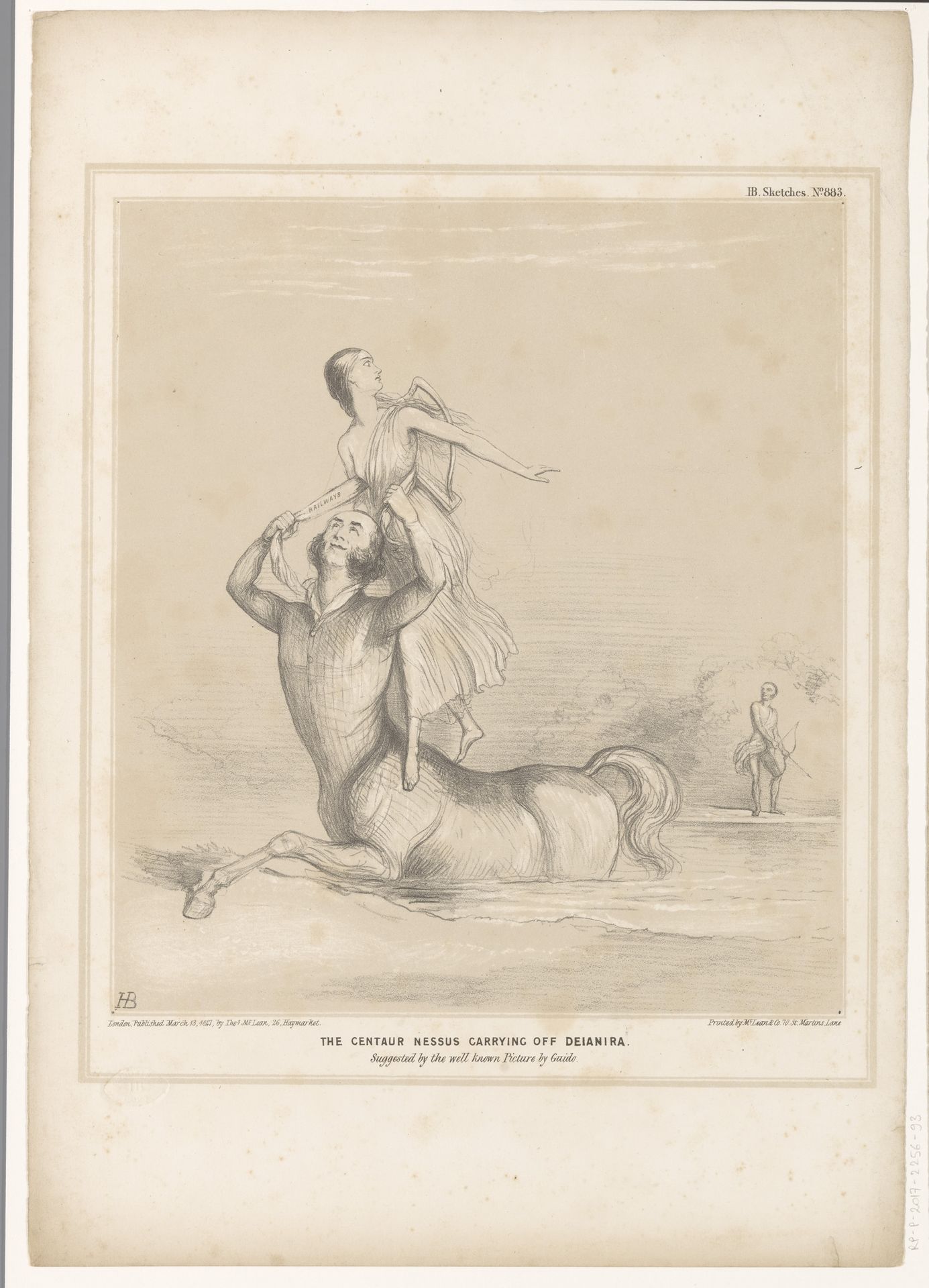
Spotprent met Lord Bentinck als de centaur Nessus

John Doyle
1797 - 1868Location
RijksmuseumListen to curator's interpretation
Curatorial notes
This print, by John Doyle, depicts Lord Bentinck as the centaur Nessus. We see the iconic scene of Nessus carrying Deianira, his gaze full of lust, while Hercules stands on the shore, ready to strike. The centaur, a being half-man and half-horse, is a symbol deeply rooted in mythology, embodying the duality of human and animal nature. In ancient Greece, centaurs like Nessus were often associated with wildness and untamed passions. Yet, here, the centaur becomes a vehicle for political satire. Doyle uses this well-known mythological trope to comment on Bentinck's political actions. The abduction motif, as seen here, echoes throughout art history, from ancient friezes to Renaissance paintings. It speaks to the timeless themes of desire, power, and betrayal, engaging viewers on a subconscious level with its potent emotional charge. The centaur's lustful gaze and the woman's fearful pose tap into primal instincts, revealing the enduring power of such images across cultures. In essence, this print illustrates how classical motifs are never truly lost. They resurface, evolve, and take on new meanings, reflecting the cyclical nature of cultural memory.