Possibly 1775
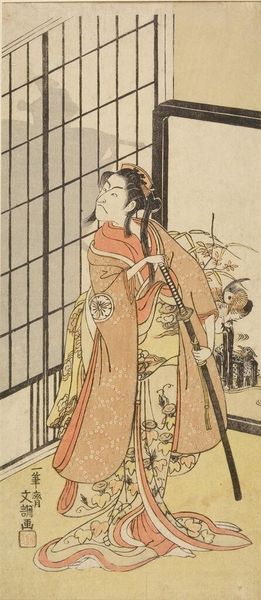
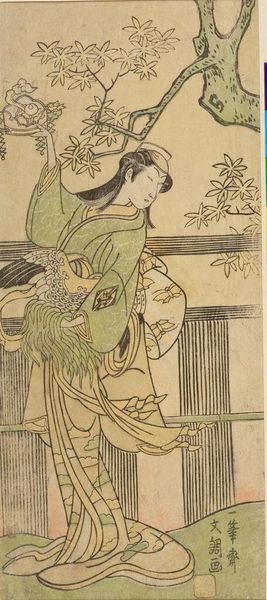
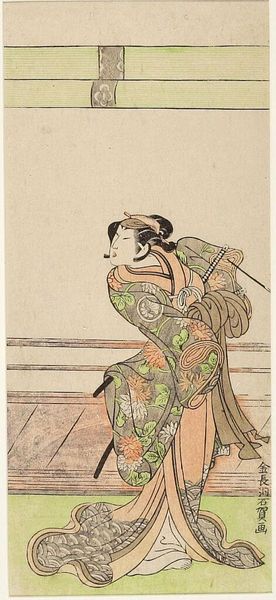
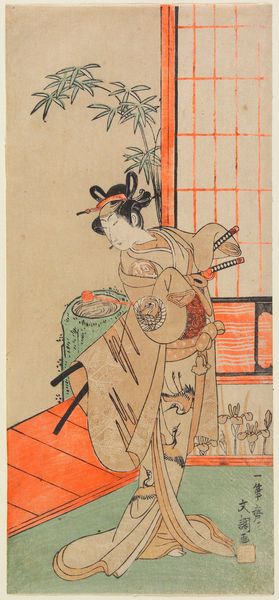
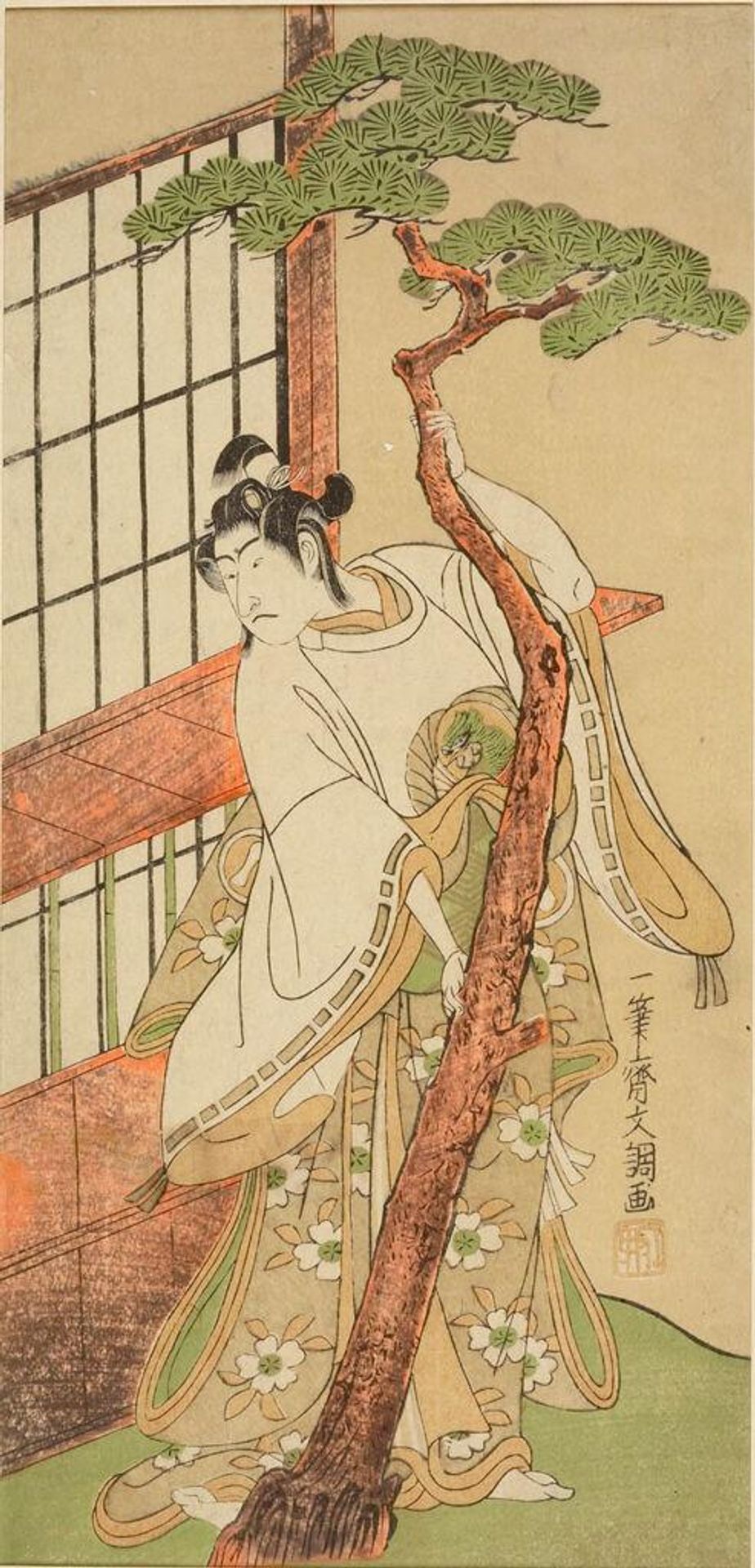
Actor Ichikawa Monnosuke 2nd as Tsunewakamaru in the play Iro MoyÅ Aoyagi Soga performed at the Nakamura Theater from the second month of 1775


Listen to curator's interpretation
Curatorial notes
Editor: This striking woodblock print by Ippitsusai Bunchō depicts the actor Ichikawa Monnosuke as Tsunewakamaru. The play was performed in 1775. I’m immediately drawn to the contrast between the detailed costume and the simple, almost bare tree. What can you tell me about the significance of Kabuki actors in Japanese art? Curator: These prints, known as *yakusha-e*, were immensely popular. They functioned as publicity, celebrating the actors as celebrities. Consider the role of celebrity culture in shaping artistic trends. Editor: So, this wasn't just art for art's sake? Curator: Precisely. It's deeply intertwined with social and theatrical history. The art world and celebrity culture were connected even then. Editor: That's fascinating. I never thought about it that way.