before 1858
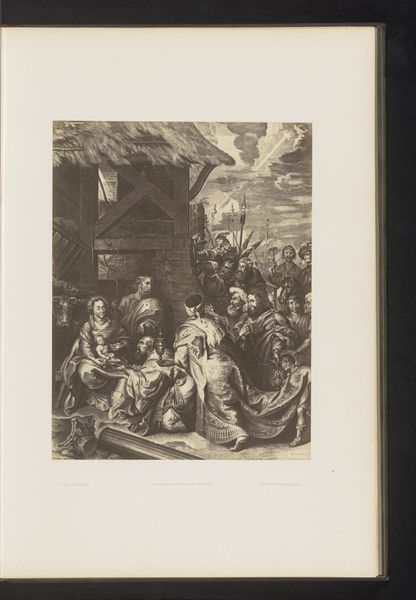
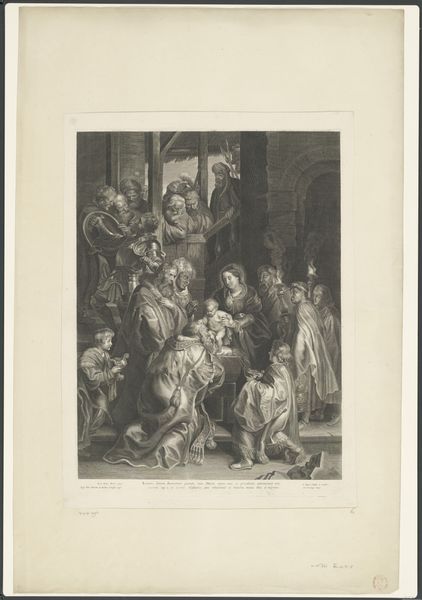
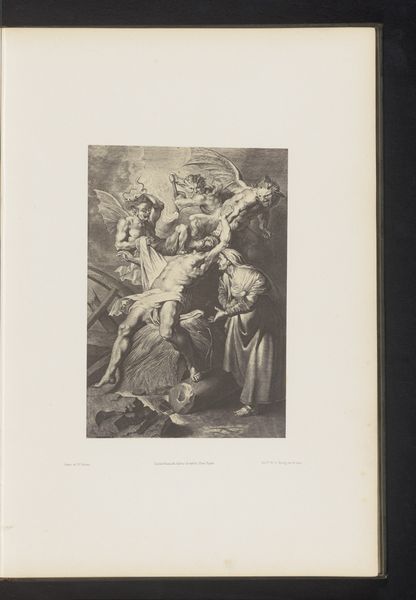
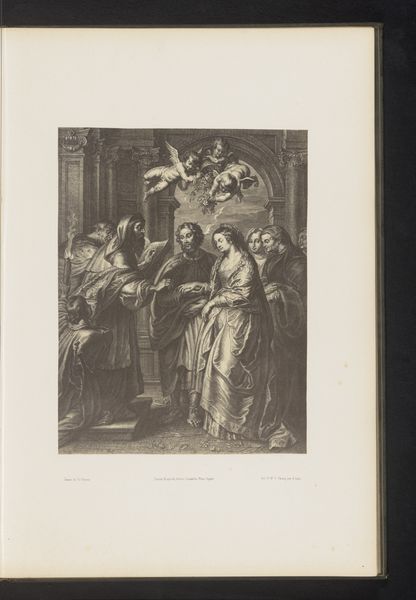
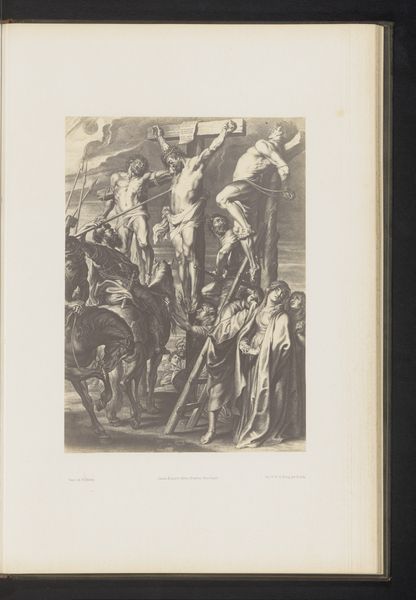
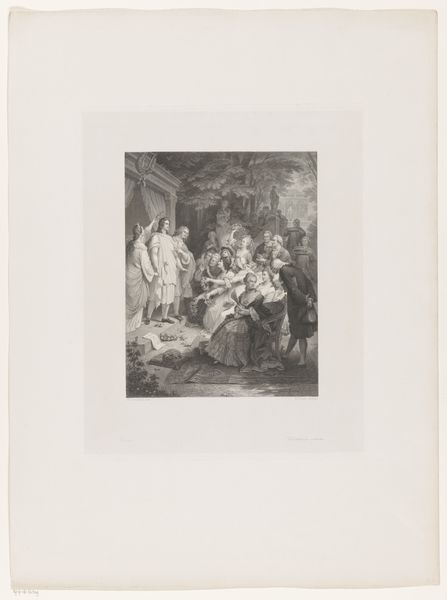
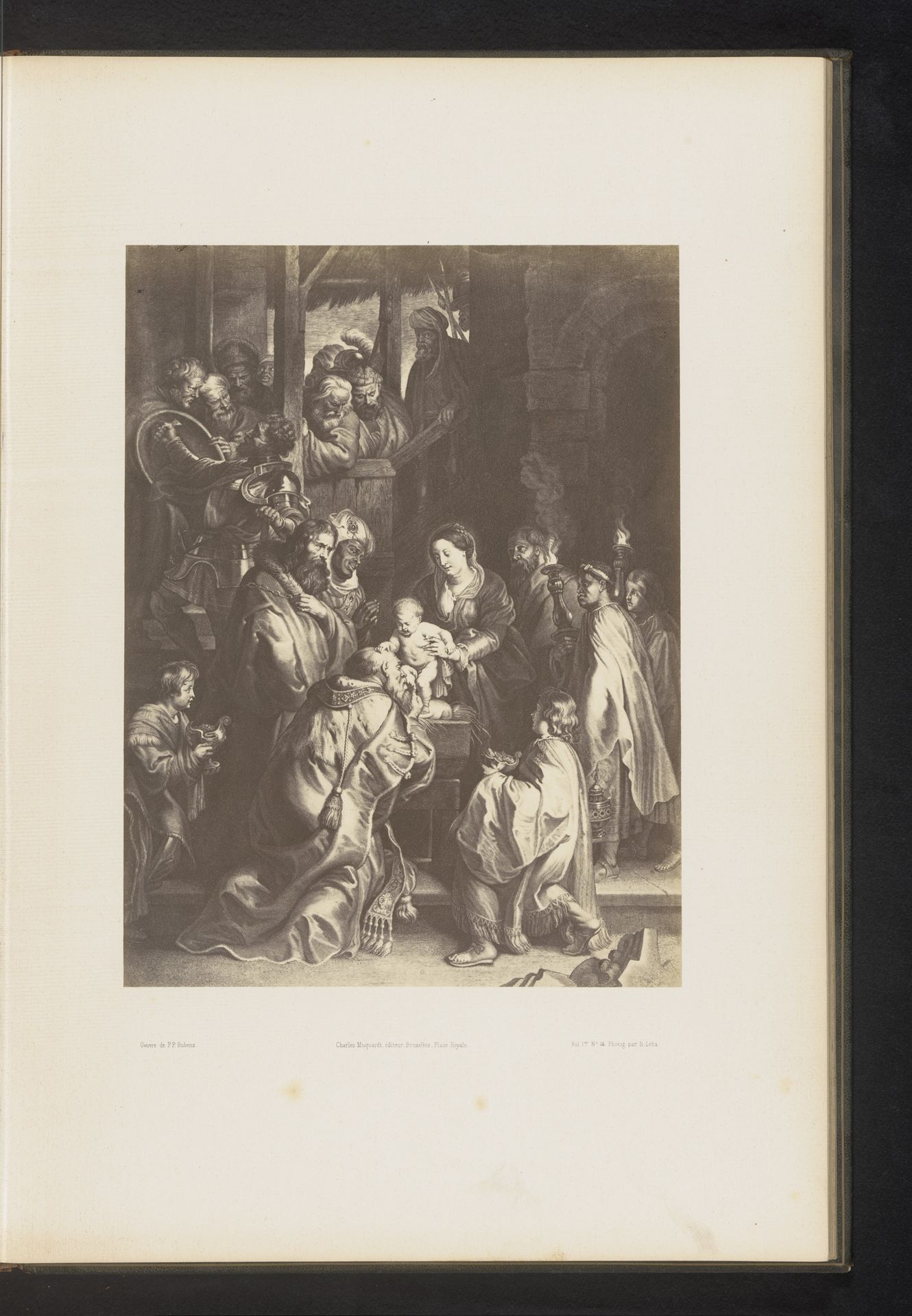
Fotoreproductie van een gravure van de Aanbidding door de koningen door Nicolaes Lauwers, naar het schilderij door Peter Paul Rubens

Listen to curator's interpretation
Curatorial notes
This is Jean Louis Bargignac's reproduction of Nicolaes Lauwers' engraving, after Peter Paul Rubens’ depiction of 'The Adoration of the Kings.' The act of kneeling, front and center, before the infant Jesus is the dominant symbol here. Kneeling speaks of reverence, humility, and submission before the divine. This posture isn't unique to Christianity; we see it echoed in ancient Egyptian art, where pharaohs kneel before their gods, and in depictions of Roman emperors receiving homage. It expresses a deep-seated human need to acknowledge a higher power. Over time, the gesture evolves, shifting from religious to secular contexts, and then back again. In the Renaissance, kneeling appears in portraits, signaling fealty and social hierarchy. The emotional resonance is palpable, engaging viewers on a subconscious level. The symbolic language echoes through the centuries, each repetition adding layers of meaning. It resurfaces, evolves, and takes on new meanings in different historical contexts, its emotional power undiminished.