About this artwork
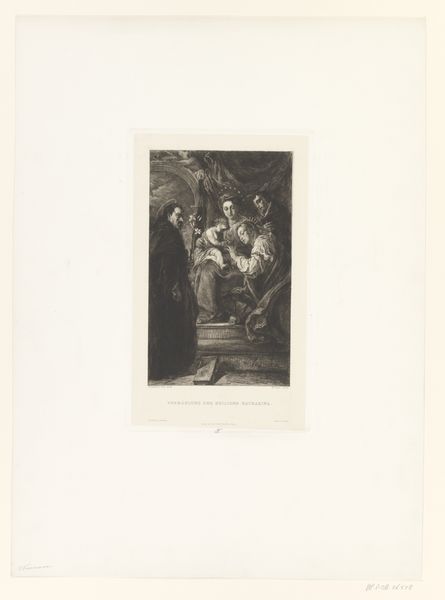
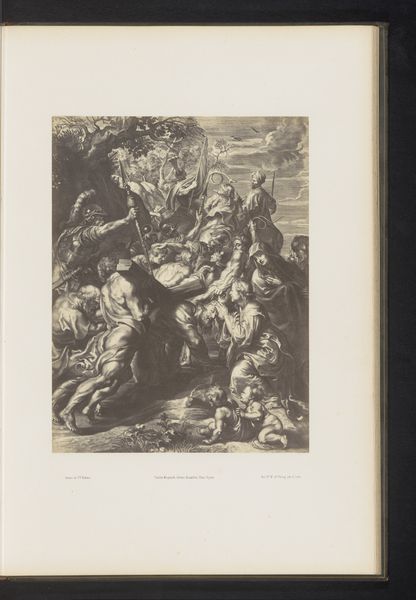
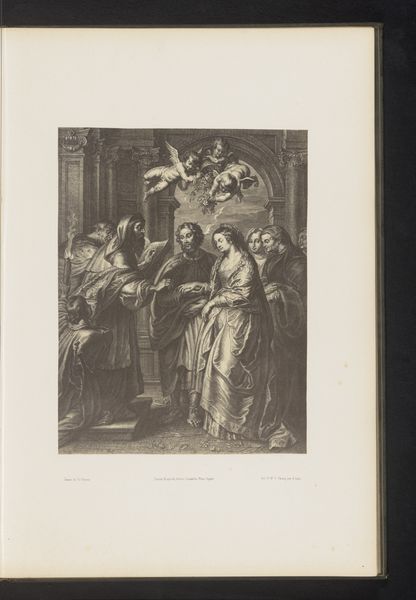
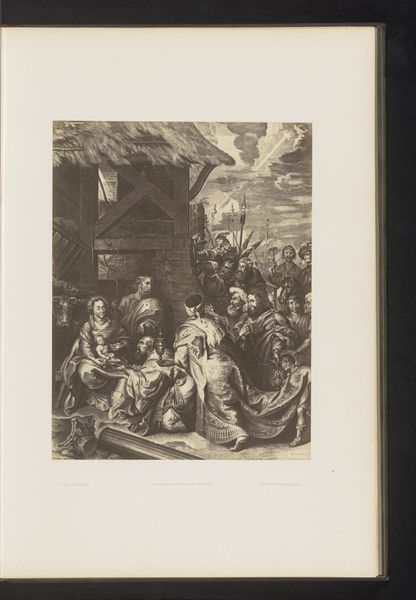
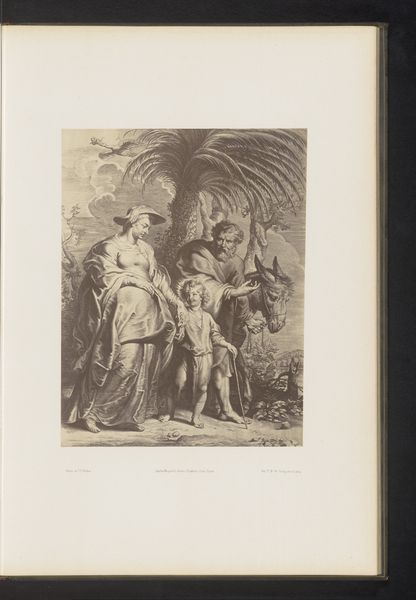
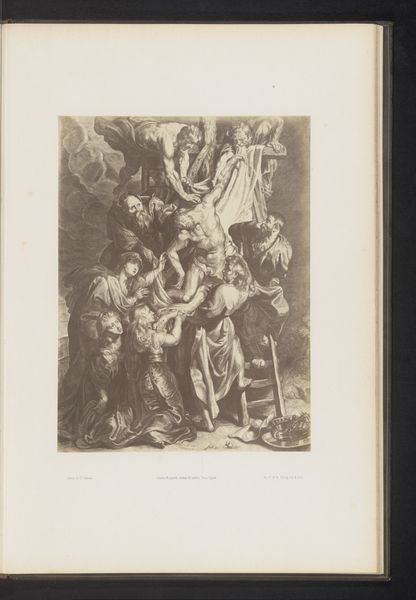
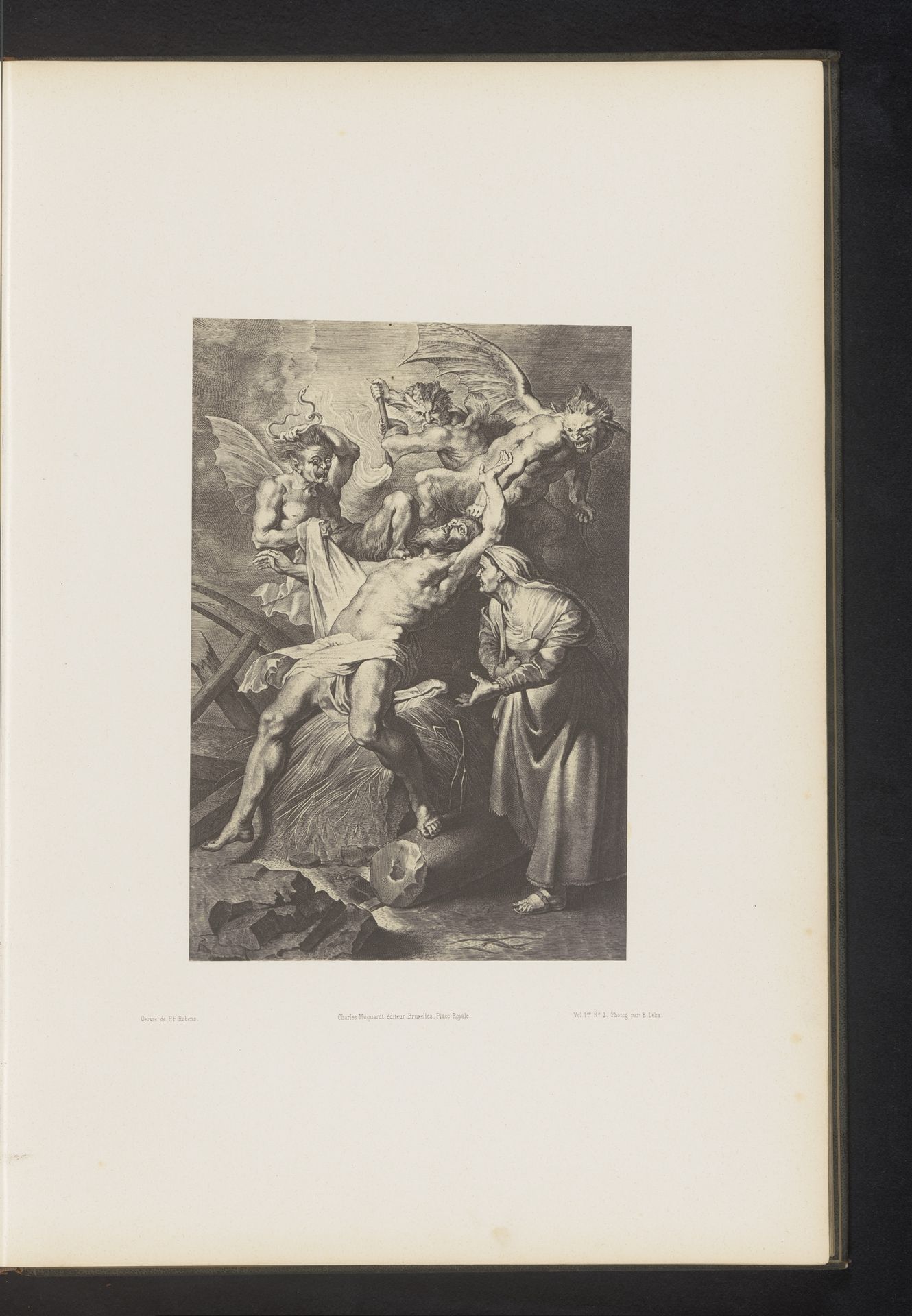
Jean Louis Bargignac created this photogravure, of an engraving by Lucas Vorsterman after Peter Paul Rubens' painting, sometime in the mid-19th century. The composition immediately draws the eye to the tormented figure of Job, his body a study in contrasts of light and shadow. The scene is structured around the interplay of diagonals and curves, creating a dynamic yet unsettling tableau. Job's suffering is made palpable through the meticulous rendering of his strained muscles and anguished expression. The ethereal figures of the devils above Job introduce a dramatic tension, their grotesque forms a stark counterpoint to the relative serenity of Job's wife. It functions as a semiotic field where the classical and the baroque collide. The viewer is challenged to reconcile the formal beauty of the composition with the raw emotional content it conveys. The artwork invites us to reconsider the boundaries between suffering and aesthetics, challenging fixed interpretations of morality and divine justice.
Fotoreproductie van een gravure van Job gekweld door zijn vrouw en duivels door Lucas Vorsterman, naar het schilderij door Peter Paul Rubens
before 1858

Artwork details
- Dimensions
- height 269 mm, width 183 mm
- Copyright
- Rijks Museum: Open Domain
Comments
Share your thoughts
About this artwork
Jean Louis Bargignac created this photogravure, of an engraving by Lucas Vorsterman after Peter Paul Rubens' painting, sometime in the mid-19th century. The composition immediately draws the eye to the tormented figure of Job, his body a study in contrasts of light and shadow. The scene is structured around the interplay of diagonals and curves, creating a dynamic yet unsettling tableau. Job's suffering is made palpable through the meticulous rendering of his strained muscles and anguished expression. The ethereal figures of the devils above Job introduce a dramatic tension, their grotesque forms a stark counterpoint to the relative serenity of Job's wife. It functions as a semiotic field where the classical and the baroque collide. The viewer is challenged to reconcile the formal beauty of the composition with the raw emotional content it conveys. The artwork invites us to reconsider the boundaries between suffering and aesthetics, challenging fixed interpretations of morality and divine justice.
Comments
Share your thoughts