About this artwork
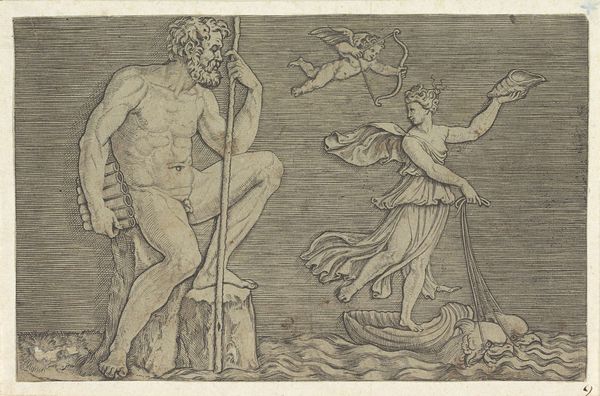
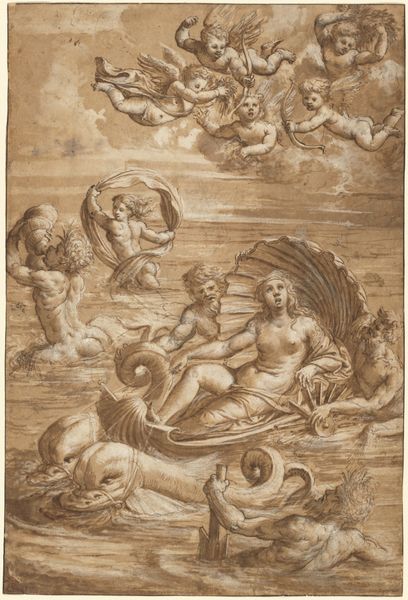
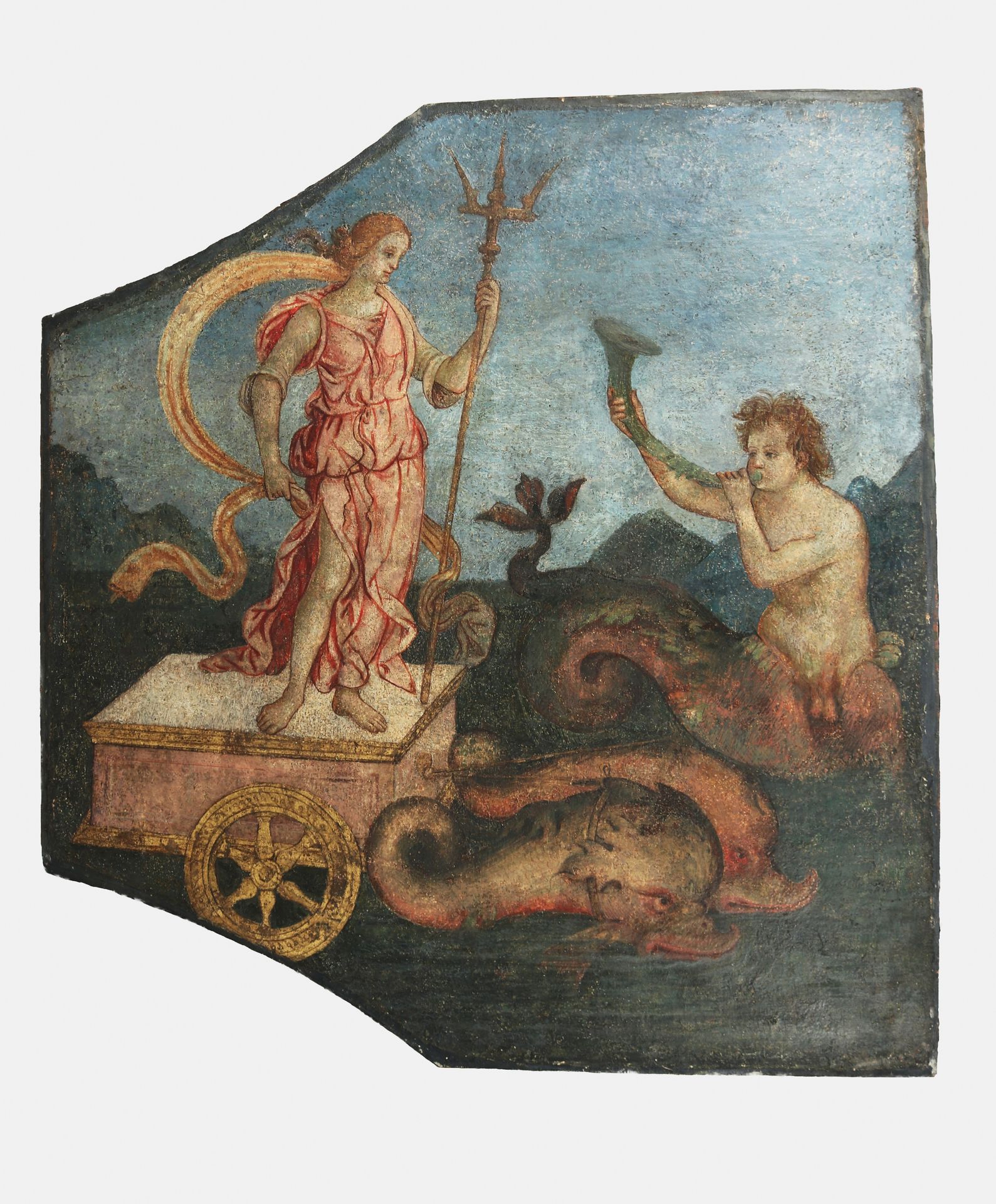
Pinturicchio painted this panel of "The Triumph of Amphitrite" in the late 15th century, during the Italian Renaissance. The depiction of Amphitrite, a sea goddess from Greek mythology, wasn't merely decorative. It reflected a broader cultural interest of the time: a revival of classical antiquity. The image creates meaning through visual codes. The goddess is idealized, and the image connects to historical associations of classical mythology. The sea god blowing a conch shell is a visual motif that would have resonated with the educated elite, who would have been familiar with classical literature and art. Paintings of mythological figures in Renaissance Italy often served as allegories for virtues or political ideals. The image may have been commissioned by a wealthy patron to celebrate a marriage or to symbolize their power and influence. Further research into the social and institutional context of Renaissance art can illuminate the specific meanings and purposes behind such works. The interpretation of art is always contingent on its social and institutional context.
Triumph of Amphitrite
1504 - 1514


Artwork details
- Medium
- painting, oil-paint, sculpture
- Dimensions
- Overall: 30 1/2 × 28 in. (77.5 × 71.1 cm)
- Location
- Metropolitan Museum of Art, New York, NY
- Copyright
- Public Domain
Tags
Comments
Share your thoughts
About this artwork
Pinturicchio painted this panel of "The Triumph of Amphitrite" in the late 15th century, during the Italian Renaissance. The depiction of Amphitrite, a sea goddess from Greek mythology, wasn't merely decorative. It reflected a broader cultural interest of the time: a revival of classical antiquity. The image creates meaning through visual codes. The goddess is idealized, and the image connects to historical associations of classical mythology. The sea god blowing a conch shell is a visual motif that would have resonated with the educated elite, who would have been familiar with classical literature and art. Paintings of mythological figures in Renaissance Italy often served as allegories for virtues or political ideals. The image may have been commissioned by a wealthy patron to celebrate a marriage or to symbolize their power and influence. Further research into the social and institutional context of Renaissance art can illuminate the specific meanings and purposes behind such works. The interpretation of art is always contingent on its social and institutional context.
Comments
Share your thoughts