About this artwork
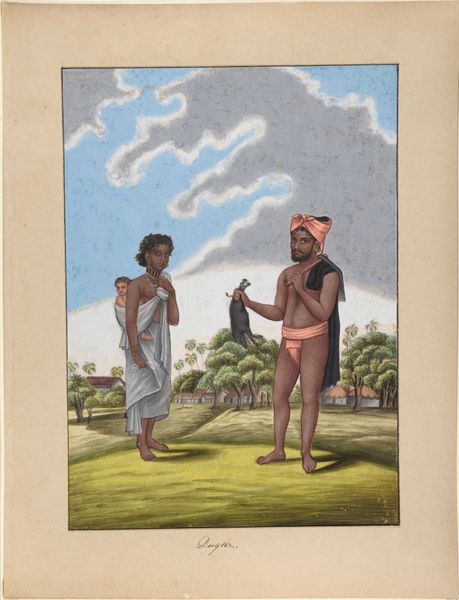
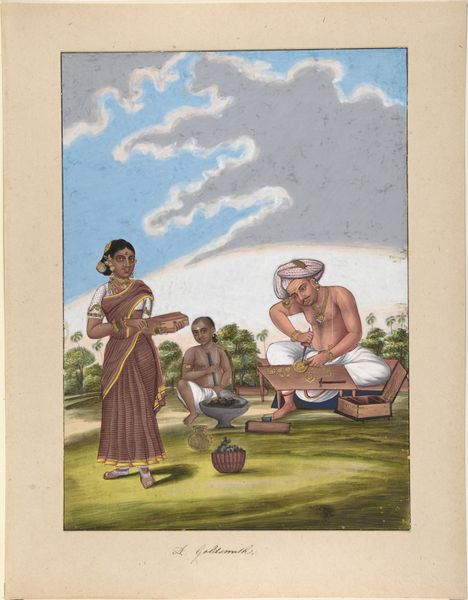
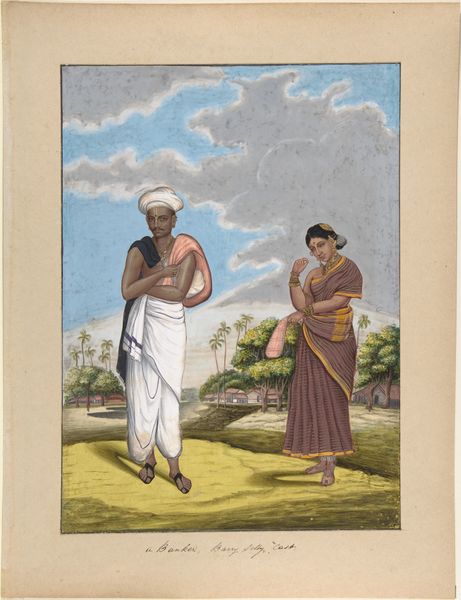
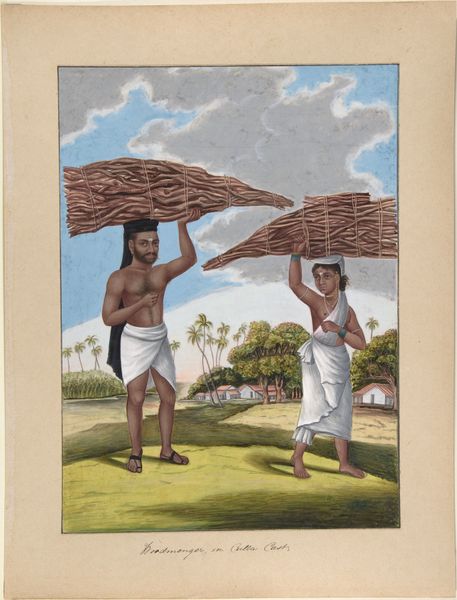
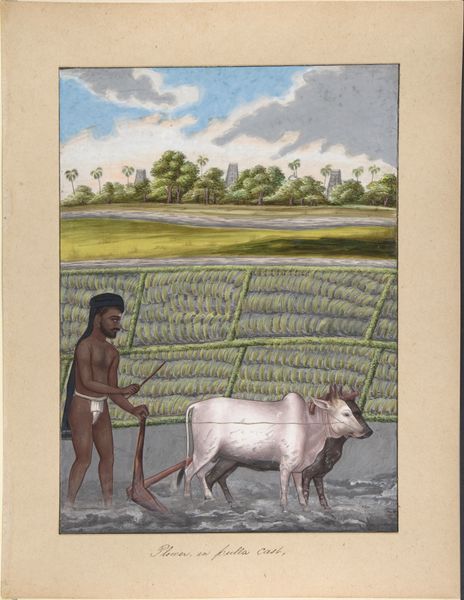
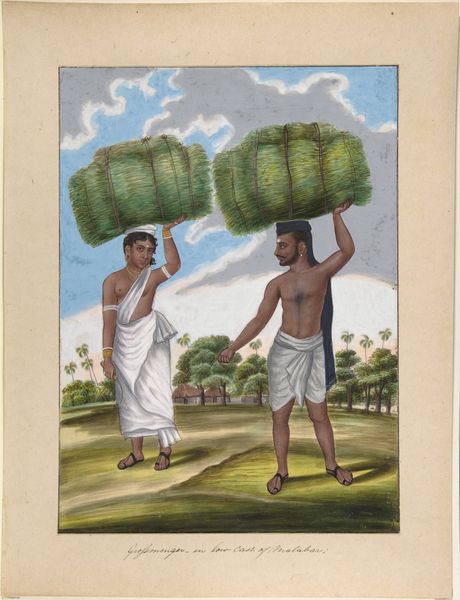
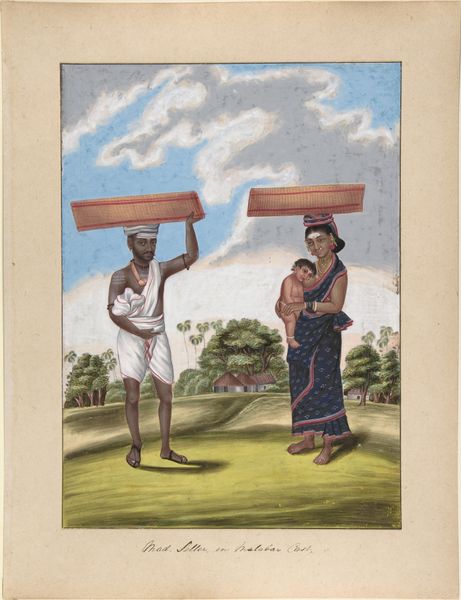
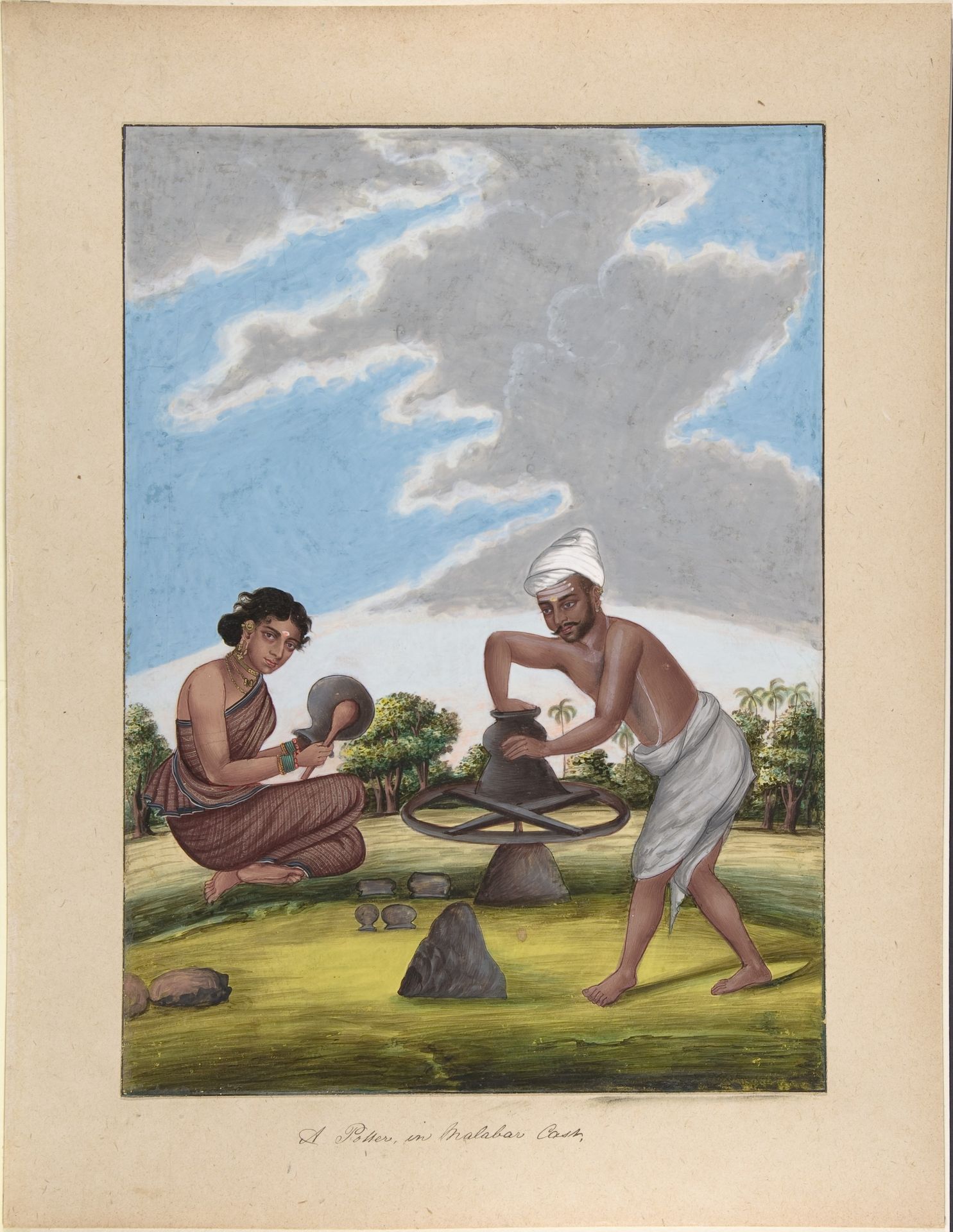
This watercolor painting titled 'A Potter in Balabar Cast' is from an album called ‘Indian Trades and Castes’. It was created by an anonymous artist. It offers a glimpse into the intricate social hierarchies of 18th and 19th century India. While seemingly a straightforward depiction of labor, the image is loaded with information about caste, gender roles, and regional identities. The painting is less about the individuals and more about the social categories they represent. Notice how the man, presumably the potter, is actively engaged in physical labor. The woman is seated, holding what appears to be a tool. The portrayal subtly reinforces traditional gender roles within the community. The term "Balabar Cast" itself is a colonial construct, reflecting the British gaze and their attempt to classify Indian society. It's a reminder of how external forces can shape the perception and representation of a community, influencing both how they're seen and how they see themselves. The painting invites us to consider the complexities of identity, labor, and representation within a specific historical and cultural context.
A Potter in Balabar Cast, from Indian Trades and Castes
1835 - 1845


Artwork details
- Medium
- drawing
- Dimensions
- sheet: 14 3/8 x 10 3/8 in. (36.5 x 26.4 cm) mount: 18 1/4 x 14 1/4 in. (46.4 x 36.2 cm)
- Location
- Metropolitan Museum of Art, New York, NY
- Copyright
- Public Domain
Tags
Comments
Share your thoughts
About this artwork
This watercolor painting titled 'A Potter in Balabar Cast' is from an album called ‘Indian Trades and Castes’. It was created by an anonymous artist. It offers a glimpse into the intricate social hierarchies of 18th and 19th century India. While seemingly a straightforward depiction of labor, the image is loaded with information about caste, gender roles, and regional identities. The painting is less about the individuals and more about the social categories they represent. Notice how the man, presumably the potter, is actively engaged in physical labor. The woman is seated, holding what appears to be a tool. The portrayal subtly reinforces traditional gender roles within the community. The term "Balabar Cast" itself is a colonial construct, reflecting the British gaze and their attempt to classify Indian society. It's a reminder of how external forces can shape the perception and representation of a community, influencing both how they're seen and how they see themselves. The painting invites us to consider the complexities of identity, labor, and representation within a specific historical and cultural context.
Comments
Share your thoughts