About this artwork
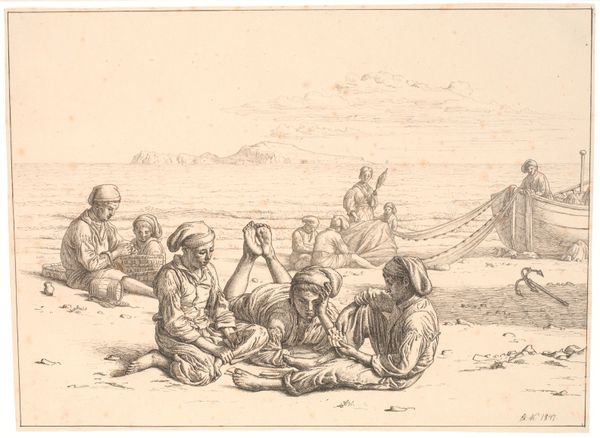
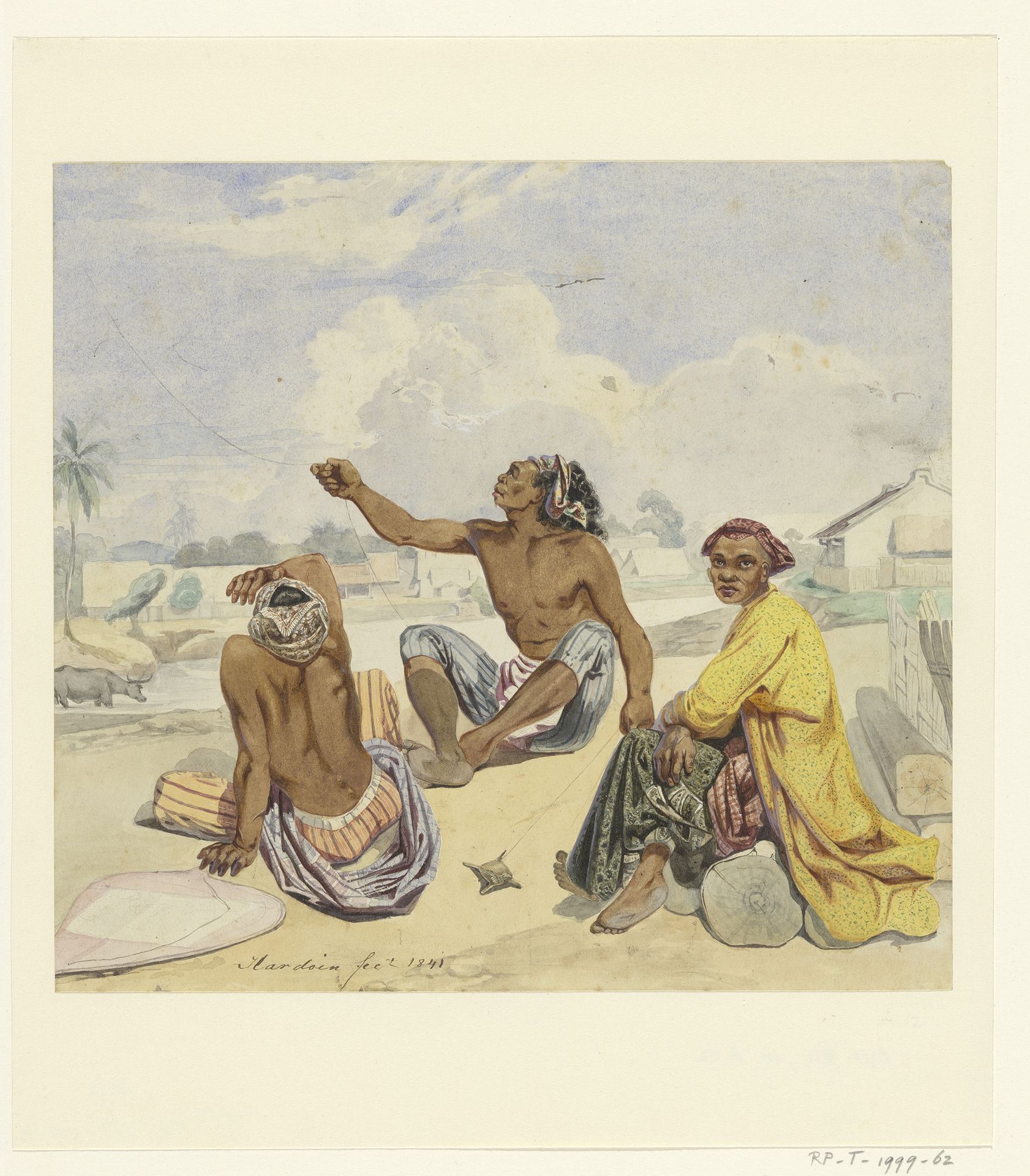
Ernest Alfred Hardouin made this watercolor titled ‘Three Seated Men by a Kali (Village)’ sometime in the 1840s. It depicts three men, presumably Indonesian villagers, relaxing by a river. This image reflects the visual codes of colonialism. The artist, a European, depicts the local population in a seemingly casual, almost ethnographic manner. The figures are shown in traditional clothing, engaged in leisure, which reinforces a narrative of the exotic ‘other’ that was prevalent in European art of this period. The very act of creating such a work underscores the power dynamic between colonizer and colonized, with the artist acting as an observer and recorder of a culture deemed different. To understand this work more fully, we need to examine colonial archives, travel literature, and studies of the Dutch East Indies. Only then can we grasp the complex interplay of power, representation, and cultural exchange that this seemingly simple watercolor embodies.
Drie zittende mannen bij een kali (dorp)
1841

Ernest Alfred Hardouin
1820 - 1853Location
RijksmuseumArtwork details
- Medium
- painting, watercolor
- Dimensions
- height 222 mm, width 240 mm
- Location
- Rijksmuseum
- Copyright
- Rijks Museum: Open Domain
Tags
Comments
Share your thoughts
About this artwork
Ernest Alfred Hardouin made this watercolor titled ‘Three Seated Men by a Kali (Village)’ sometime in the 1840s. It depicts three men, presumably Indonesian villagers, relaxing by a river. This image reflects the visual codes of colonialism. The artist, a European, depicts the local population in a seemingly casual, almost ethnographic manner. The figures are shown in traditional clothing, engaged in leisure, which reinforces a narrative of the exotic ‘other’ that was prevalent in European art of this period. The very act of creating such a work underscores the power dynamic between colonizer and colonized, with the artist acting as an observer and recorder of a culture deemed different. To understand this work more fully, we need to examine colonial archives, travel literature, and studies of the Dutch East Indies. Only then can we grasp the complex interplay of power, representation, and cultural exchange that this seemingly simple watercolor embodies.
Comments
Share your thoughts