1524 - 1527
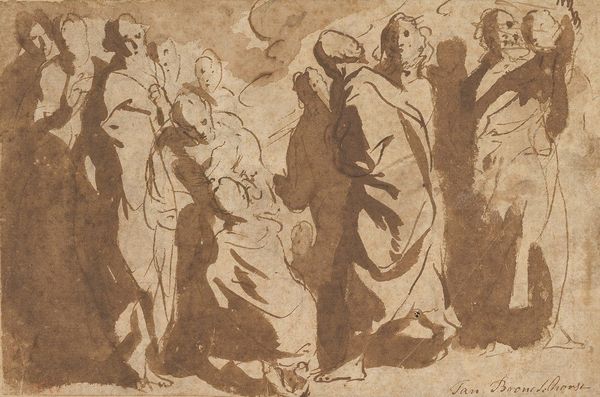
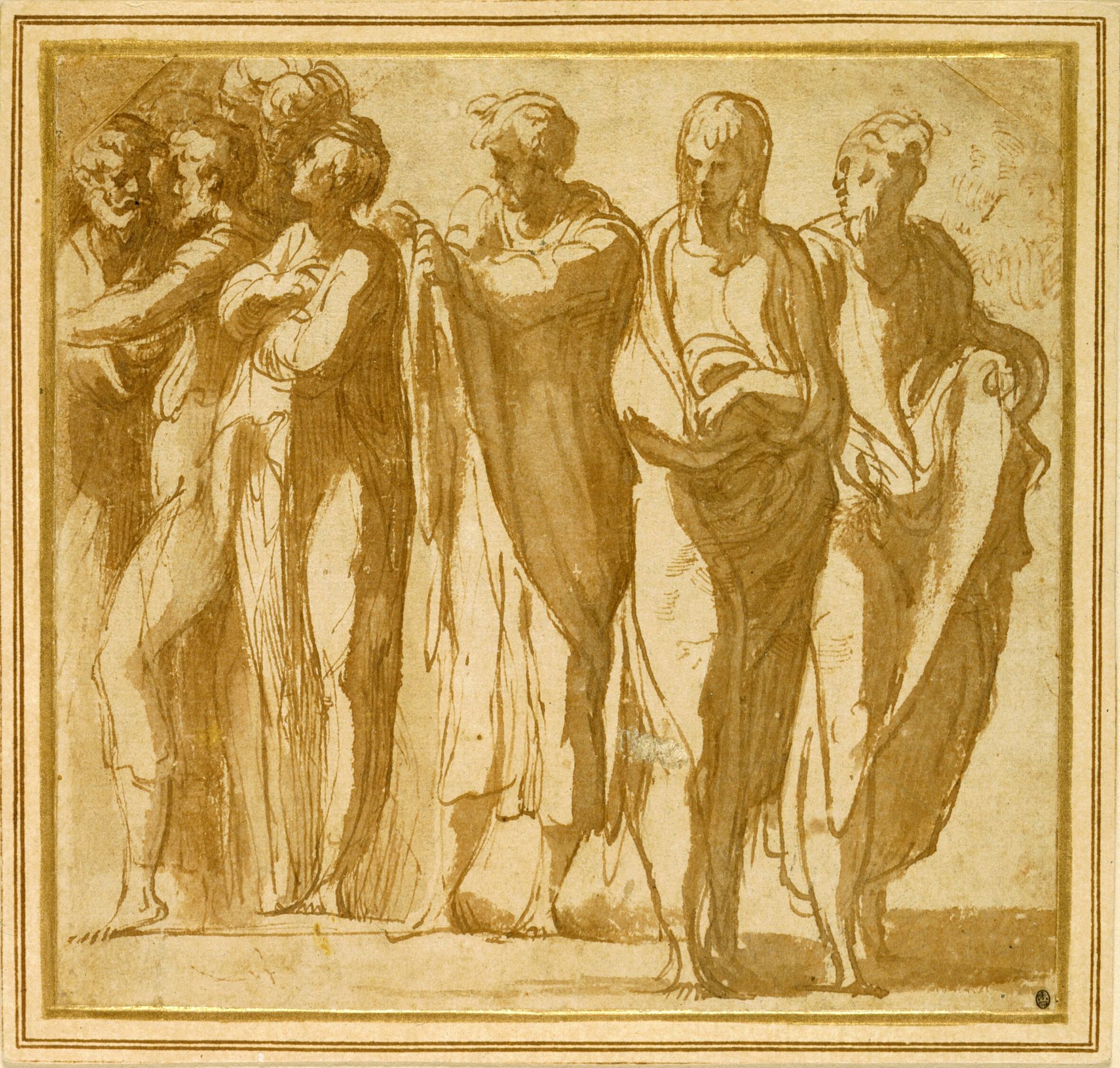
Group of Nine Standing Figures


Listen to curator's interpretation
Curatorial notes
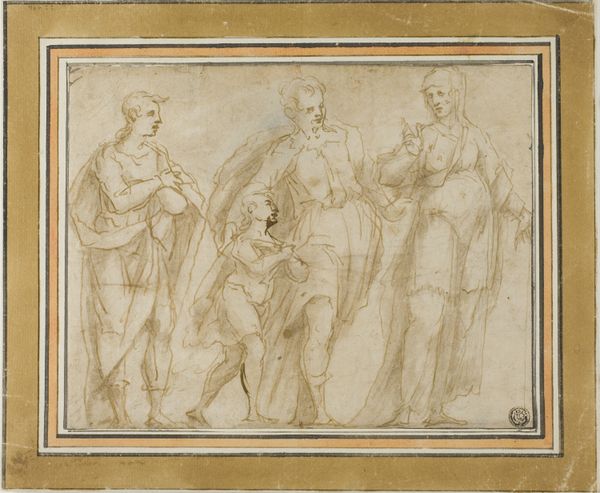
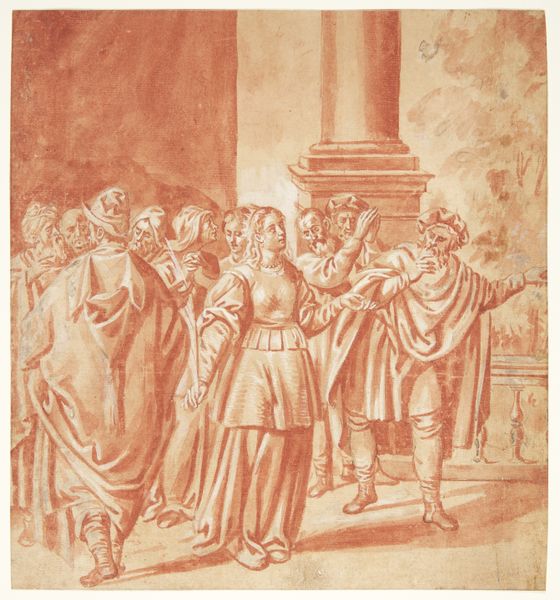
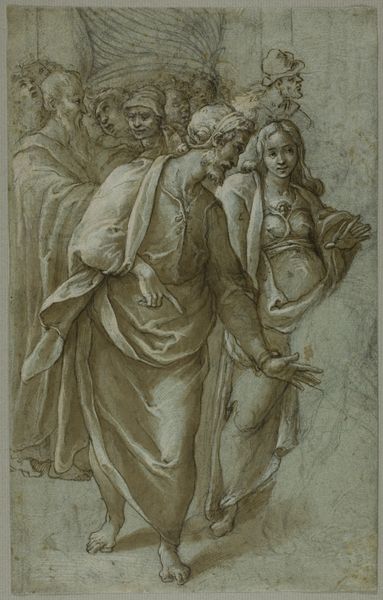
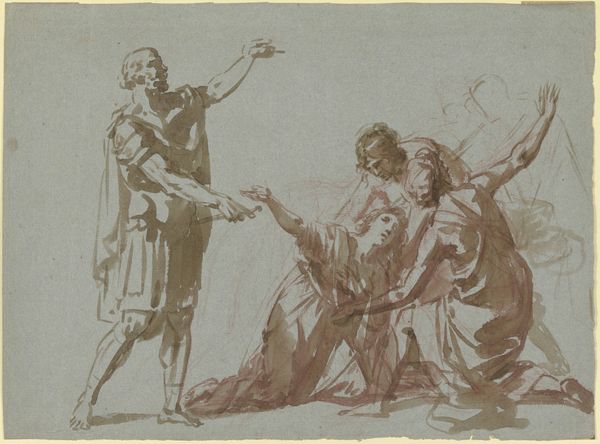
Curator: Here we have "Group of Nine Standing Figures," a drawing created with ink and charcoal on paper by Parmigianino, dating back to between 1524 and 1527. It’s currently housed here at the Art Institute of Chicago. Editor: My initial impression is of a very stylized rendering. The figures are elongated, almost to the point of being ethereal. The limited tonal range contributes to an atmospheric quality. Curator: Absolutely. The Mannerist style really comes through here. Parmigianino, deeply influenced by the socio-political and religious tensions of the Reformation, uses elongated forms and artificial poses to create a sense of unease and spiritual striving. These figures, seemingly classical in drapery, also embody a certain fragility in light of the iconoclasm of the era. Editor: I'm drawn to the rhythmic repetition of form. Notice how the lines create a sense of movement despite the figures being ostensibly "standing." The use of line and wash, combined with a subtly textured paper, gives the artwork depth despite its essentially monochrome palette. How do you see that formal language working to shape the context? Curator: The monochromatic palette speaks to the limited, often austere resources that artists had access to at the time. There's also the reading of muted colours as being symbolic for a loss of faith. These individuals— are they community elders, are they townspeople looking at the viewer, seeking support? Their stances create a palpable psychological tension. The Renaissance ideals of perfect symmetry are fractured here. Editor: Precisely. Semiotically, that imbalance disrupts expectations. The distortion isn't merely stylistic; it communicates, disrupts, and poses open-ended questions, doesn't it? The formal composition really underpins all potential themes in its elegant and challenging structures. Curator: It also resonates within the broader context of anxieties about representation and power during the Reformation. He subtly critiques established societal structures, through the group depiction and individual expression. Editor: Well, seeing your reading now has provided a refreshing new layer that I had previously not observed. I now have more considerations about the artist's potential intention and background. Curator: Similarly, I'm appreciating that close attention to how the artist's hand guides our perception. I think this piece beautifully showcases how art reflects both the beauty of form and complexities of life.