About this artwork
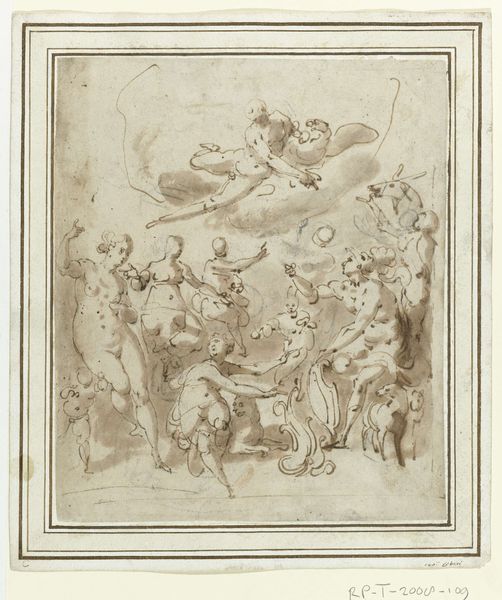
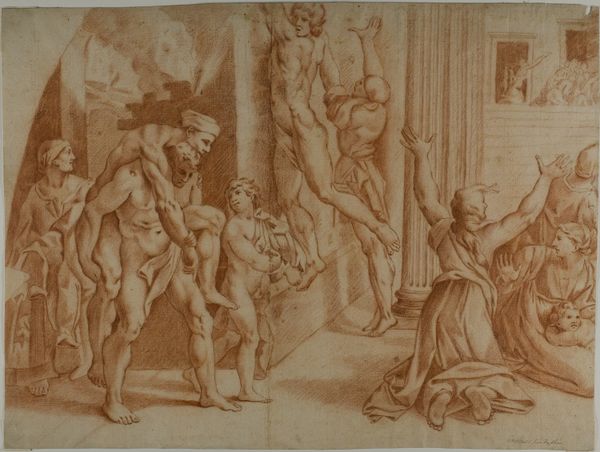
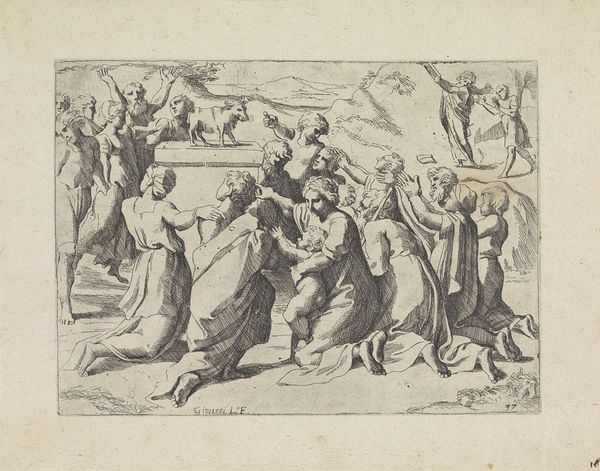
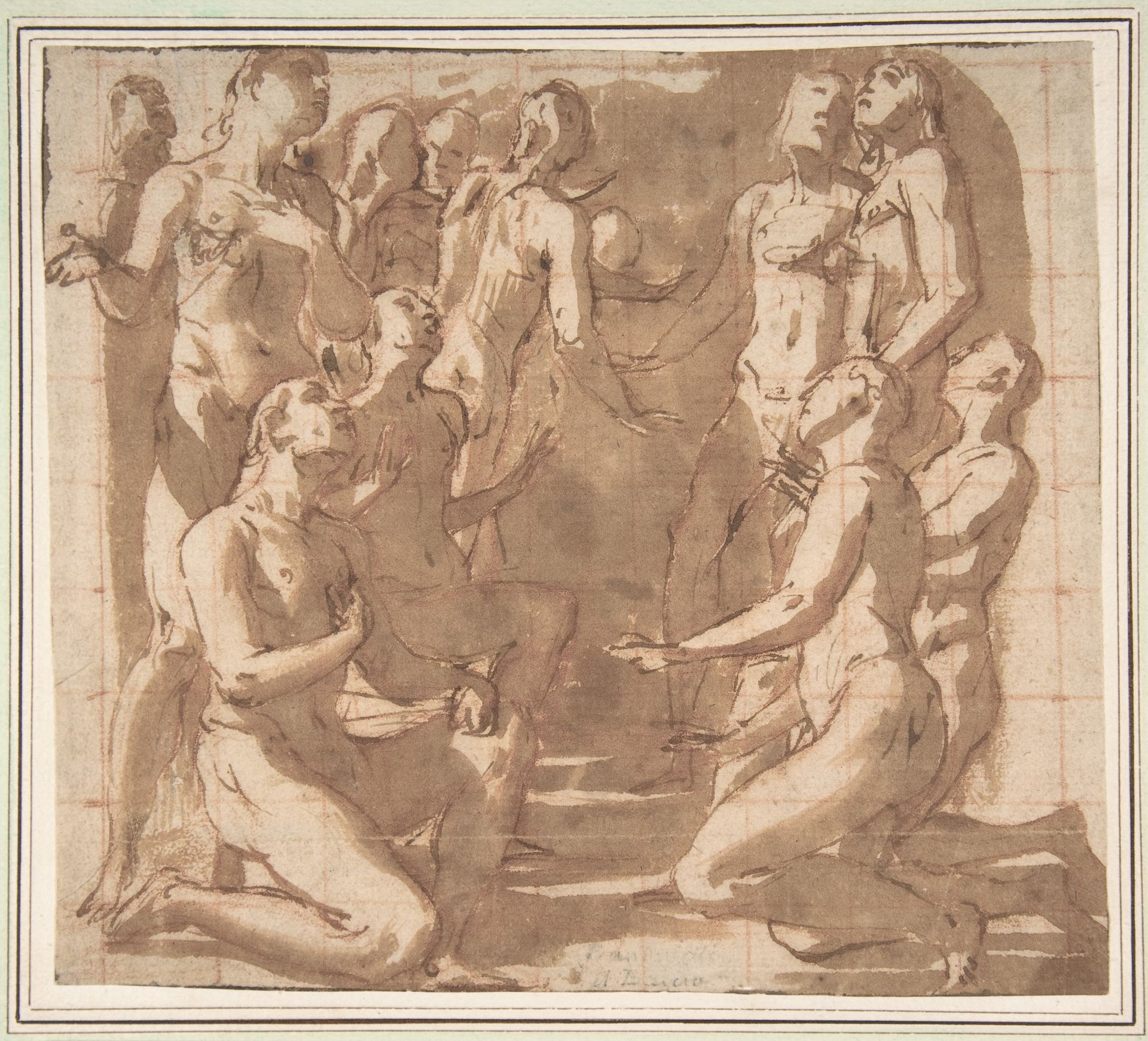
Giovanni Baglione rendered this drawing of nude male figures in pen and brown ink. The figures with their pleading gestures, heads tilted towards the heavens, are steeped in a tradition stretching back millennia. Consider the raised hands, a universal symbol of supplication. We see it echoed in ancient Egyptian art, where figures reach out to their deities, a similar longing present. The pose speaks to a deep-seated human impulse to seek intervention from a higher power, a desire etched into our collective memory. The act of kneeling, too, is a powerful gesture of humility and submission, a posture found in countless religious and secular contexts across cultures. It is a physical expression of vulnerability. How does this visual language tap into our subconscious understanding of power and dependence? The echoes of these gestures in the Renaissance reflect the cyclical progression of cultural symbols. Each era reinterprets and re-presents these primordial images, imbuing them with new emotional and intellectual resonance.
Group of Nude Male Figures Kneeling and Standing in Supplication
1593 - 1603
Artwork details
- Medium
- drawing, print, charcoal
- Dimensions
- 6-15/16 x 7-13/16 in. (17.6 x 19.8 cm)
- Location
- Metropolitan Museum of Art, New York, NY
- Copyright
- Public Domain
Tags
Comments
Share your thoughts
About this artwork
Giovanni Baglione rendered this drawing of nude male figures in pen and brown ink. The figures with their pleading gestures, heads tilted towards the heavens, are steeped in a tradition stretching back millennia. Consider the raised hands, a universal symbol of supplication. We see it echoed in ancient Egyptian art, where figures reach out to their deities, a similar longing present. The pose speaks to a deep-seated human impulse to seek intervention from a higher power, a desire etched into our collective memory. The act of kneeling, too, is a powerful gesture of humility and submission, a posture found in countless religious and secular contexts across cultures. It is a physical expression of vulnerability. How does this visual language tap into our subconscious understanding of power and dependence? The echoes of these gestures in the Renaissance reflect the cyclical progression of cultural symbols. Each era reinterprets and re-presents these primordial images, imbuing them with new emotional and intellectual resonance.
Comments
Share your thoughts