About this artwork
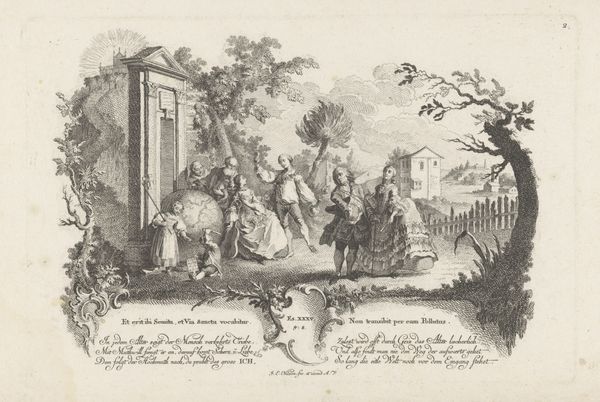
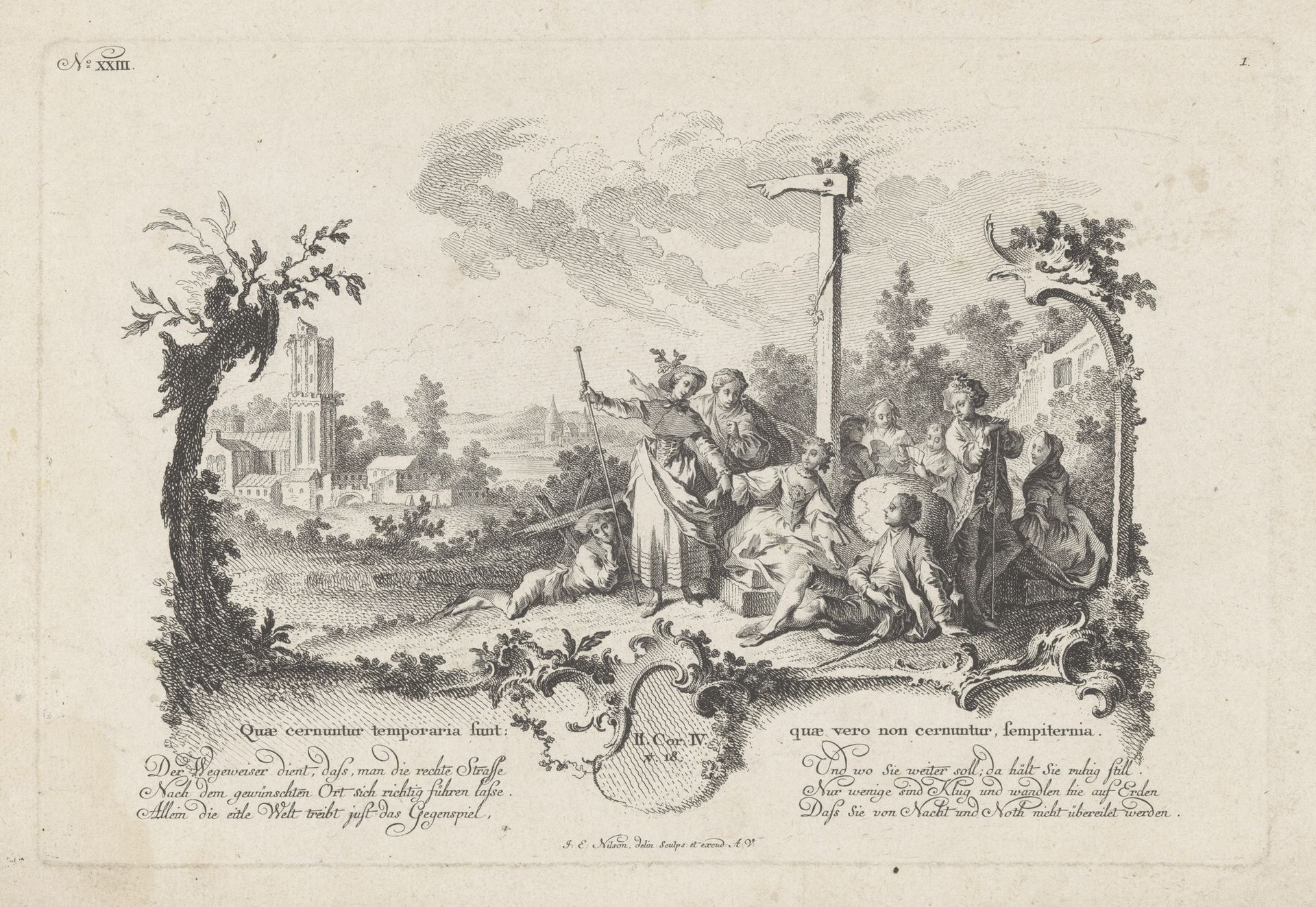
Johann Esaias Nilson made this print of men and women beneath a signpost, likely in Germany, during the 18th century. A clue to this can be found at the bottom of the artwork, with a few lines of German text decorating the lower portion of the artwork. Nilson's composition speaks to the social and cultural life of the period. The group is gathered under a signpost, perhaps symbolic of life's journey or moral decisions. Consider the clothing of the figures; their attire hints at a level of social status that would have been prevalent at the time. Note also the division of space within the print; the background shows an ordered landscape and a church, suggesting the influence of religious institutions on daily life. The study of prints like this one involves a combination of visual analysis and historical research. By looking at costume, class structure, and cultural values, historians can better understand how art reflects its own time.
Groep mannen en vrouwen onder een wegwijzer
1731 - 1788

Johann Esaias Nilson
1721 - 1788Location
RijksmuseumArtwork details
- Medium
- drawing, print, pen, engraving
- Dimensions
- height 194 mm, width 291 mm
- Location
- Rijksmuseum
- Copyright
- Rijks Museum: Open Domain
Tags
Comments
Share your thoughts
About this artwork
Johann Esaias Nilson made this print of men and women beneath a signpost, likely in Germany, during the 18th century. A clue to this can be found at the bottom of the artwork, with a few lines of German text decorating the lower portion of the artwork. Nilson's composition speaks to the social and cultural life of the period. The group is gathered under a signpost, perhaps symbolic of life's journey or moral decisions. Consider the clothing of the figures; their attire hints at a level of social status that would have been prevalent at the time. Note also the division of space within the print; the background shows an ordered landscape and a church, suggesting the influence of religious institutions on daily life. The study of prints like this one involves a combination of visual analysis and historical research. By looking at costume, class structure, and cultural values, historians can better understand how art reflects its own time.
Comments
Share your thoughts