About this artwork
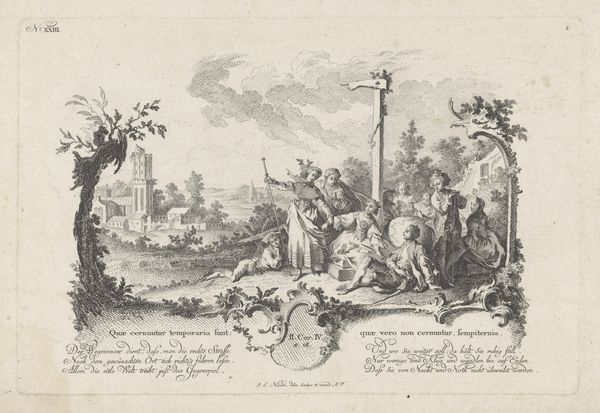
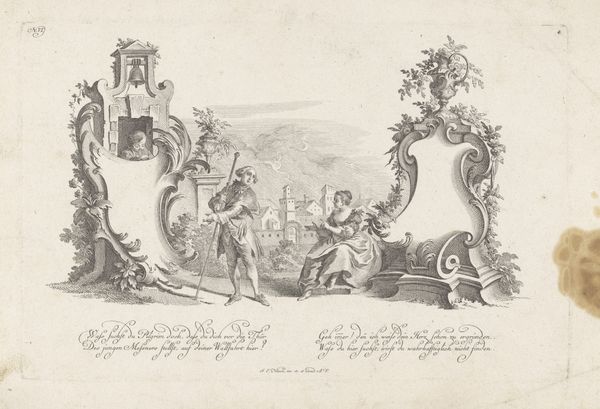
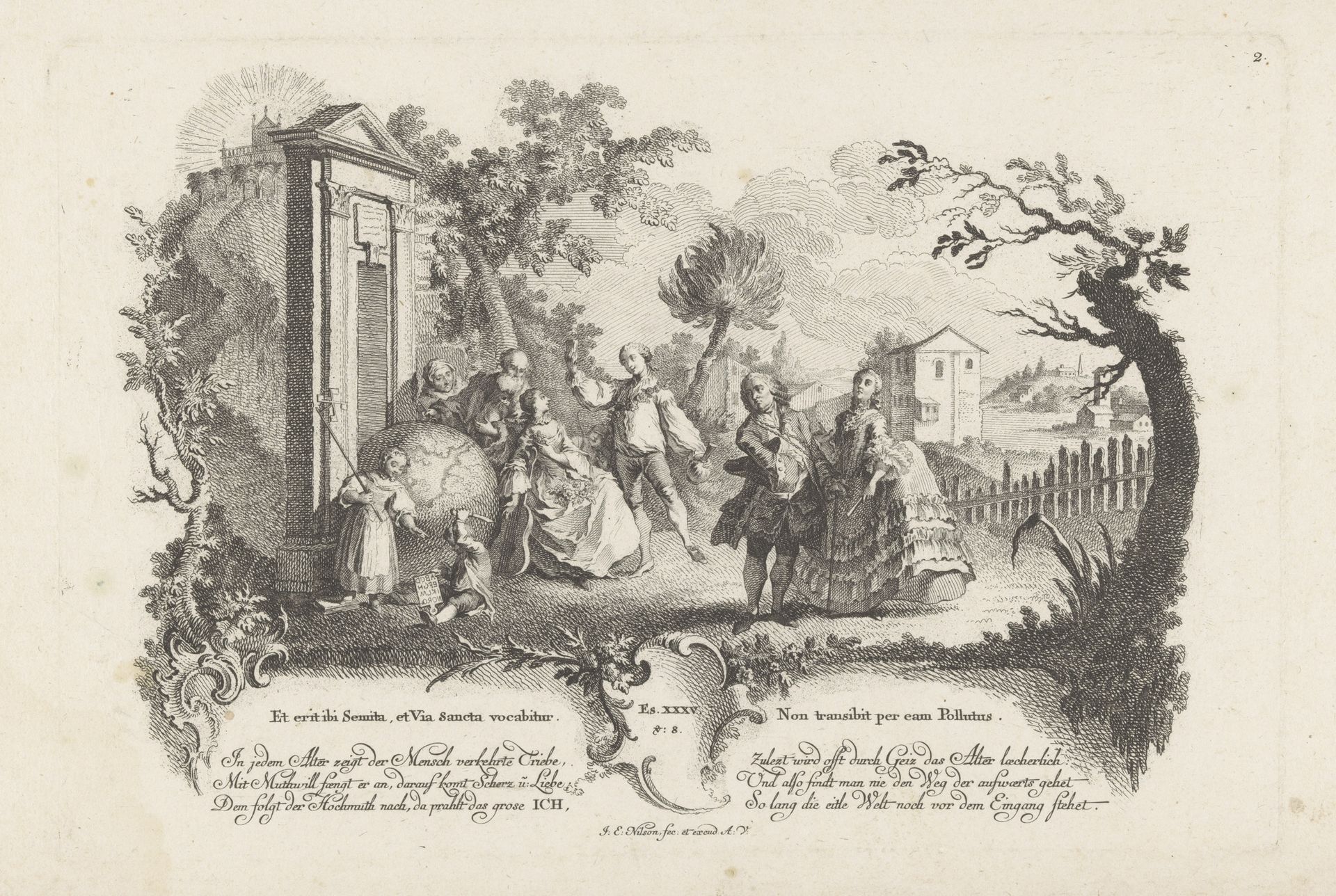
Johann Esaias Nilson created this print, "IJdele wereld verspert de weg omhoog," sometime in the 18th century. The image presents us with a dichotomy: on one side, figures engage in worldly pursuits, seemingly oblivious to the radiant path leading upwards to a temple. Nilson was working in Augsburg, then a vibrant centre of printmaking within the Holy Roman Empire. The culture of the German Enlightenment was beginning to critique the established order. This print seems to embody this tension, contrasting earthly vanity with spiritual enlightenment. The figures, adorned in elaborate dress, stand as symbols of worldly indulgence, effectively blocking the path to spiritual ascent, as the title suggests. Understanding this print fully requires delving into the religious and philosophical debates of 18th-century Europe. Further research into Nilson's other works and the artistic conventions of his time would provide more insight. Ultimately, this image, like all art, is a product of its time, reflecting the social and intellectual currents that shaped its creation.
IJdele wereld verspert de weg omhoog
1731 - 1788

Johann Esaias Nilson
1721 - 1788Location
RijksmuseumArtwork details
- Medium
- engraving
- Dimensions
- height 194 mm, width 291 mm
- Location
- Rijksmuseum
- Copyright
- Rijks Museum: Open Domain
Tags
Comments
Share your thoughts
About this artwork
Johann Esaias Nilson created this print, "IJdele wereld verspert de weg omhoog," sometime in the 18th century. The image presents us with a dichotomy: on one side, figures engage in worldly pursuits, seemingly oblivious to the radiant path leading upwards to a temple. Nilson was working in Augsburg, then a vibrant centre of printmaking within the Holy Roman Empire. The culture of the German Enlightenment was beginning to critique the established order. This print seems to embody this tension, contrasting earthly vanity with spiritual enlightenment. The figures, adorned in elaborate dress, stand as symbols of worldly indulgence, effectively blocking the path to spiritual ascent, as the title suggests. Understanding this print fully requires delving into the religious and philosophical debates of 18th-century Europe. Further research into Nilson's other works and the artistic conventions of his time would provide more insight. Ultimately, this image, like all art, is a product of its time, reflecting the social and intellectual currents that shaped its creation.
Comments
Share your thoughts