About this artwork
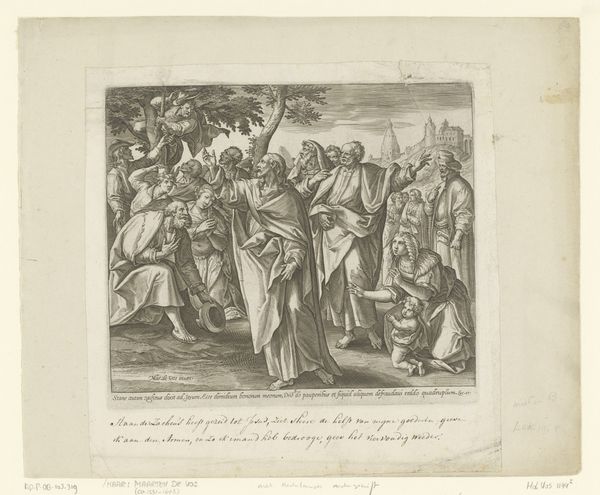
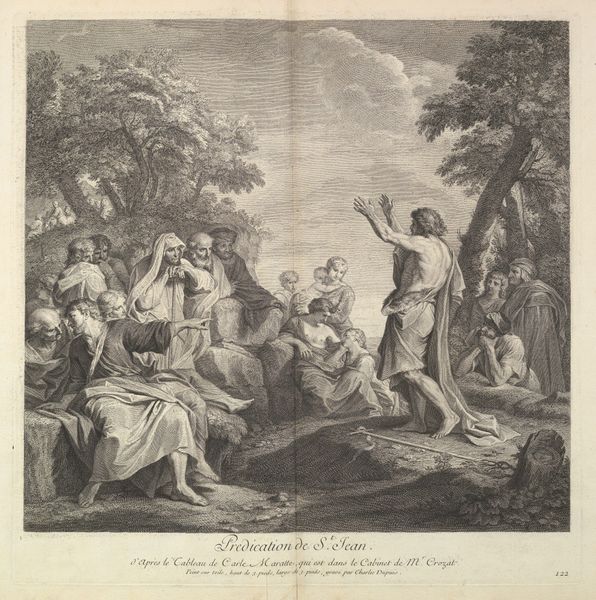
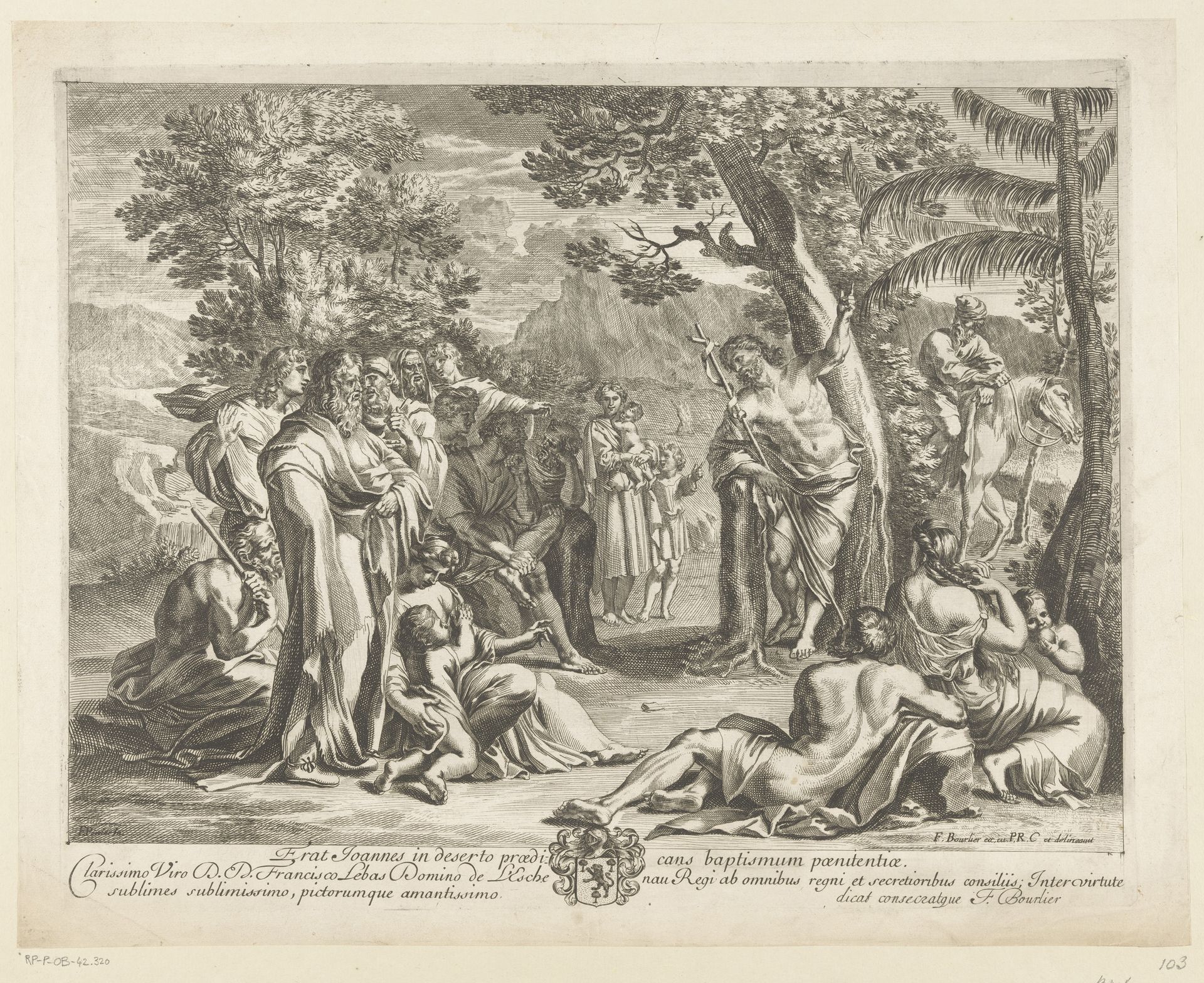
François Bourlier created this print, ‘Prediking van Johannes de Doper’ or ‘Preaching of John the Baptist’, in the late 17th century. The picture depicts John the Baptist preaching to a crowd in the wilderness, emphasizing themes of repentance and baptism. It was made in the Netherlands, a place experiencing a golden age of art and commerce. Prints such as this served a crucial social function, disseminating religious and moral ideas in a portable and reproducible form. The choice of John the Baptist as a subject reflects the cultural interest in figures who challenged societal norms. Here, the stern Baptist stands apart from the establishment, advocating a return to more fundamental values. The print's visual codes – the expressive gestures, the dramatic lighting – all communicate a message of urgency. To truly understand this artwork, one must research the religious and social climate of the Dutch Golden Age, consulting historical texts, sermons, and other visual representations of the period. We, as historians, seek to connect the dots between artistic creation and the world in which it was made.

Artwork details
- Medium
- print, engraving
- Dimensions
- height 353 mm, width 450 mm
- Copyright
- Rijks Museum: Open Domain
Tags
Comments
Share your thoughts
About this artwork
François Bourlier created this print, ‘Prediking van Johannes de Doper’ or ‘Preaching of John the Baptist’, in the late 17th century. The picture depicts John the Baptist preaching to a crowd in the wilderness, emphasizing themes of repentance and baptism. It was made in the Netherlands, a place experiencing a golden age of art and commerce. Prints such as this served a crucial social function, disseminating religious and moral ideas in a portable and reproducible form. The choice of John the Baptist as a subject reflects the cultural interest in figures who challenged societal norms. Here, the stern Baptist stands apart from the establishment, advocating a return to more fundamental values. The print's visual codes – the expressive gestures, the dramatic lighting – all communicate a message of urgency. To truly understand this artwork, one must research the religious and social climate of the Dutch Golden Age, consulting historical texts, sermons, and other visual representations of the period. We, as historians, seek to connect the dots between artistic creation and the world in which it was made.
Comments
Share your thoughts