About this artwork
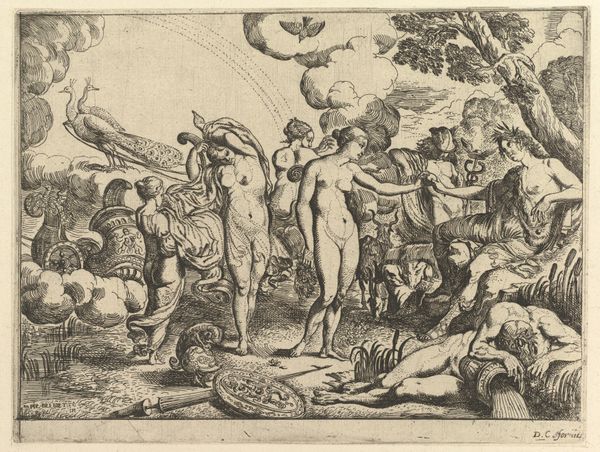
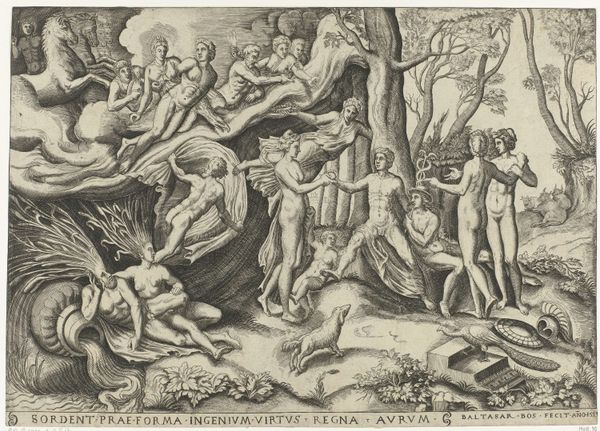
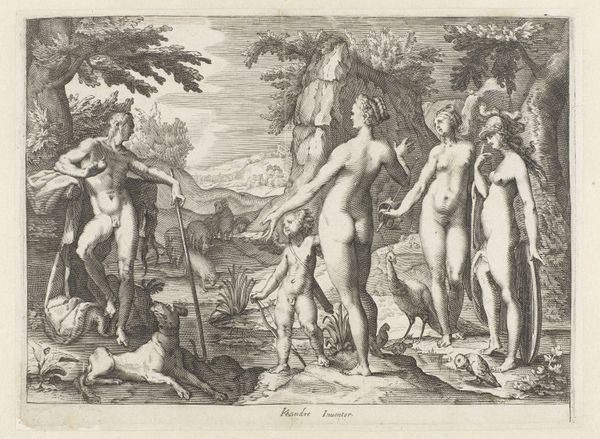
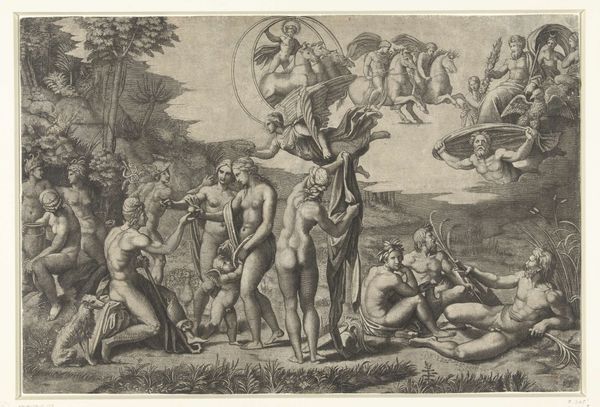
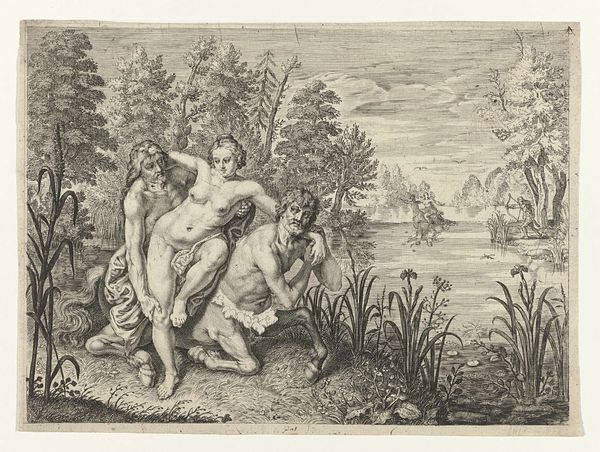
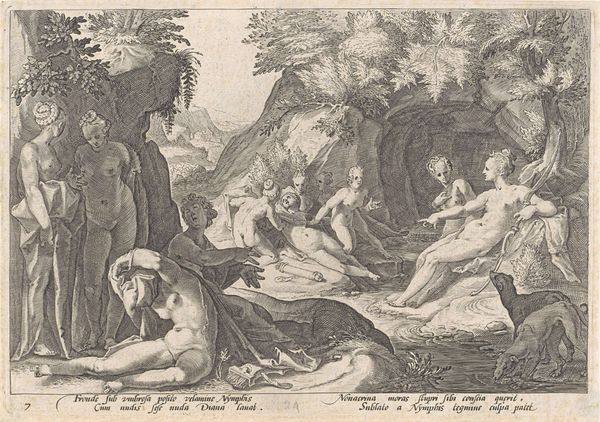
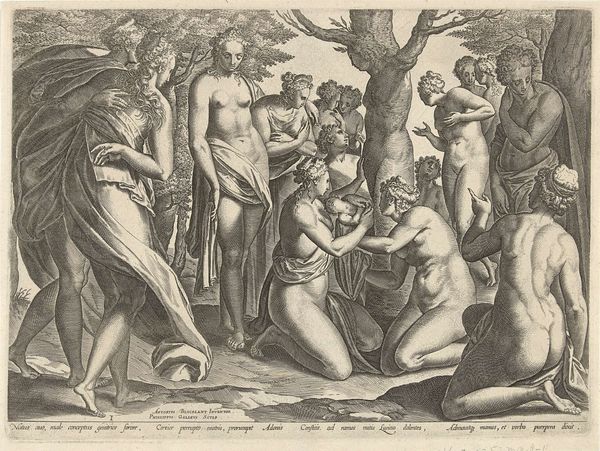
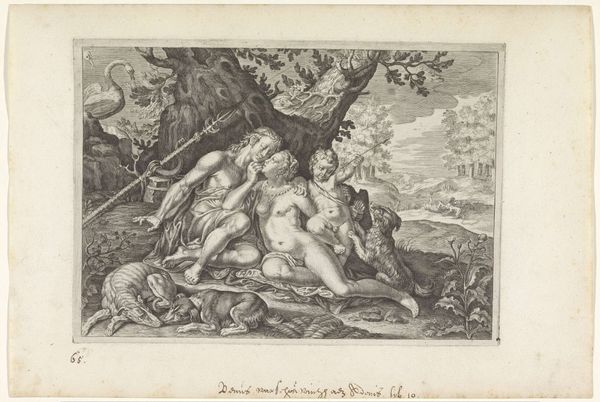
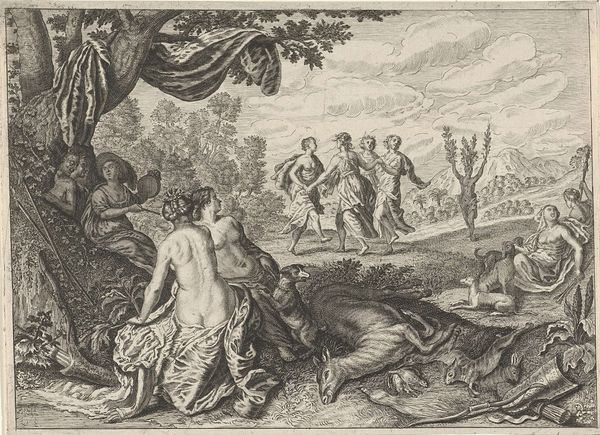
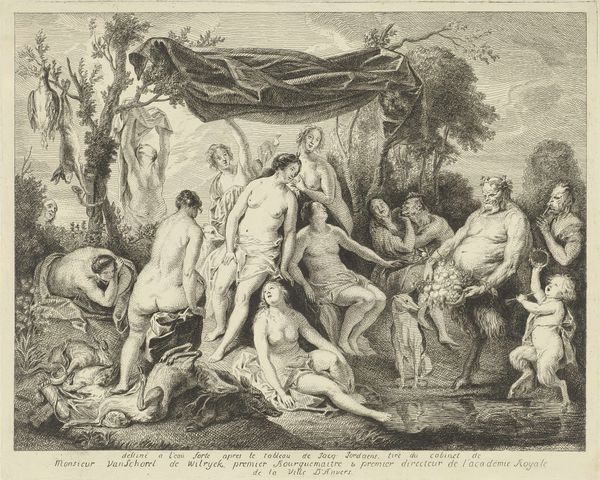
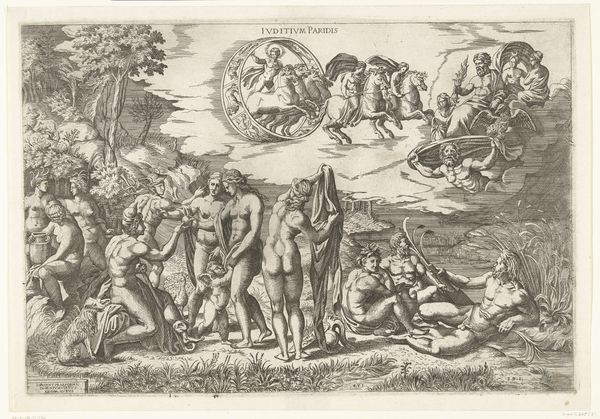
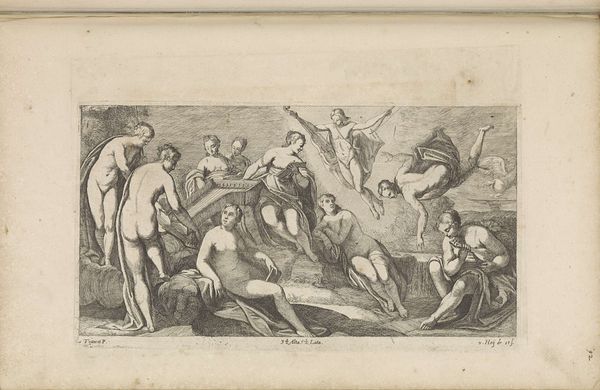
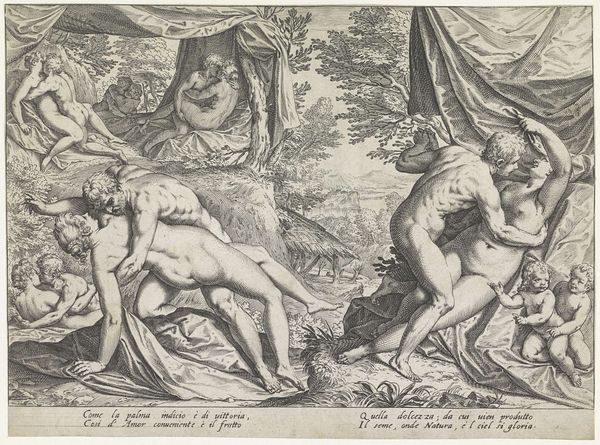
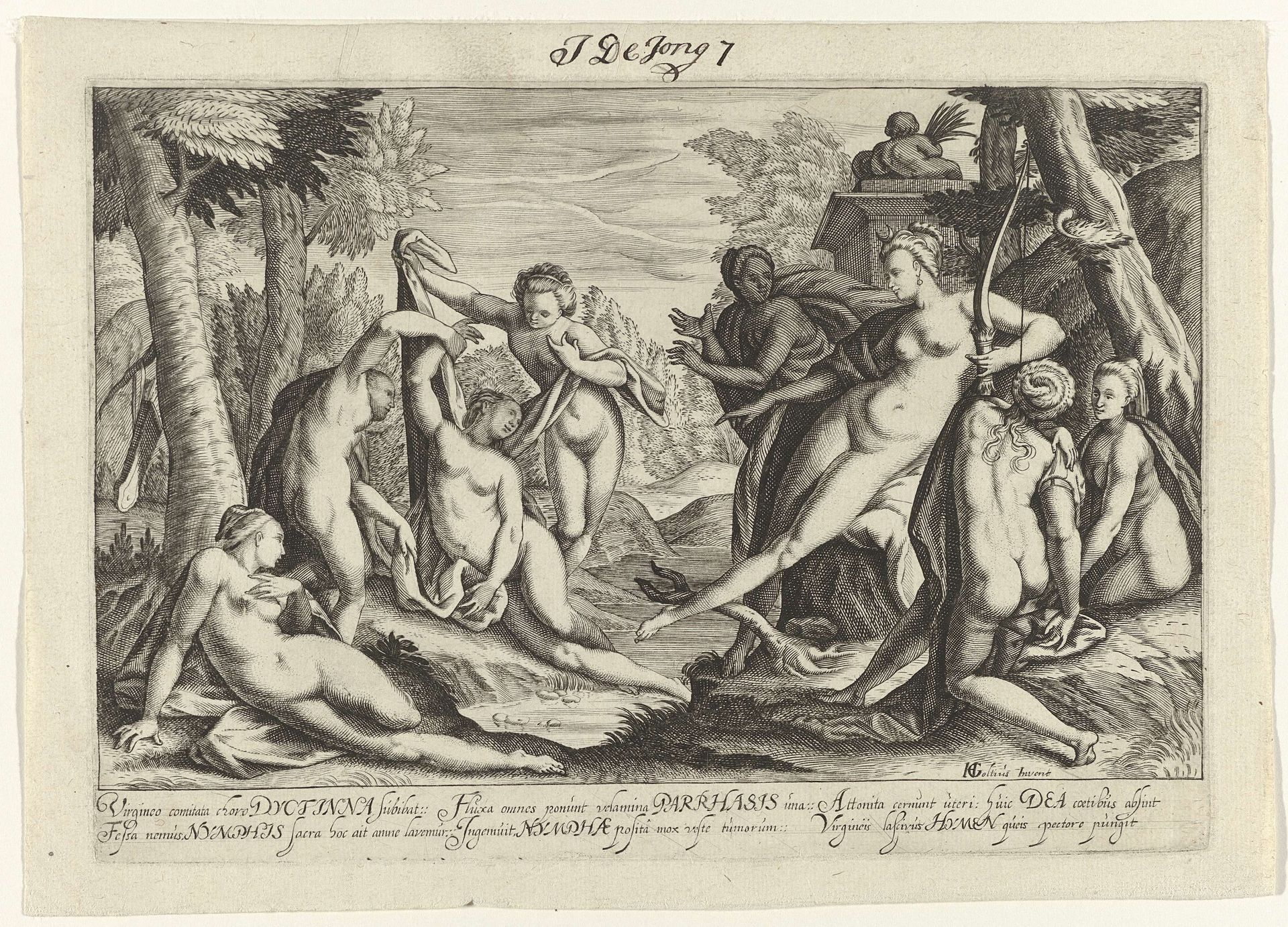
This print, titled "Diana Discovers Callisto's Pregnancy," was created by an anonymous artist using the intaglio process. This painstaking method involves incising an image into a metal plate, inking the grooves, and then pressing the plate onto paper. The visual effect depends entirely on the mark-making. Look closely, and you’ll notice the complex network of lines used to define form and shadow. The density and direction of these lines create tonal variation, which gives the figures depth and volume. The final print is a direct result of the labor-intensive process, requiring careful planning, skilled handwork, and a deep understanding of materials. Intaglio printing was revolutionary, because it allowed for the mass production of images, and the relatively inexpensive distribution of ideas and aesthetics. It was essential for circulating visual culture throughout Europe, connecting artists, and enabling the rise of a commercial art market. This print, with its narrative scene and classical references, exemplifies how even the most refined artistic traditions are deeply embedded in modes of production and broader cultural contexts.

Artwork details
- Medium
- print, engraving
- Dimensions
- height 155 mm, width 223 mm
- Location
- Rijksmuseum
- Copyright
- Rijks Museum: Open Domain
Tags
baroque
figuration
history-painting
nude
engraving
Comments
Be the first to share your thoughts about this work.
About this artwork
This print, titled "Diana Discovers Callisto's Pregnancy," was created by an anonymous artist using the intaglio process. This painstaking method involves incising an image into a metal plate, inking the grooves, and then pressing the plate onto paper. The visual effect depends entirely on the mark-making. Look closely, and you’ll notice the complex network of lines used to define form and shadow. The density and direction of these lines create tonal variation, which gives the figures depth and volume. The final print is a direct result of the labor-intensive process, requiring careful planning, skilled handwork, and a deep understanding of materials. Intaglio printing was revolutionary, because it allowed for the mass production of images, and the relatively inexpensive distribution of ideas and aesthetics. It was essential for circulating visual culture throughout Europe, connecting artists, and enabling the rise of a commercial art market. This print, with its narrative scene and classical references, exemplifies how even the most refined artistic traditions are deeply embedded in modes of production and broader cultural contexts.
Comments
Be the first to share your thoughts about this work.