About this artwork
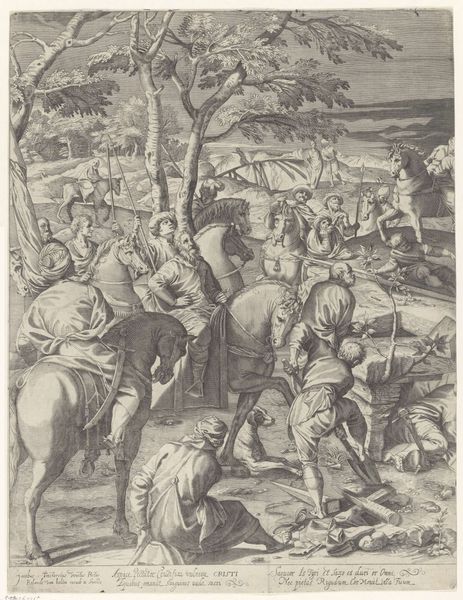
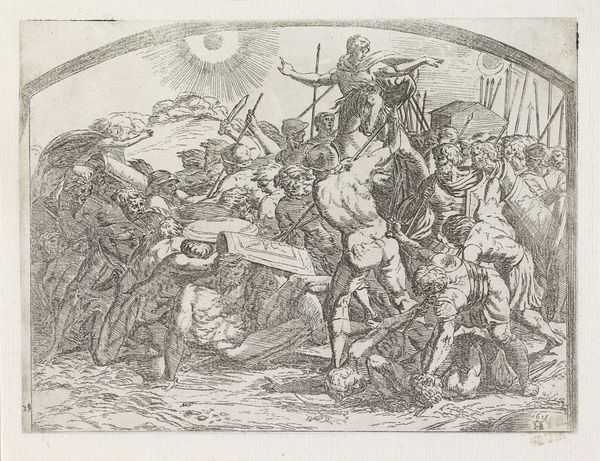
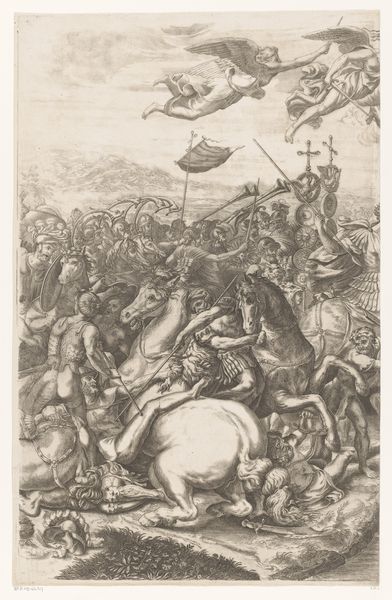
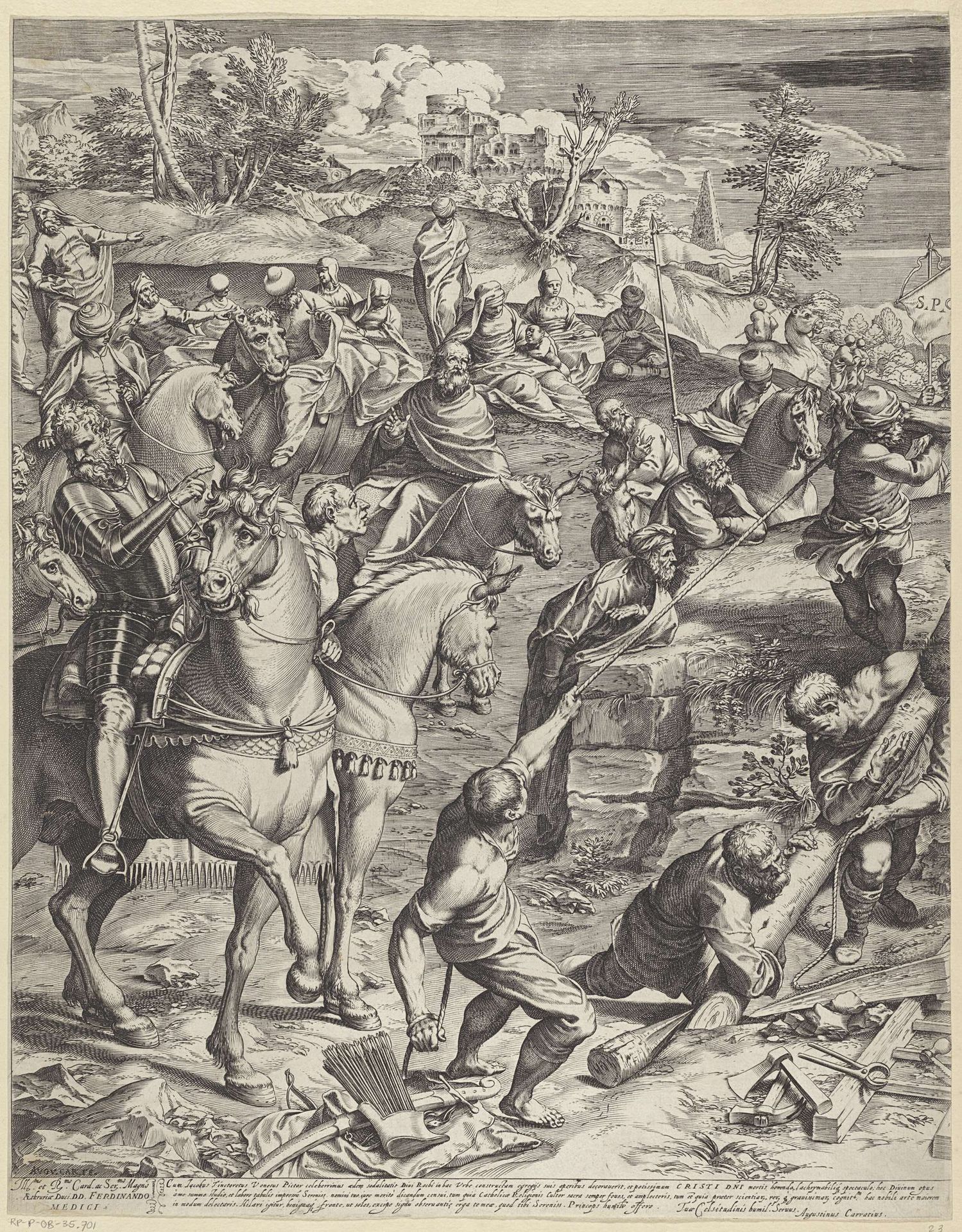
This is a section of Agostino Carracci’s engraving of the Crucifixion of Christ, rendered with a stark eye. Observe how the cross, a central figure here, is not merely an instrument of execution but a symbol laden with meaning. From ancient solar symbols to its adoption as the emblem of Christianity, the cross carries layers of cultural memory. Notice how the men struggle to raise it. This echoes the suffering and sacrifice central to Christian narrative. Consider how the motif of the cross has migrated through art history, appearing in various forms—from simple wooden structures to ornate, bejeweled objects. Its presence is a powerful force engaging viewers on a deep, subconscious level. The emotional weight of this symbol is palpable, drawing on a collective understanding of suffering, redemption, and faith that is ever-present. This symbol's non-linear progression has resurfaced, evolved, and taken on new meanings in different historical contexts.

Artwork details
- Medium
- print, engraving
- Dimensions
- height 510 mm, width 402 mm
- Location
- Rijksmuseum
- Copyright
- Rijks Museum: Open Domain
Tags
Comments
Share your thoughts
About this artwork
This is a section of Agostino Carracci’s engraving of the Crucifixion of Christ, rendered with a stark eye. Observe how the cross, a central figure here, is not merely an instrument of execution but a symbol laden with meaning. From ancient solar symbols to its adoption as the emblem of Christianity, the cross carries layers of cultural memory. Notice how the men struggle to raise it. This echoes the suffering and sacrifice central to Christian narrative. Consider how the motif of the cross has migrated through art history, appearing in various forms—from simple wooden structures to ornate, bejeweled objects. Its presence is a powerful force engaging viewers on a deep, subconscious level. The emotional weight of this symbol is palpable, drawing on a collective understanding of suffering, redemption, and faith that is ever-present. This symbol's non-linear progression has resurfaced, evolved, and taken on new meanings in different historical contexts.
Comments
Share your thoughts