About this artwork
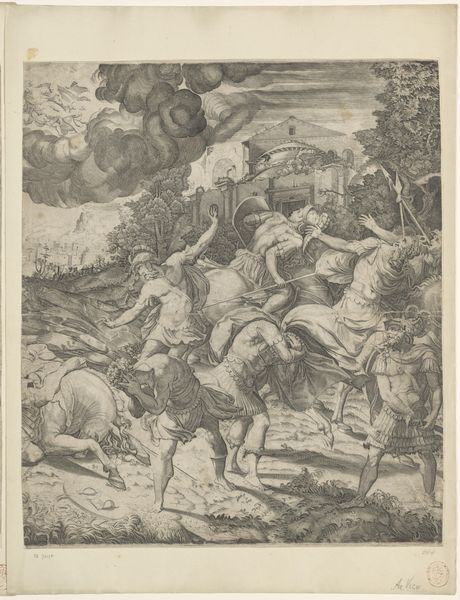
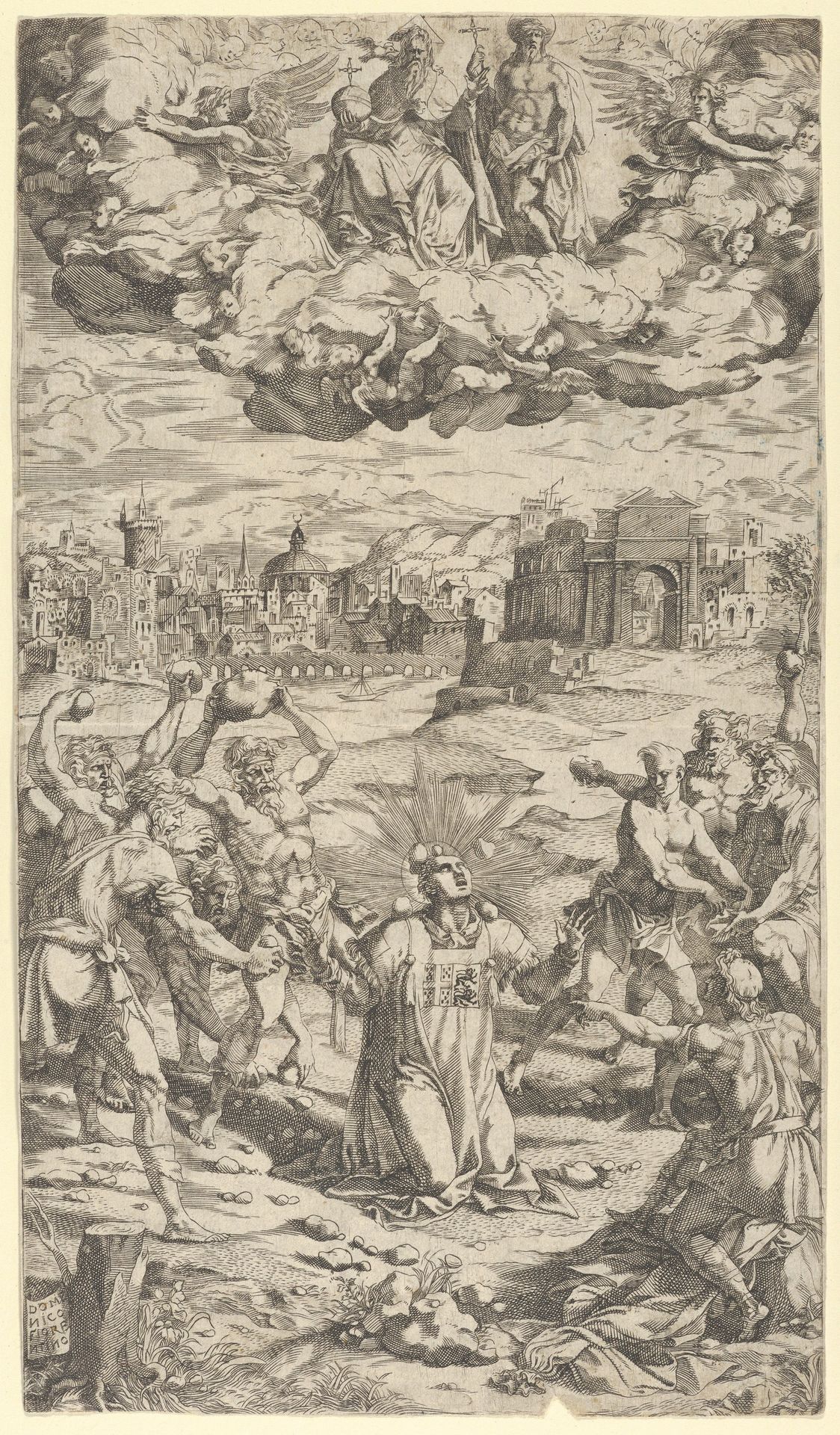
Domenico del Barbiere created this print, "The Stoning of Saint Stephen," sometime between 1541 and 1565. It depicts the biblical story of Saint Stephen, the first Christian martyr, being stoned to death for his faith. During the Renaissance, religious narratives were often used to convey not just spiritual messages, but also political and social commentary. In this work, the serene acceptance of Stephen contrasts sharply with the brutal actions of his stoners. One is forced to consider how the persecution and martyrdom of religious figures often become symbols of resistance against oppressive forces. Notice how Barbiere places the scene within a detailed landscape, complete with classical architecture. The city, with its gates and arches, situates the story in a specific time and place, adding to the emotional weight of the event. The figures above, bathed in light, seem to offer solace. This print serves as a reflection on faith, persecution, and the enduring power of belief in the face of adversity.
The Stoning of Saint Stephen
1540 - 1560

Domenico del Barbiere
1506 - 1565
The Metropolitan Museum of Art
Metropolitan Museum of Art, New York, NYArtwork details
- Medium
- drawing, print, ink, pen, engraving
- Dimensions
- Sheet: 10 11/16 x 6 1/8 in. (27.1 x 15.6 cm)
- Location
- Metropolitan Museum of Art, New York, NY
- Copyright
- Public Domain
Tags
Comments
Share your thoughts
About this artwork
Domenico del Barbiere created this print, "The Stoning of Saint Stephen," sometime between 1541 and 1565. It depicts the biblical story of Saint Stephen, the first Christian martyr, being stoned to death for his faith. During the Renaissance, religious narratives were often used to convey not just spiritual messages, but also political and social commentary. In this work, the serene acceptance of Stephen contrasts sharply with the brutal actions of his stoners. One is forced to consider how the persecution and martyrdom of religious figures often become symbols of resistance against oppressive forces. Notice how Barbiere places the scene within a detailed landscape, complete with classical architecture. The city, with its gates and arches, situates the story in a specific time and place, adding to the emotional weight of the event. The figures above, bathed in light, seem to offer solace. This print serves as a reflection on faith, persecution, and the enduring power of belief in the face of adversity.
Comments
Share your thoughts