About this artwork
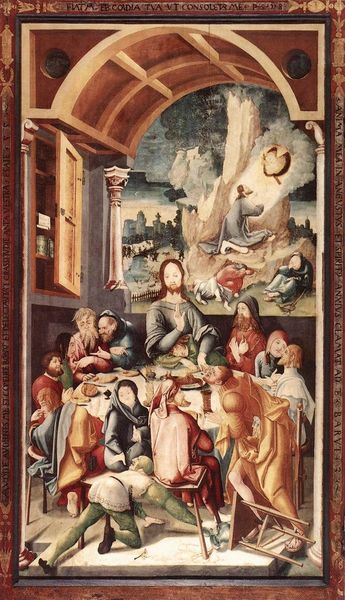
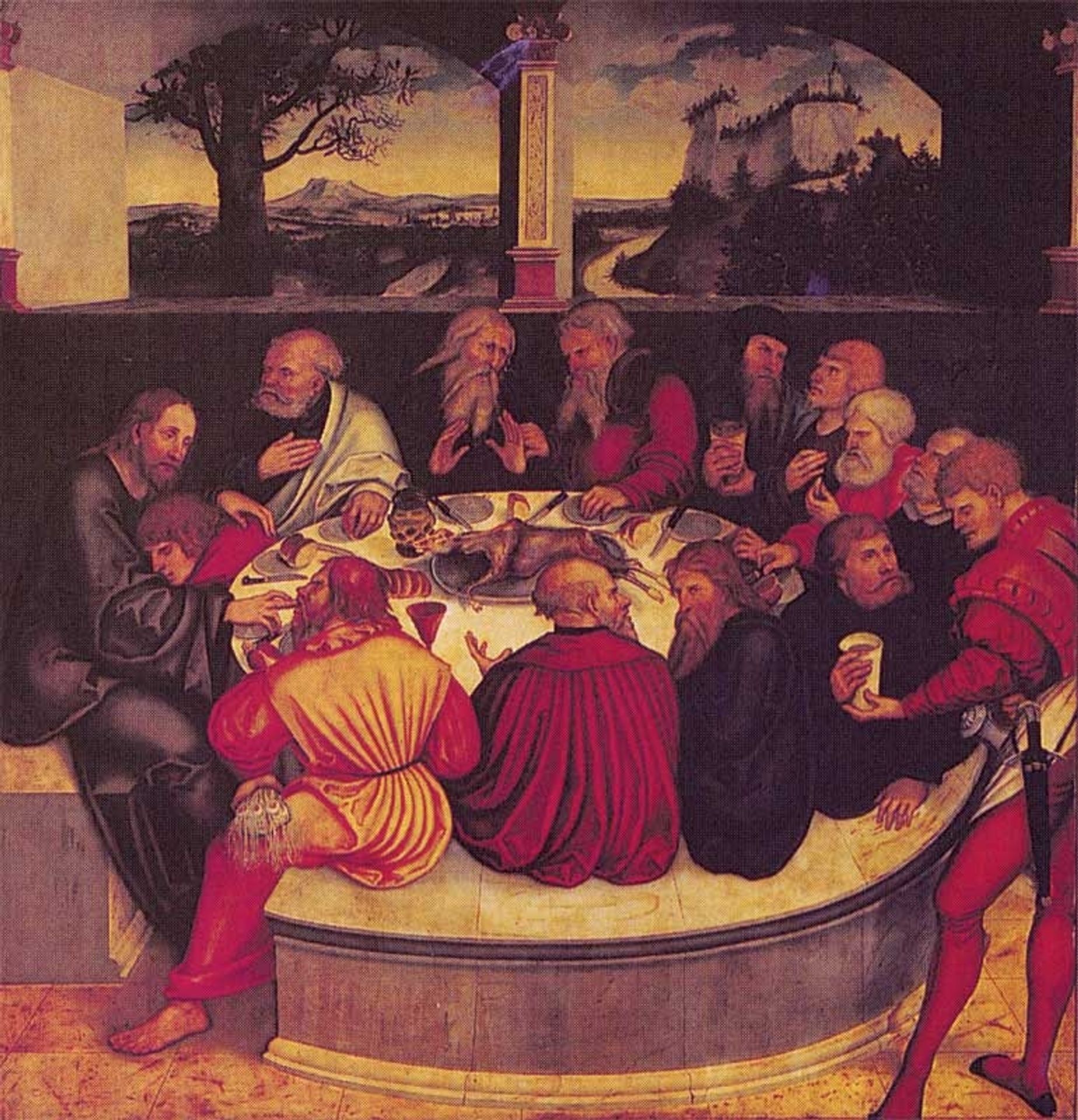
Editor: Lucas Cranach the Elder's "The Last Supper," painted in 1547, feels like a strikingly intimate take on a familiar scene, almost like overhearing a conversation. The table around which Christ and his disciples gather seems so…domestic. What strikes you most when you look at it? Curator: Oh, that domestic feel is entirely intentional, and precisely what tickles my fancy! Instead of high drama, we see… dinner. Cranach wasn’t just painting the Bible; he was painting his own life, his own Wittenberg. See how he subtly weaves in portraits of local figures amongst the disciples? It’s like a Lutheran potluck! He turns sacred events into earthly relatable moments, which I find endlessly compelling. Isn’t it wonderful how he manages to democratize the divine? Editor: So it’s a conscious effort to bring the religious narrative closer to the everyday viewer? To normalize it, almost? Curator: Exactly! And that's the revolutionary genius of the Reformation shining through. This isn't some remote, gilded event. This is your neighbor, your mayor, *you*, breaking bread with Christ. Tell me, how does that shift in perspective sit with you? Editor: I find it quite powerful, actually. It reframes the way one might think about their faith, not as something distant, but rather an integral part of community life. It’s a meal, not a myth. Curator: Precisely! And that, my dear friend, is how art continues to speak across centuries – by taking the grand and making it wonderfully, messily human. Editor: It gives a new and meaningful way of understanding religious art as civic identity! Thanks. Curator: My pleasure. Keep questioning, keep connecting, and the art will keep whispering its secrets.
The Last Supper
1547

Lucas Cranach the Elder
1472 - 1553Location
Stadtkirche Wittenberg, Wittenberg, GermanyArtwork details
- Medium
- painting, oil-paint
- Location
- Stadtkirche Wittenberg, Wittenberg, Germany
- Copyright
- Public domain
Tags
Comments
Share your thoughts
About this artwork
Editor: Lucas Cranach the Elder's "The Last Supper," painted in 1547, feels like a strikingly intimate take on a familiar scene, almost like overhearing a conversation. The table around which Christ and his disciples gather seems so…domestic. What strikes you most when you look at it? Curator: Oh, that domestic feel is entirely intentional, and precisely what tickles my fancy! Instead of high drama, we see… dinner. Cranach wasn’t just painting the Bible; he was painting his own life, his own Wittenberg. See how he subtly weaves in portraits of local figures amongst the disciples? It’s like a Lutheran potluck! He turns sacred events into earthly relatable moments, which I find endlessly compelling. Isn’t it wonderful how he manages to democratize the divine? Editor: So it’s a conscious effort to bring the religious narrative closer to the everyday viewer? To normalize it, almost? Curator: Exactly! And that's the revolutionary genius of the Reformation shining through. This isn't some remote, gilded event. This is your neighbor, your mayor, *you*, breaking bread with Christ. Tell me, how does that shift in perspective sit with you? Editor: I find it quite powerful, actually. It reframes the way one might think about their faith, not as something distant, but rather an integral part of community life. It’s a meal, not a myth. Curator: Precisely! And that, my dear friend, is how art continues to speak across centuries – by taking the grand and making it wonderfully, messily human. Editor: It gives a new and meaningful way of understanding religious art as civic identity! Thanks. Curator: My pleasure. Keep questioning, keep connecting, and the art will keep whispering its secrets.
Comments
Share your thoughts