About this artwork
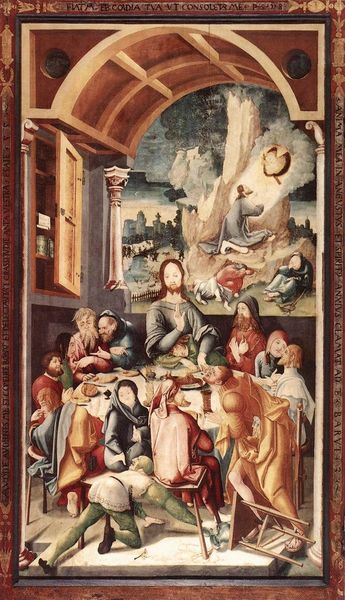
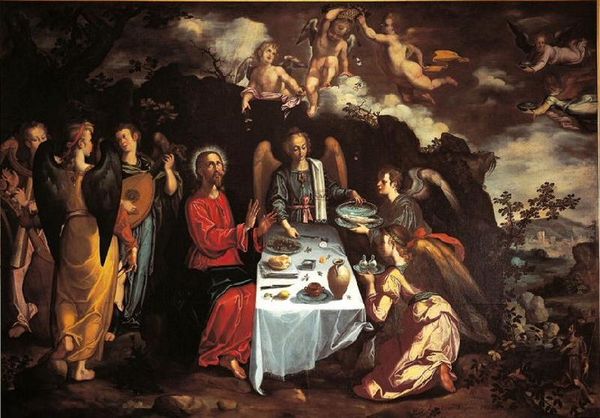
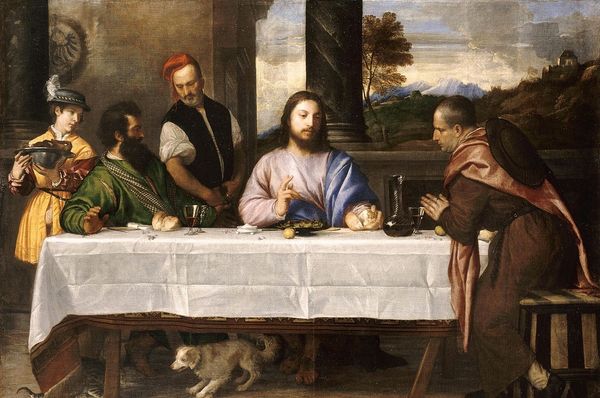
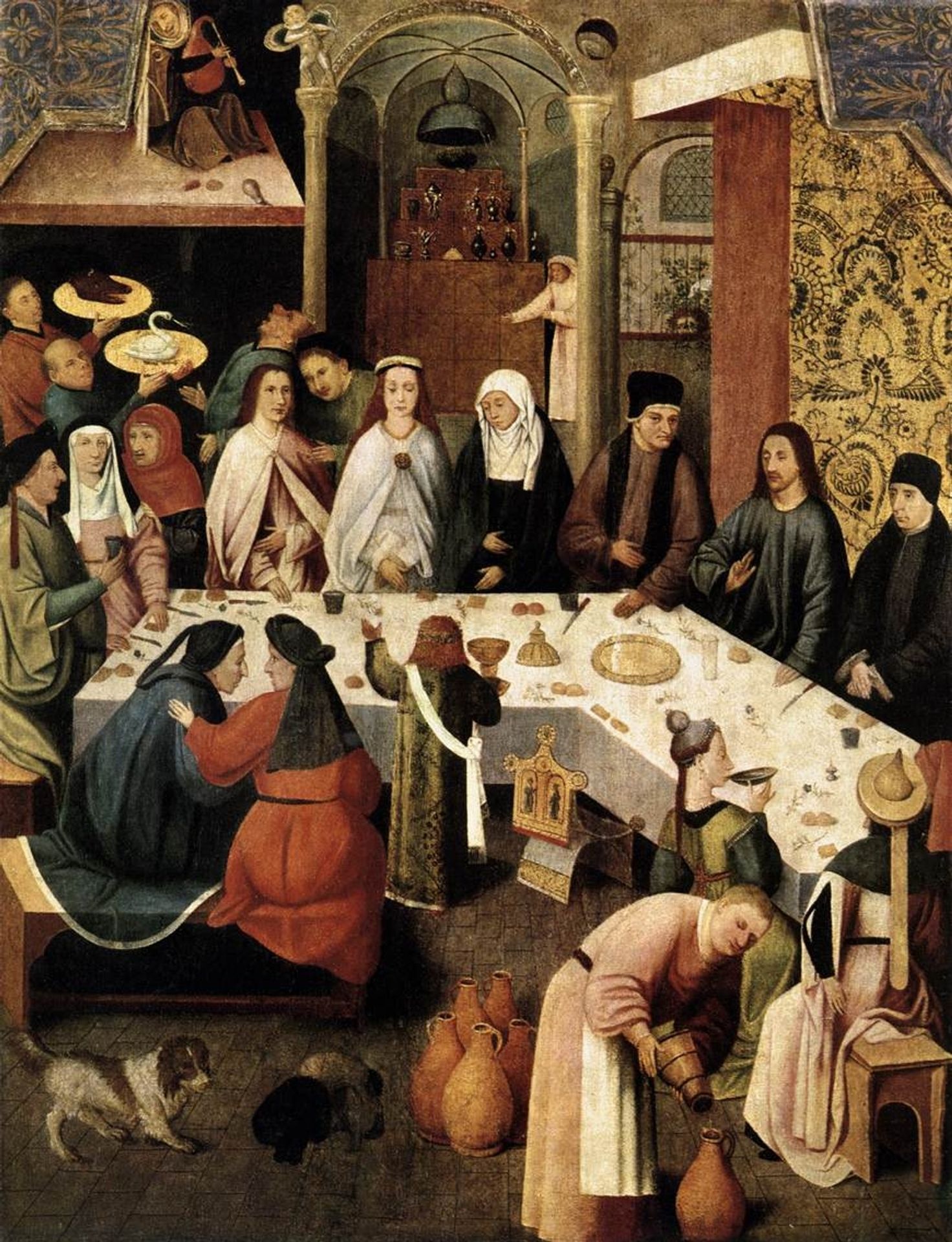
Hieronymus Bosch created this piece, The Marriage Feast at Cana, in the Netherlands during the late 15th or early 16th century. The painting depicts the biblical story of Jesus turning water into wine at a wedding. Bosch's depiction is full of peculiar details that invite us to think about the social and religious complexities of his time. What does it mean to represent a miracle in a society grappling with religious reform and social change? The figures around the table are a mix of the pious and the grotesque, reflecting a world where spiritual ideals coexist with human failings. Consider how gender roles are portrayed: women are present but mostly in supportive roles, embodying the social expectations of the time. This painting isn’t just a retelling of a Bible story; it's an invitation to reflect on the tensions between faith, society, and human nature. It challenges us to think about the cultural context that shapes our own interpretations of such a well known story.
The Marriage Feast at Cana
1500

Hieronymus Bosch
1450 - 1516
Museum Boijmans Van Beuningen
Museum Boijmans van Beuningen, Rotterdam, NetherlandsArtwork details
- Medium
- tempera, oil-paint
- Location
- Museum Boijmans van Beuningen, Rotterdam, Netherlands
- Copyright
- Public domain
Tags
Comments
Share your thoughts
About this artwork
Hieronymus Bosch created this piece, The Marriage Feast at Cana, in the Netherlands during the late 15th or early 16th century. The painting depicts the biblical story of Jesus turning water into wine at a wedding. Bosch's depiction is full of peculiar details that invite us to think about the social and religious complexities of his time. What does it mean to represent a miracle in a society grappling with religious reform and social change? The figures around the table are a mix of the pious and the grotesque, reflecting a world where spiritual ideals coexist with human failings. Consider how gender roles are portrayed: women are present but mostly in supportive roles, embodying the social expectations of the time. This painting isn’t just a retelling of a Bible story; it's an invitation to reflect on the tensions between faith, society, and human nature. It challenges us to think about the cultural context that shapes our own interpretations of such a well known story.
Comments
Share your thoughts