About this artwork
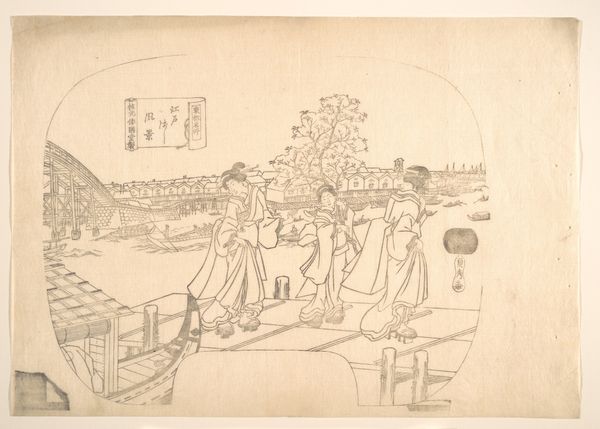
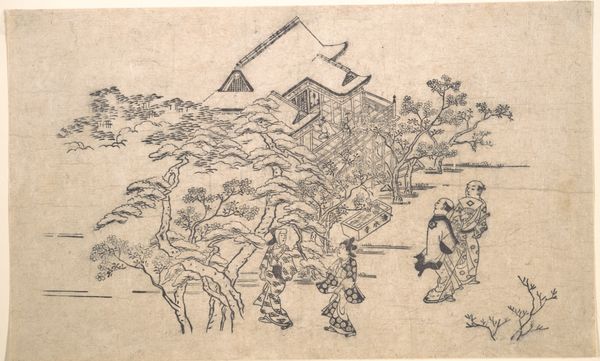
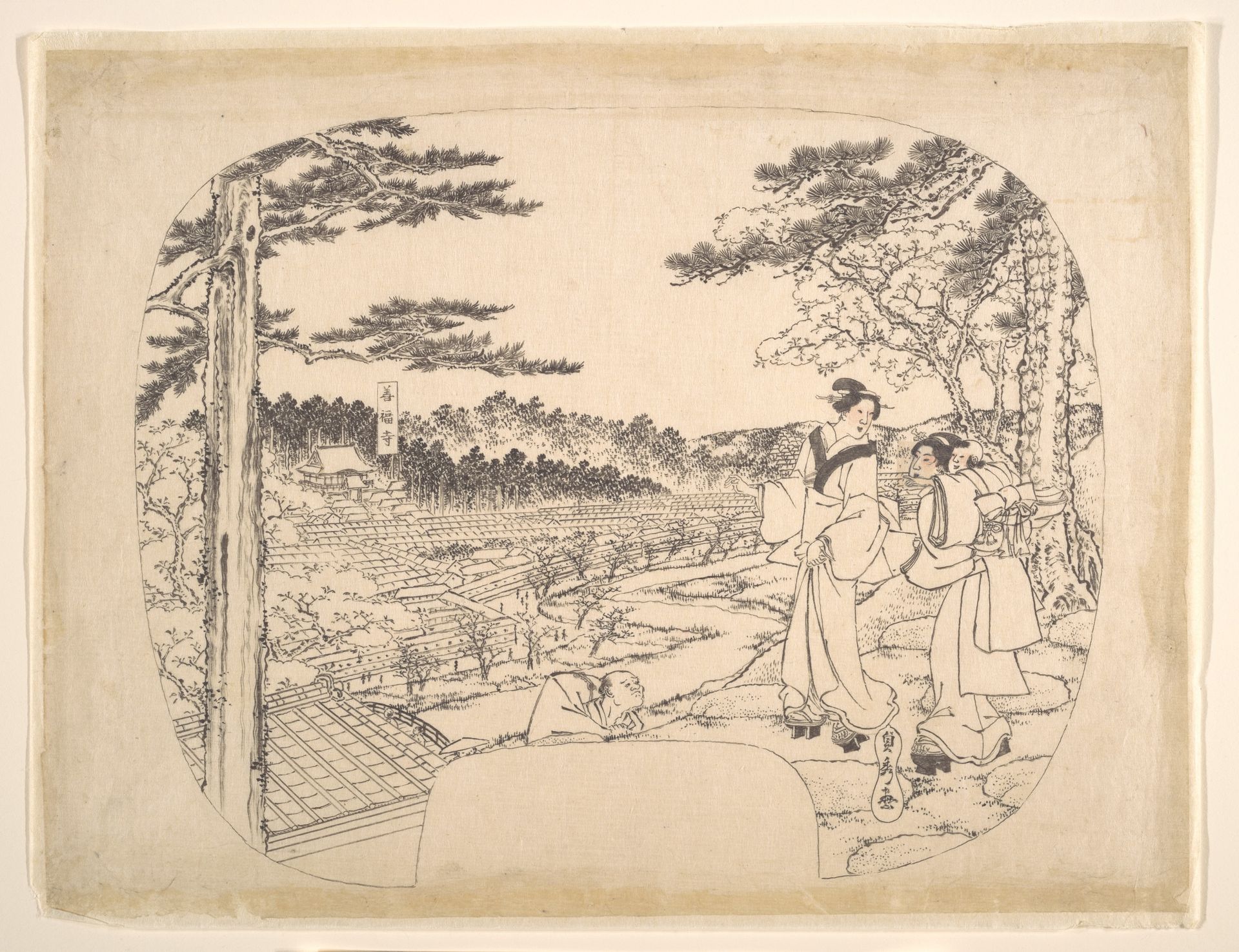
Utagawa Sadahide created this woodblock print, "Two Women Admiring the Sights from a Vantage Point Overlooking the Zenpukuji Temple", using paper, ink, and woodblocks. The printmaking process involves several steps. The artist first carves a design into a block of wood, then applies ink to the raised surfaces, and presses paper against the block to transfer the image. The lines and patterns were all meticulously carved by hand, suggesting a labor-intensive practice passed through generations. The inherent qualities of the paper, like its absorbency, affect the final appearance of the print, while the ink’s viscosity determines the crispness of the lines. These prints are commodities and artworks; they represent a convergence of skill, tradition, and commercial enterprise. They were made using techniques and traditions in contrast to those of fine arts, and served as a key format for visual communication and popular culture during Japan’s Edo period. The print reminds us that the meaning of an artwork is deeply entwined with the materials, techniques, and cultural contexts that bring it into being.
Two Women Admiring the Sights from a Vantage Point Overlooking the Zenpukuji Temple
1807 - 1879

Utagawa (Gountei) Sadahide
1807 - 1879
The Metropolitan Museum of Art
Metropolitan Museum of Art, New York, NYArtwork details
- Dimensions
- Image: 9 1/2 x 12 in. (24.1 x 30.5 cm)
- Location
- Metropolitan Museum of Art, New York, NY
- Copyright
- Public Domain
Tags
Comments
Share your thoughts
About this artwork
Utagawa Sadahide created this woodblock print, "Two Women Admiring the Sights from a Vantage Point Overlooking the Zenpukuji Temple", using paper, ink, and woodblocks. The printmaking process involves several steps. The artist first carves a design into a block of wood, then applies ink to the raised surfaces, and presses paper against the block to transfer the image. The lines and patterns were all meticulously carved by hand, suggesting a labor-intensive practice passed through generations. The inherent qualities of the paper, like its absorbency, affect the final appearance of the print, while the ink’s viscosity determines the crispness of the lines. These prints are commodities and artworks; they represent a convergence of skill, tradition, and commercial enterprise. They were made using techniques and traditions in contrast to those of fine arts, and served as a key format for visual communication and popular culture during Japan’s Edo period. The print reminds us that the meaning of an artwork is deeply entwined with the materials, techniques, and cultural contexts that bring it into being.
Comments
Share your thoughts