1849
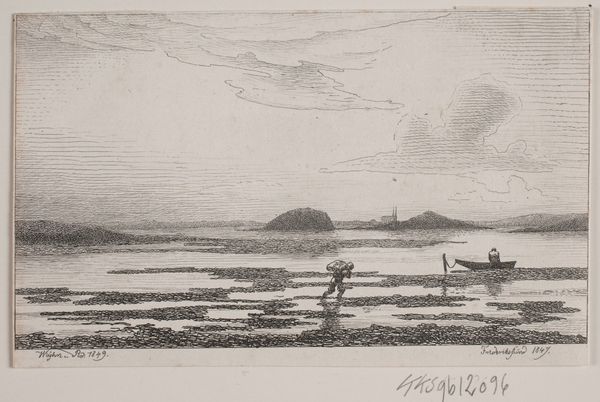
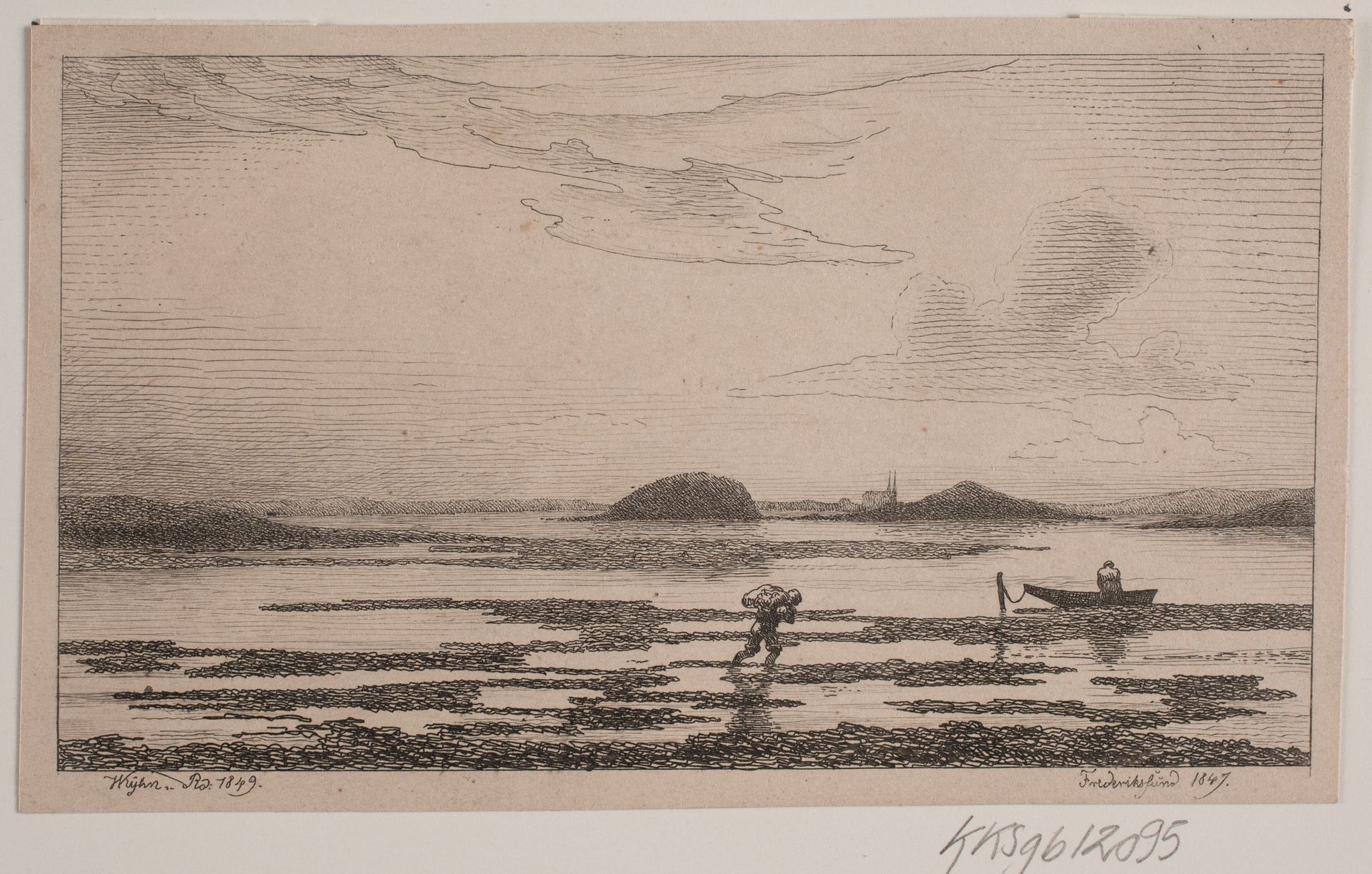
Strandparti ved Frederikssund


Listen to curator's interpretation
Curatorial notes
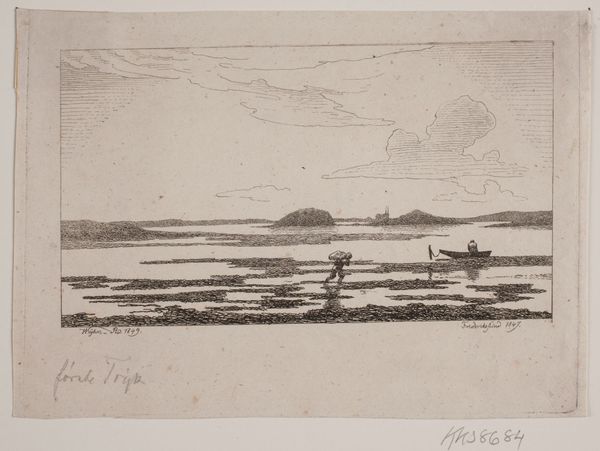
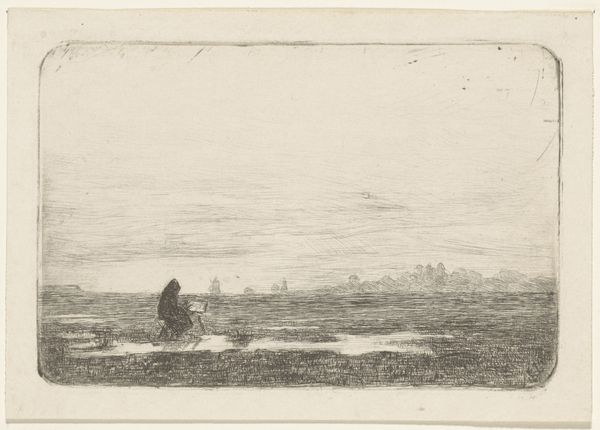
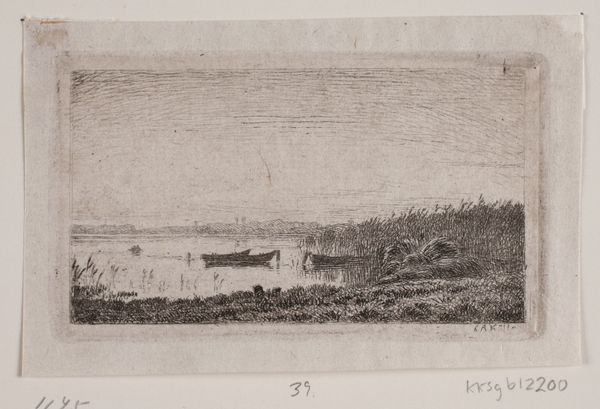
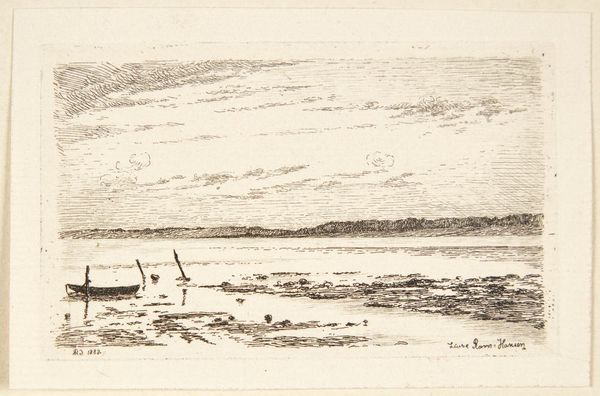
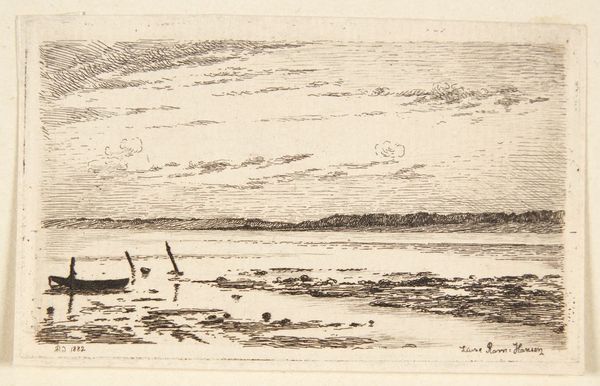
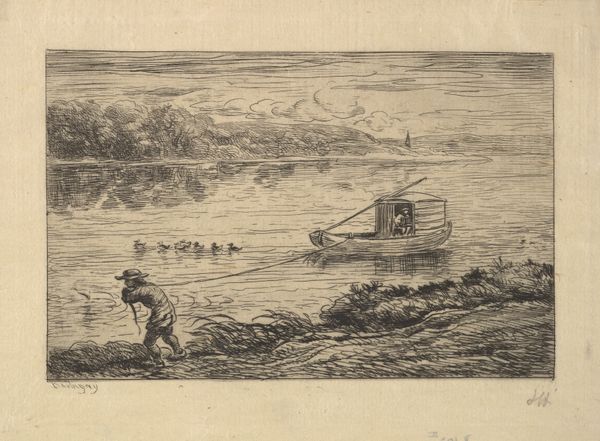
Editor: So, this is *Strandparti ved Frederikssund*, a landscape etching by Vilhelm Kyhn from 1849. It’s so detailed despite being a print – a real sense of quiet labor permeates the scene. I’m struck by how the figure walking through the shallows dominates the composition. What do you see in this piece? Curator: Well, the figure indeed. Think about what burdens he carries. The way he's depicted evokes a timeless image of human perseverance, etched – literally – into the landscape. Consider also the horizon line, bisecting the composition almost perfectly, it subtly alludes to a cultural memory. What do horizons symbolize? Editor: Beginnings? Journeys? Possibilities? Curator: Precisely. Kyhn, a Danish Golden Age painter working within Romanticism and Realism, understood how visual symbols tap into a collective consciousness. The etching's date, 1849, might evoke Europe in turmoil, struggling for reform. Now, look at the lone figure in the boat – separate, solitary, yet connected by the shared landscape. Does this isolation represent something to you? Editor: Perhaps the desire for individual liberty within a larger, unavoidable shared experience? Curator: An excellent observation! This tension, etched so precisely, speaks to a longing for independence while remaining connected to home. Editor: It's interesting to think about how seemingly simple landscape imagery can convey such complex social and cultural ideas. Thanks for your insights! Curator: My pleasure. It’s about reading images – how forms, light, and figures accrue meaning over time. Always consider, what continuities link us across the ages?