About this artwork
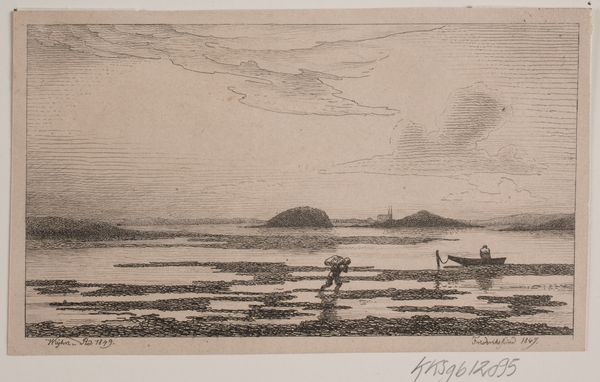
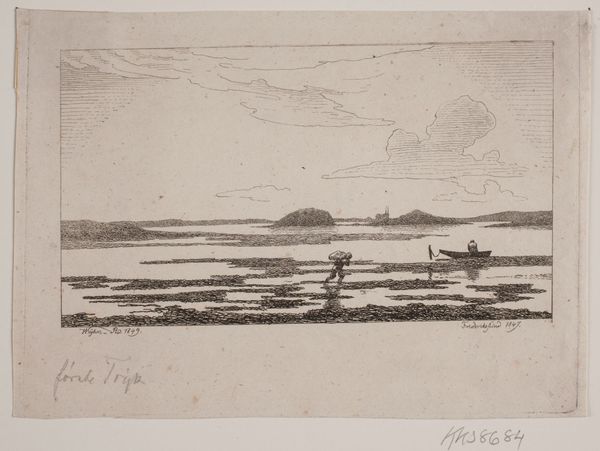
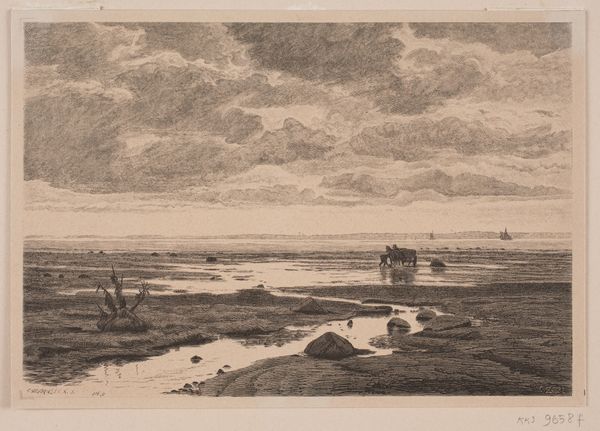
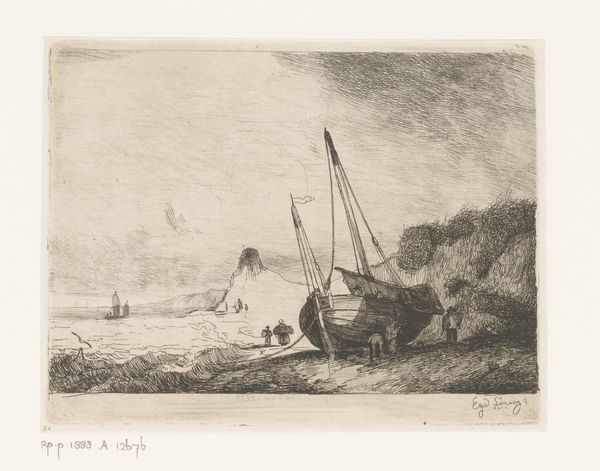
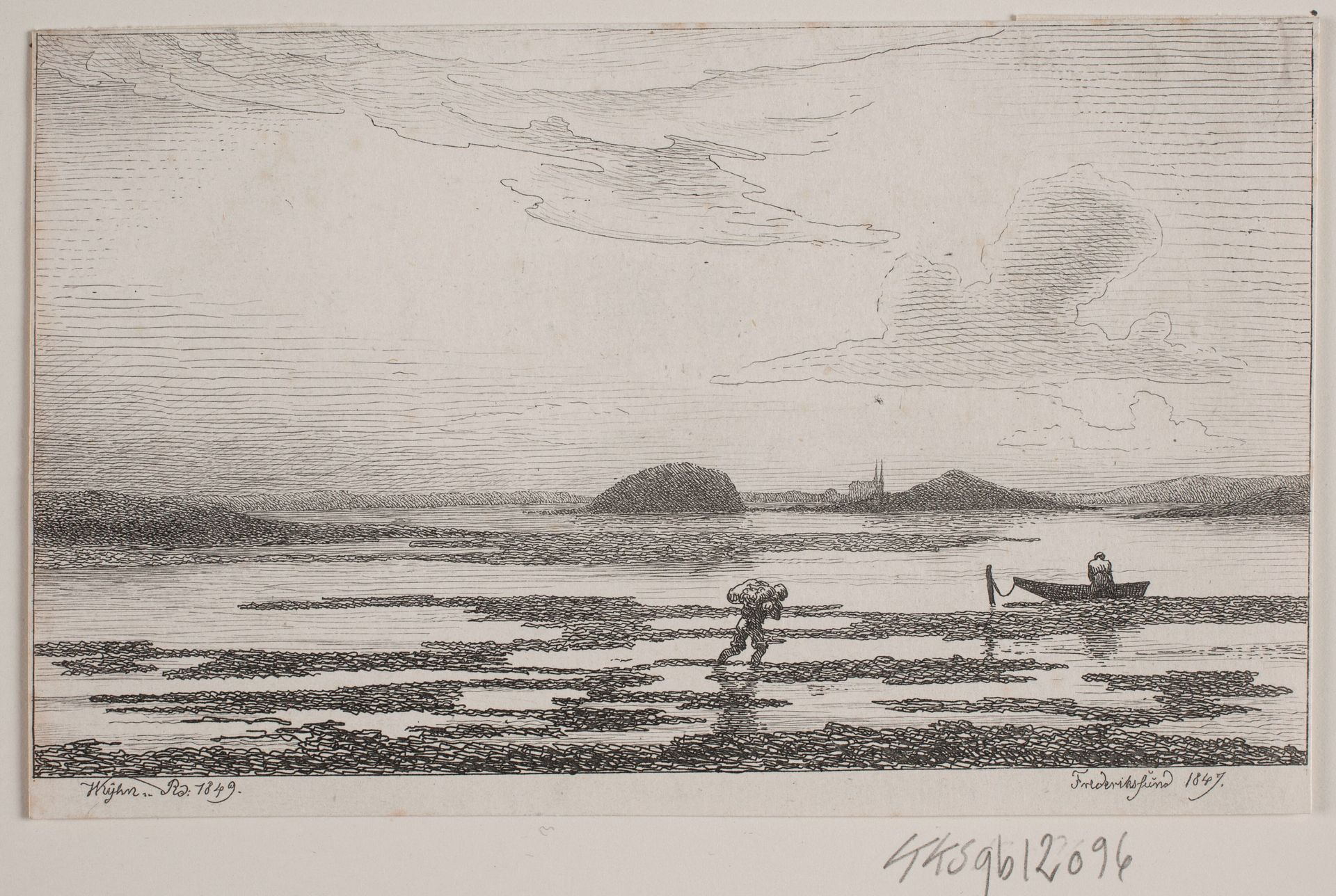
Vilhelm Kyhn created this print, "Strandparti ved Frederikssund," using etching, a process that marries technique with the social realities of its time. The delicate lines we see are the result of careful work: a metal plate coated in wax, lines drawn through it to expose the metal, then acid used to bite those lines into the surface. The plate is then inked and printed, transferring the image to paper. This was a reproducible medium, distinctly different from unique paintings. Consider how etching democratized art, making images accessible beyond the elite. The scene itself depicts everyday life, with figures engaged in labor by the water. Kyhn’s choice of etching aligns with a broader trend of representing ordinary people and landscapes, reflecting a shift in artistic focus towards the realities of 19th-century Danish life. By understanding the materials and processes behind "Strandparti ved Frederikssund," we gain insight into its cultural significance, and how it blurred the lines between fine art and the everyday experience.
Strandparti ved Frederikssund
1849


Artwork details
- Medium
- print, etching
- Dimensions
- 110 mm (height) x 155 mm (width) (plademaal)
- Location
- SMK - Statens Museum for Kunst
Tags
Comments
Share your thoughts
About this artwork
Vilhelm Kyhn created this print, "Strandparti ved Frederikssund," using etching, a process that marries technique with the social realities of its time. The delicate lines we see are the result of careful work: a metal plate coated in wax, lines drawn through it to expose the metal, then acid used to bite those lines into the surface. The plate is then inked and printed, transferring the image to paper. This was a reproducible medium, distinctly different from unique paintings. Consider how etching democratized art, making images accessible beyond the elite. The scene itself depicts everyday life, with figures engaged in labor by the water. Kyhn’s choice of etching aligns with a broader trend of representing ordinary people and landscapes, reflecting a shift in artistic focus towards the realities of 19th-century Danish life. By understanding the materials and processes behind "Strandparti ved Frederikssund," we gain insight into its cultural significance, and how it blurred the lines between fine art and the everyday experience.
Comments
Share your thoughts