About this artwork
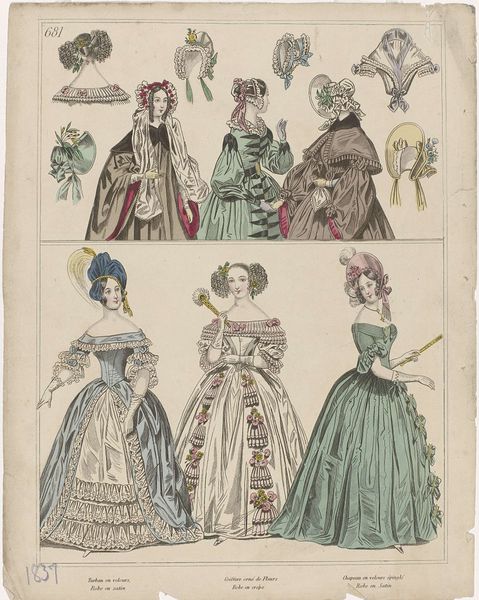
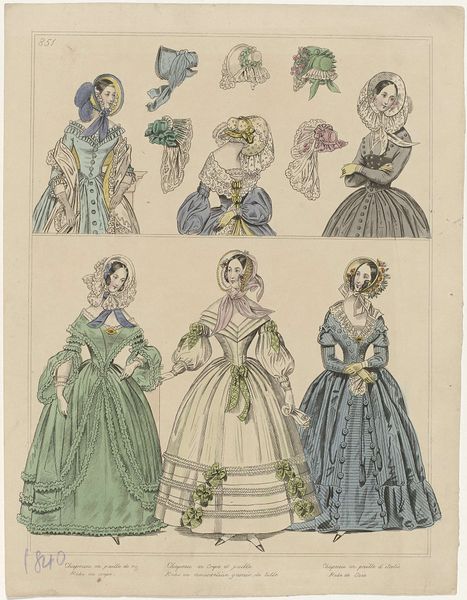
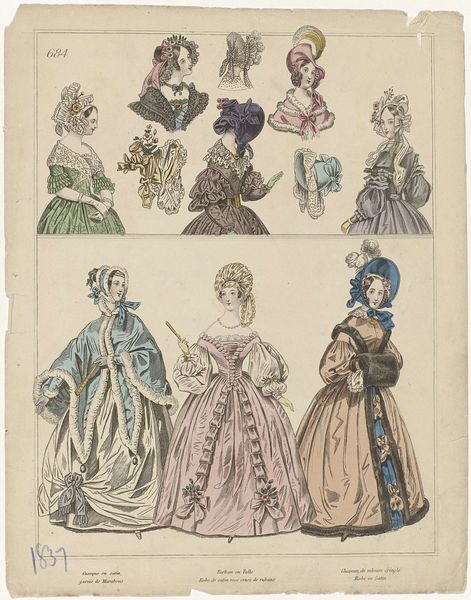
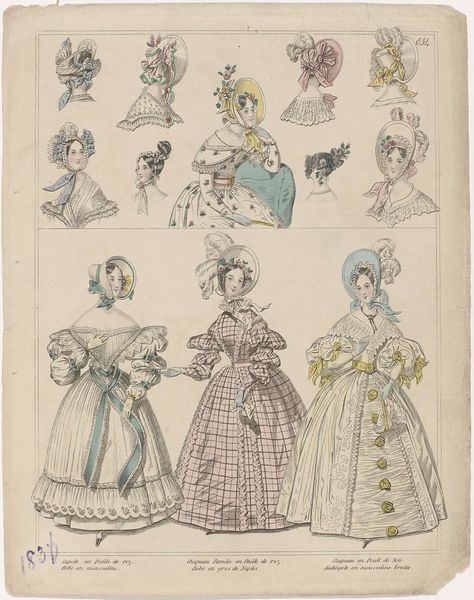
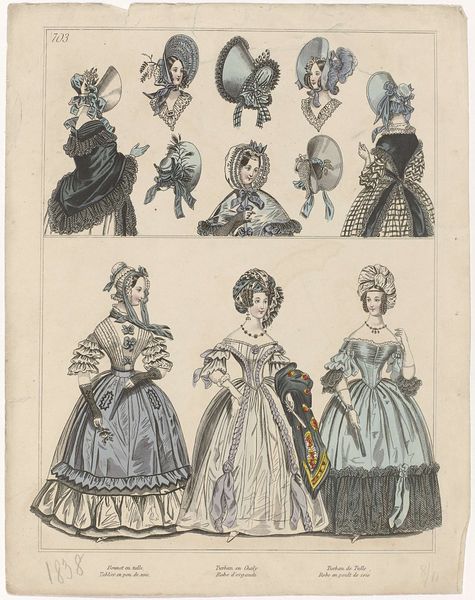
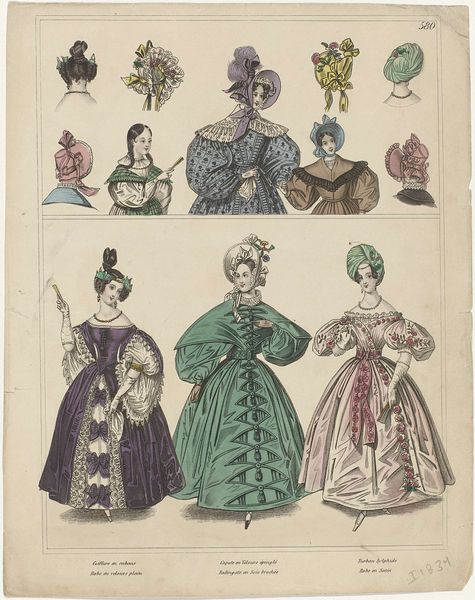
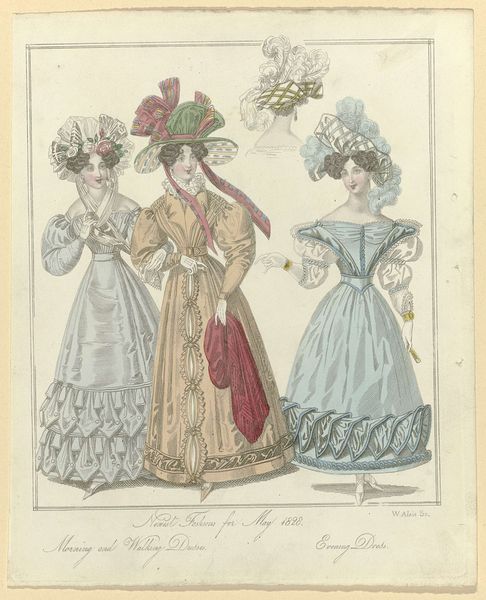
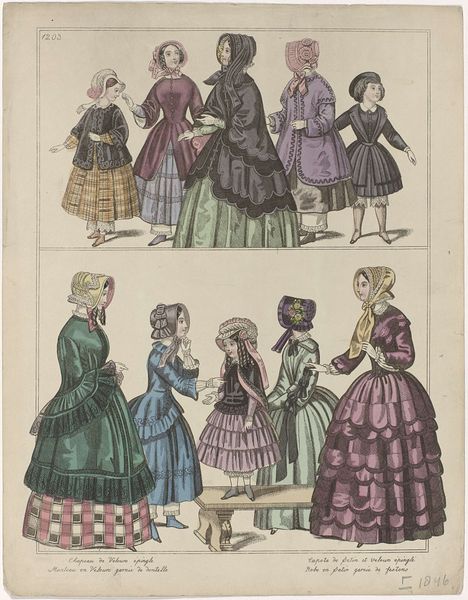
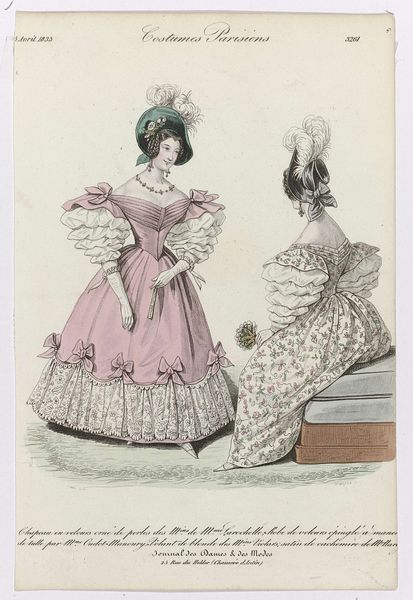
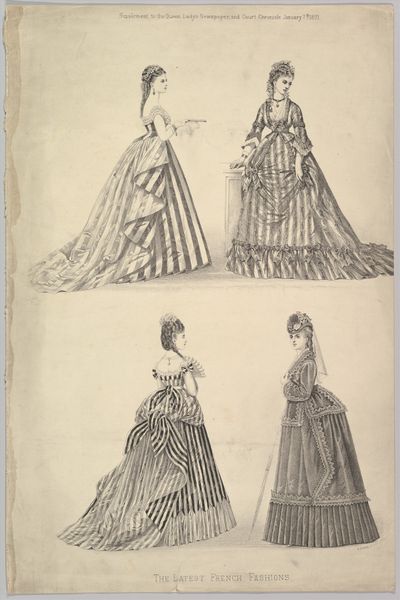
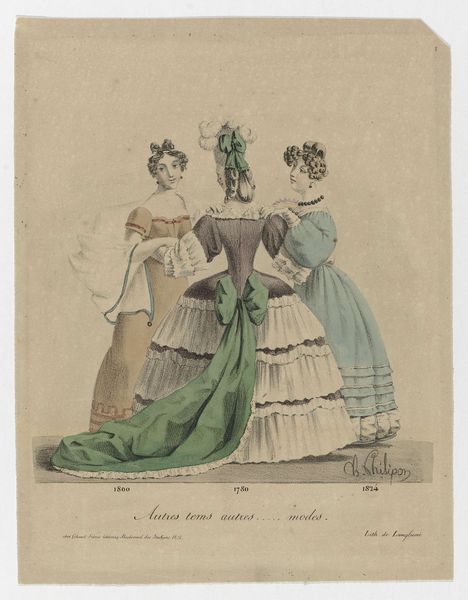
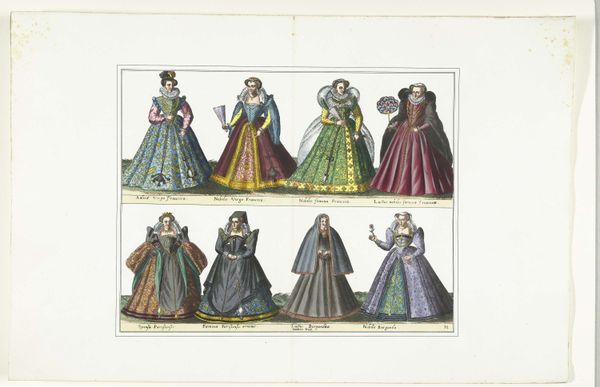
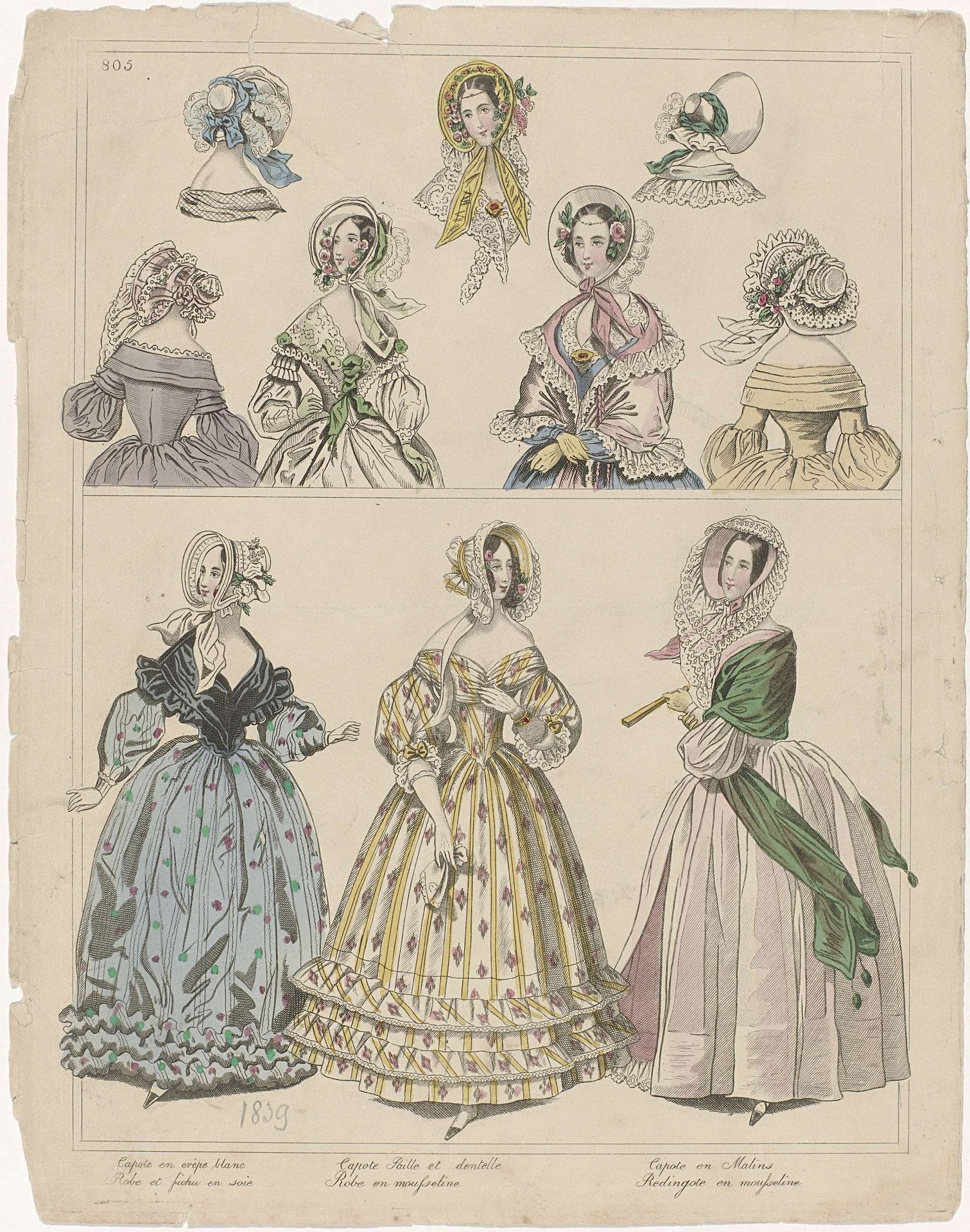
This is an anonymous print from 1839 showcasing Parisian fashion. The image offers a glimpse into the sartorial expectations of women in 19th-century France, reflecting the era's emphasis on elegance and refinement. What strikes me is how these fashion plates serve as both a reflection of and an aspiration for feminine identity. The elaborate dresses and bonnets suggest the constraints and the performance of gender, as women were expected to adhere to strict standards of beauty and social presentation. Yet, within these boundaries, there's also a sense of creativity and self-expression, as women sought to individualize their style through fabrics, colors, and accessories. Consider the material conditions of this fashion. The clothes represent a specific class. The women of color who toiled in the cotton fields were excluded from these images, which speaks volumes about the social hierarchies embedded in something as seemingly innocuous as fashion. It's a reminder that even the most beautiful creations are often entangled with histories of labor and inequality.
Townsend's Monthly Selection of Parisian Costumes, 1839, No. 805 : Capote en crêp (...)
1839

Artwork details
- Medium
- lithograph, print
- Dimensions
- height 291 mm, width 227 mm
- Copyright
- Rijks Museum: Open Domain
Tags
Comments
Share your thoughts
About this artwork
This is an anonymous print from 1839 showcasing Parisian fashion. The image offers a glimpse into the sartorial expectations of women in 19th-century France, reflecting the era's emphasis on elegance and refinement. What strikes me is how these fashion plates serve as both a reflection of and an aspiration for feminine identity. The elaborate dresses and bonnets suggest the constraints and the performance of gender, as women were expected to adhere to strict standards of beauty and social presentation. Yet, within these boundaries, there's also a sense of creativity and self-expression, as women sought to individualize their style through fabrics, colors, and accessories. Consider the material conditions of this fashion. The clothes represent a specific class. The women of color who toiled in the cotton fields were excluded from these images, which speaks volumes about the social hierarchies embedded in something as seemingly innocuous as fashion. It's a reminder that even the most beautiful creations are often entangled with histories of labor and inequality.
Comments
Share your thoughts