About this artwork
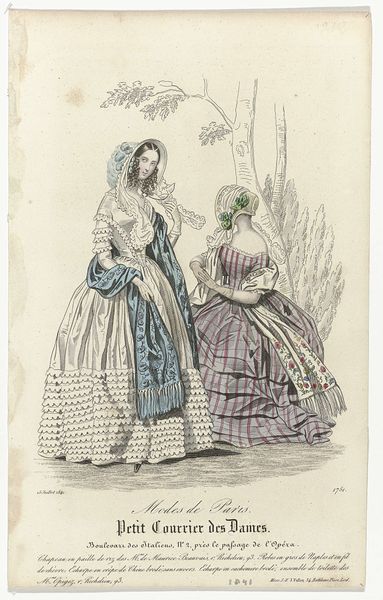
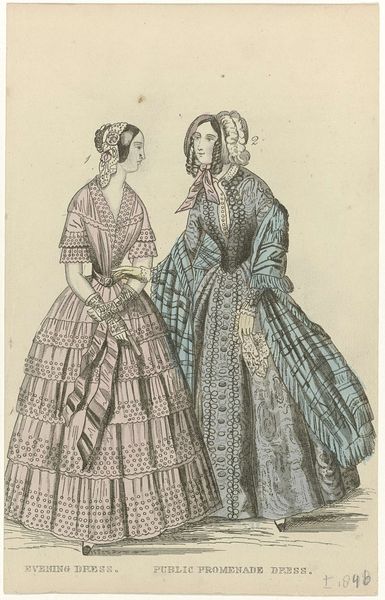
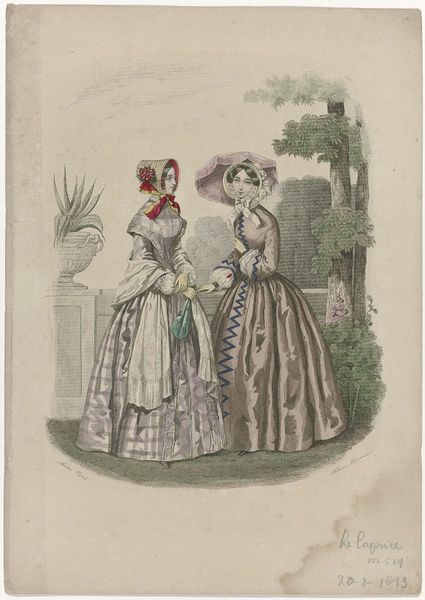
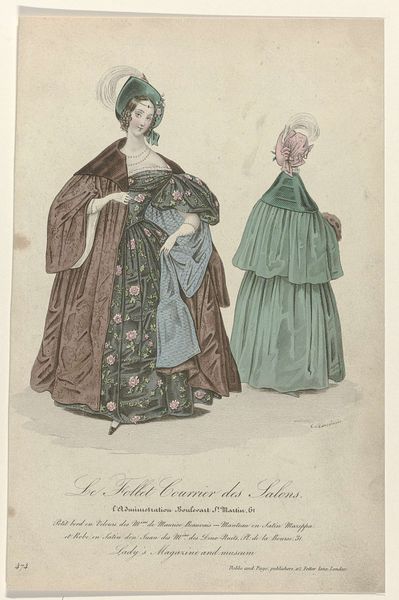
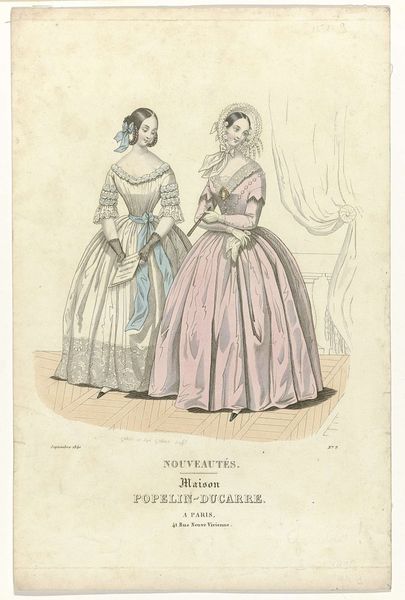
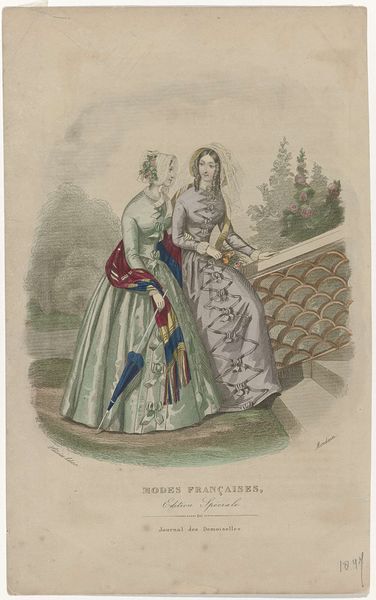
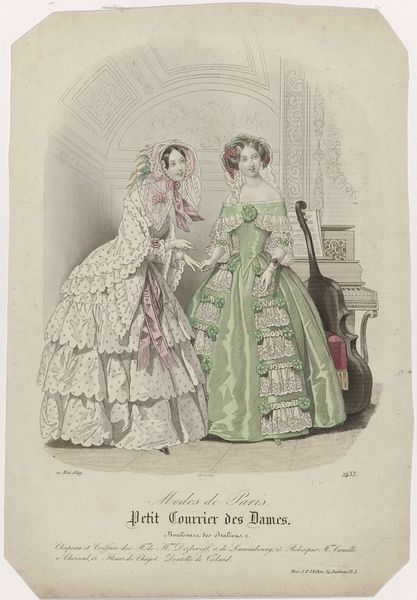
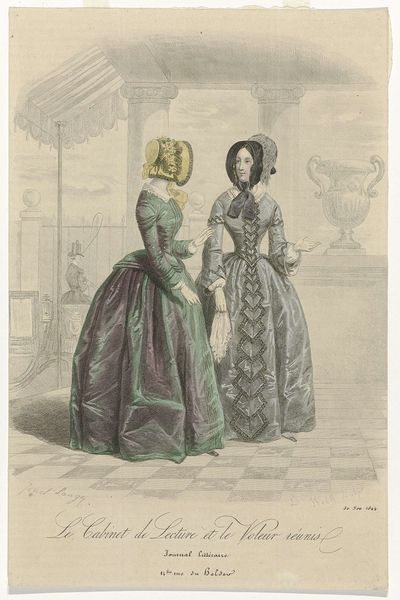
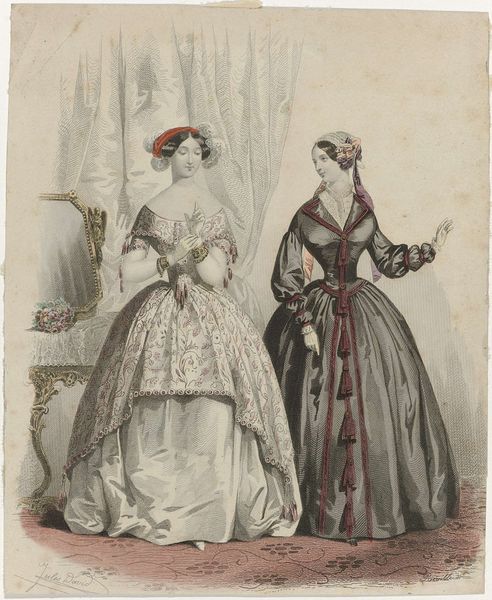
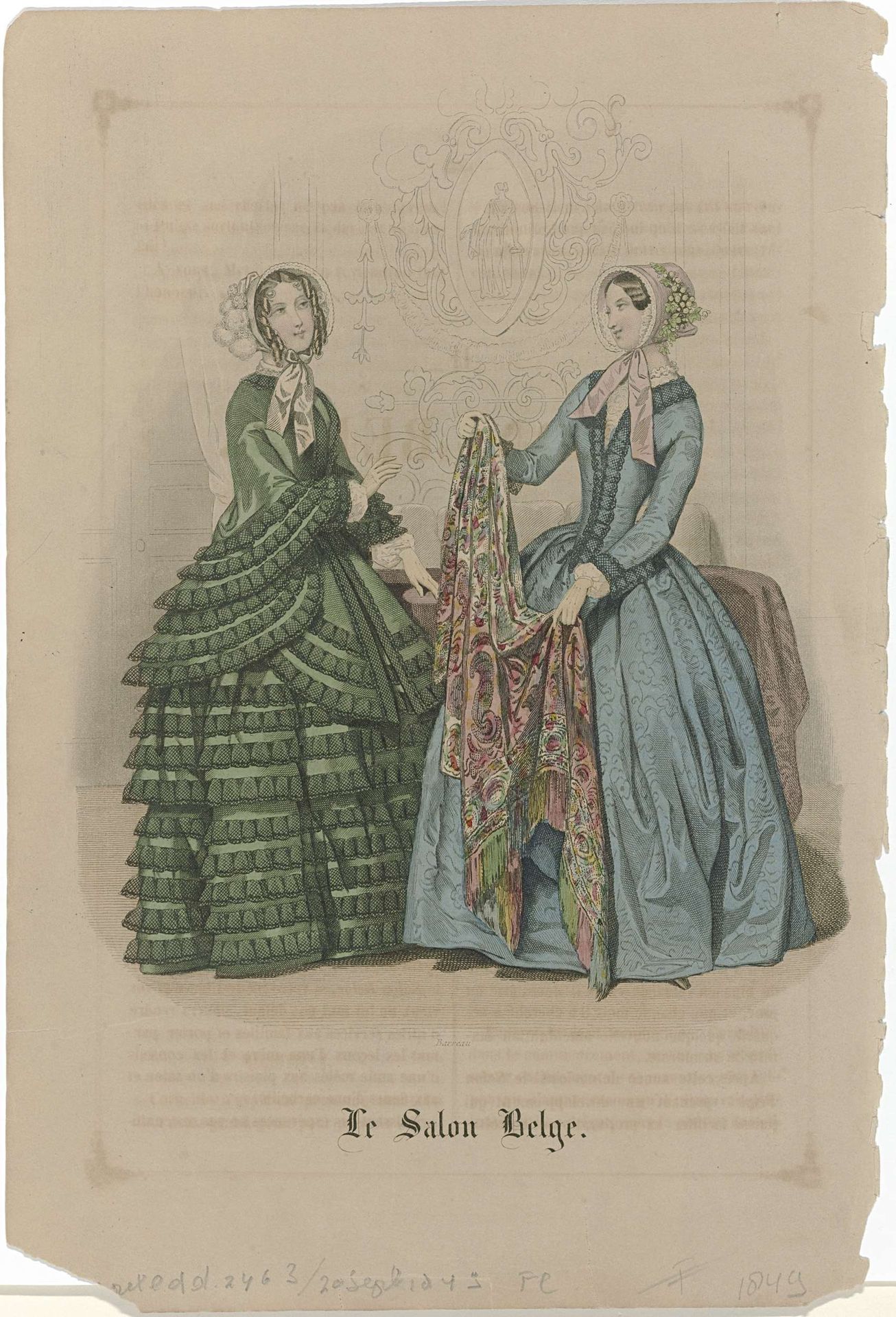
Jean-Charles-Michel Barreau created this print, Le Salon Belge, Bruxelles, in 1849. The lithographic process used here, printing from a stone or metal plate with a greasy ink, made it possible to reproduce images quickly and in multiple colors. The choice of this technique is significant. In the 19th century, fashion prints were a crucial tool for disseminating style trends, particularly among the burgeoning middle class. This image, with its focus on the elaborate dresses and paisley shawl, speaks directly to a culture increasingly driven by consumption. Consider the labor involved: from the textile mills producing the fabric to the seamstresses assembling the garments. The print itself becomes part of this chain of production, fueling desire and shaping taste. The lithograph democratized art and fashion by making images more accessible. Yet, it also obscured the labor and resources that went into producing these goods, contributing to the complexities of the industrial revolution. By examining this print, we can start to see how art, fashion, and industry became intertwined.

Artwork details
- Medium
- painting, watercolor
- Dimensions
- height 262 mm, width 175 mm
- Location
- Rijksmuseum
- Copyright
- Rijks Museum: Open Domain
Tags
Comments
Share your thoughts
About this artwork
Jean-Charles-Michel Barreau created this print, Le Salon Belge, Bruxelles, in 1849. The lithographic process used here, printing from a stone or metal plate with a greasy ink, made it possible to reproduce images quickly and in multiple colors. The choice of this technique is significant. In the 19th century, fashion prints were a crucial tool for disseminating style trends, particularly among the burgeoning middle class. This image, with its focus on the elaborate dresses and paisley shawl, speaks directly to a culture increasingly driven by consumption. Consider the labor involved: from the textile mills producing the fabric to the seamstresses assembling the garments. The print itself becomes part of this chain of production, fueling desire and shaping taste. The lithograph democratized art and fashion by making images more accessible. Yet, it also obscured the labor and resources that went into producing these goods, contributing to the complexities of the industrial revolution. By examining this print, we can start to see how art, fashion, and industry became intertwined.
Comments
Share your thoughts