1783
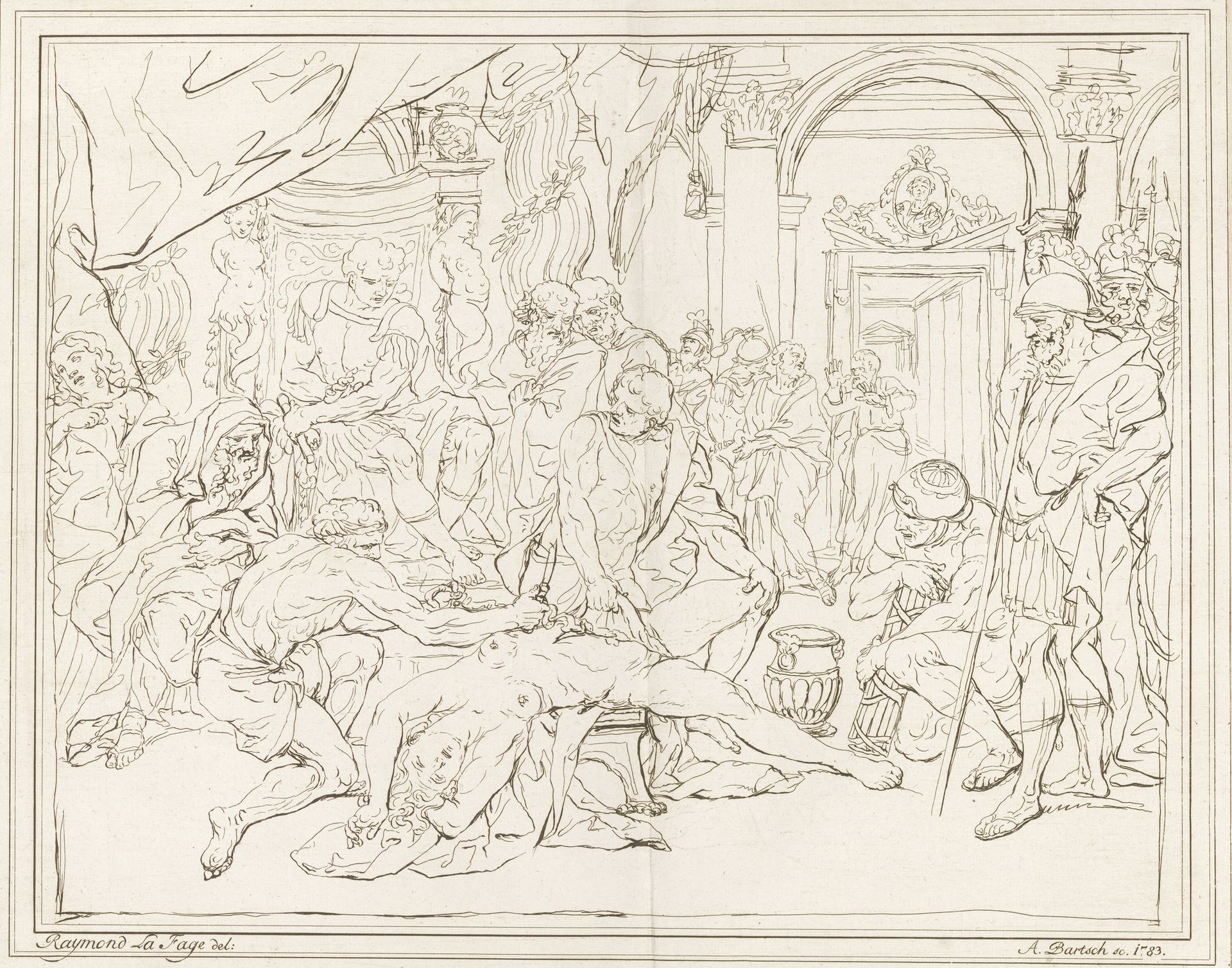
Nero voor het lijk van zijn moeder Agrippina

Adam von Bartsch
1757 - 1821Location
RijksmuseumListen to curator's interpretation
Curatorial notes
This print, Nero before the Corpse of his Mother Agrippina, was made by Adam von Bartsch in the late 18th century using etching, a printmaking technique that relies on acid to bite lines into a metal plate. The stark, linear quality of the etching emphasizes the drama of the scene – Nero contemplating the body of his mother, whom he ordered assassinated. Von Bartsch used the etching process to achieve a highly detailed composition. Think of the way the lines define form and shadow, creating a sense of depth and texture. But this wasn’t merely technical virtuosity. Printmaking in this era was increasingly aligned with the demands of the market. Etchings like this were relatively quick to produce, and lent themselves to mass distribution. The story being told would have been well known, and would carry a particular moral punch. Von Bartsch’s print is a reminder that even seemingly traditional fine art techniques were deeply enmeshed with the emerging culture of mass production and consumption.