About this artwork
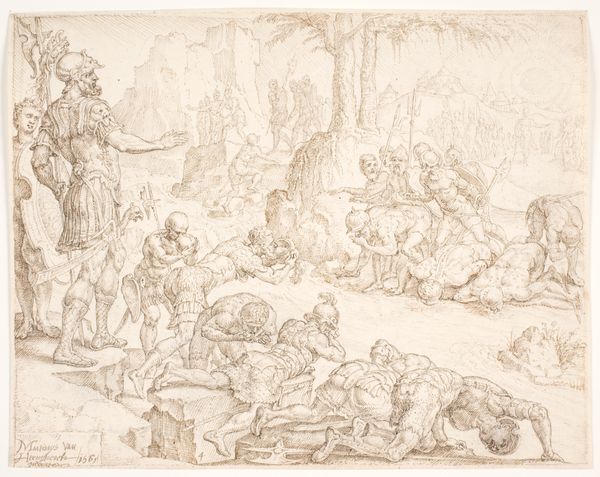
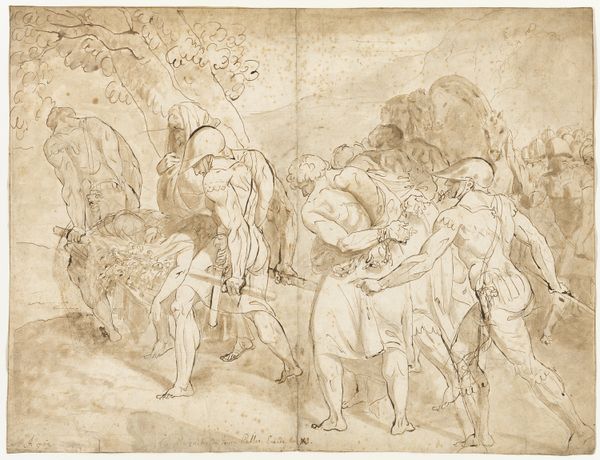
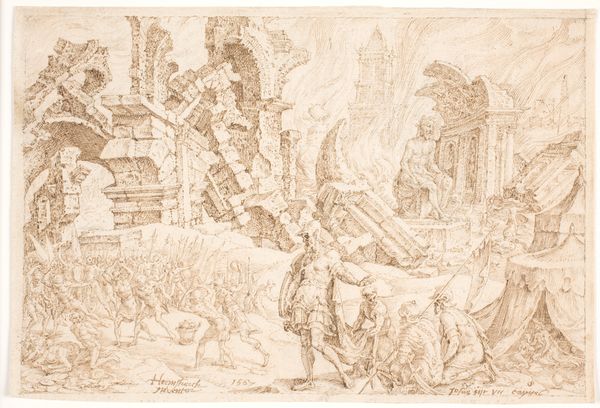
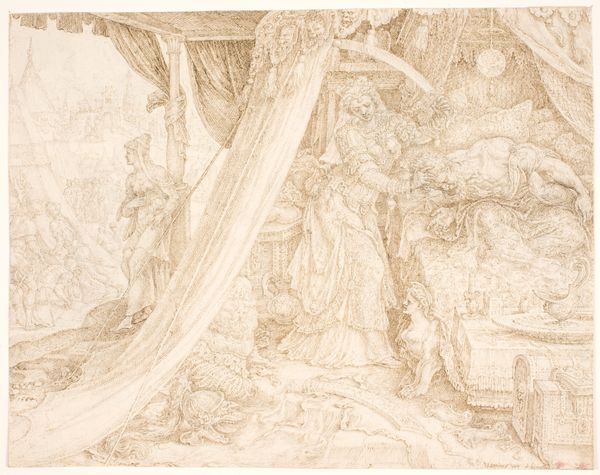
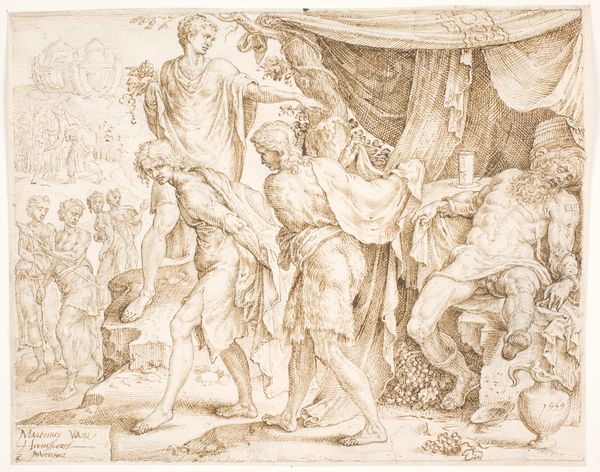
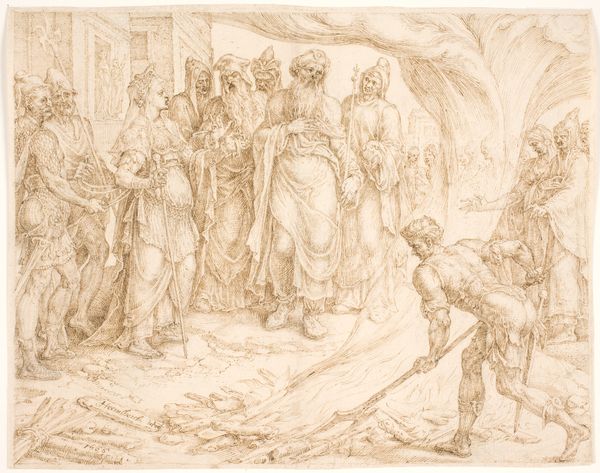
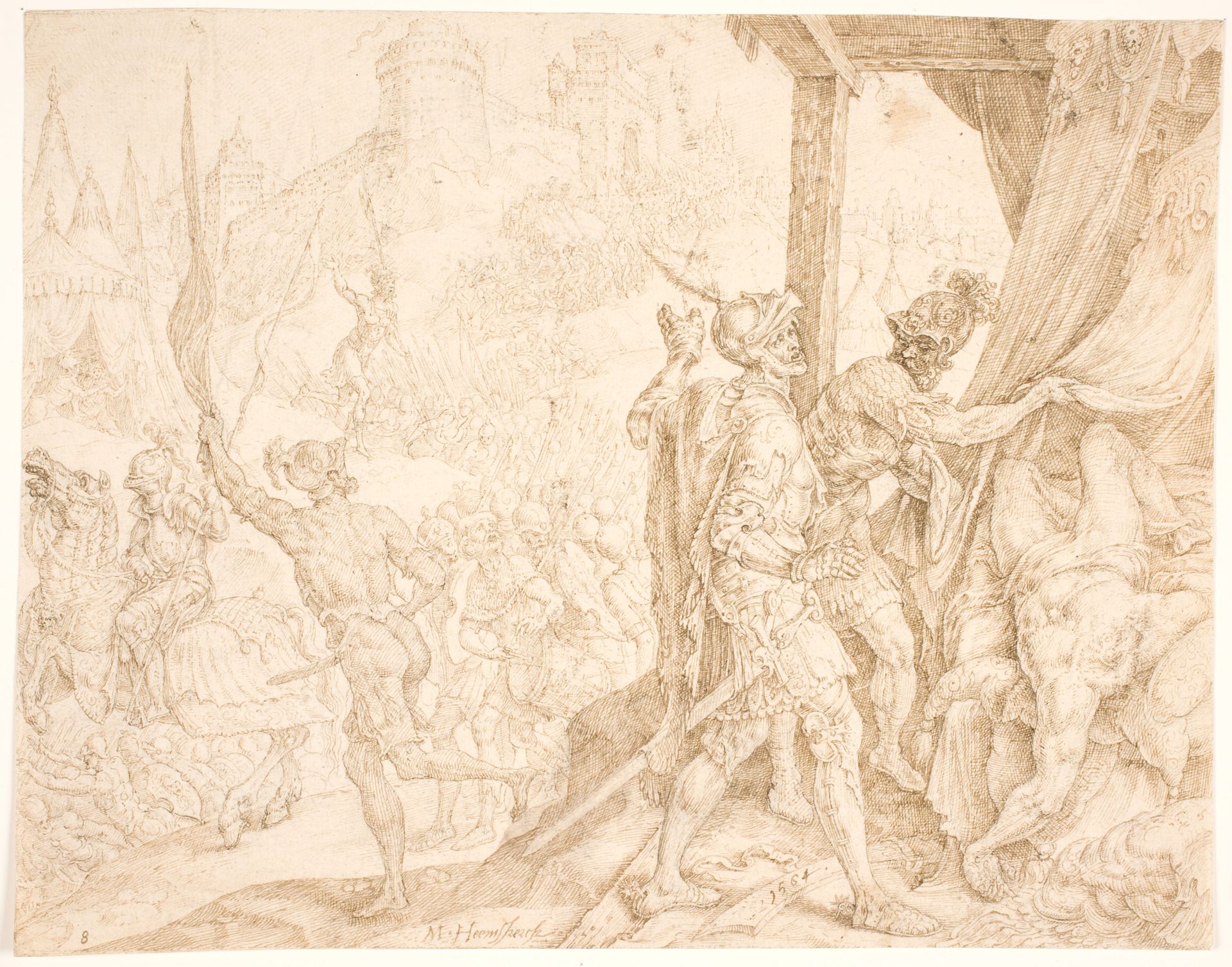
Editor: This pen drawing, "Holofernes' body found by Bagoas," was created by Maarten van Heemskerck in 1564. The detail is striking! All those tiny strokes and lines build up such a dramatic scene. What do you make of the ways he uses line and space to convey this narrative? Curator: The medium itself—pen and ink—speaks to the artist's workshop practice. Consider the ready availability of these materials, enabling the creation of preparatory drawings or independent works for a growing market. How does this affect our understanding of artistic labor at the time? Is this “high art,” or something else entirely? Editor: That’s interesting! It seems less about divine inspiration and more about a skilled worker using available resources. Curator: Precisely. We see Mannerism in the exaggerated musculature and dynamic poses. The availability of models, their cost, and their status – consider all this labor materialized in the pen strokes. What statement might the artist be making about wealth and violence through his particular emphasis? Editor: So the material itself connects to social hierarchies and economic conditions. It makes you wonder about the people Heemskerck was depicting, and who could afford to see these stories. Curator: Exactly. Think about who had access to stories, visual culture, and the actual materials to create these images in 1564. Editor: This changes everything! I’ll never look at a drawing the same way. Curator: Good. Question everything. The labor and resources, both visible and invisible, shape what we see and how we interpret it.
Holofernes' body found by Bagoas
1564


Artwork details
- Medium
- drawing, pen
- Dimensions
- 197 mm (height) x 251 mm (width) (bladmaal)
- Location
- SMK - Statens Museum for Kunst
Tags
Comments
Share your thoughts
About this artwork
Editor: This pen drawing, "Holofernes' body found by Bagoas," was created by Maarten van Heemskerck in 1564. The detail is striking! All those tiny strokes and lines build up such a dramatic scene. What do you make of the ways he uses line and space to convey this narrative? Curator: The medium itself—pen and ink—speaks to the artist's workshop practice. Consider the ready availability of these materials, enabling the creation of preparatory drawings or independent works for a growing market. How does this affect our understanding of artistic labor at the time? Is this “high art,” or something else entirely? Editor: That’s interesting! It seems less about divine inspiration and more about a skilled worker using available resources. Curator: Precisely. We see Mannerism in the exaggerated musculature and dynamic poses. The availability of models, their cost, and their status – consider all this labor materialized in the pen strokes. What statement might the artist be making about wealth and violence through his particular emphasis? Editor: So the material itself connects to social hierarchies and economic conditions. It makes you wonder about the people Heemskerck was depicting, and who could afford to see these stories. Curator: Exactly. Think about who had access to stories, visual culture, and the actual materials to create these images in 1564. Editor: This changes everything! I’ll never look at a drawing the same way. Curator: Good. Question everything. The labor and resources, both visible and invisible, shape what we see and how we interpret it.
Comments
Share your thoughts