About this artwork
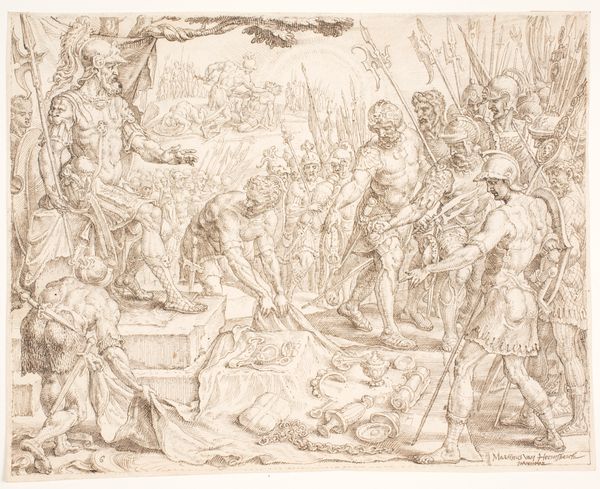
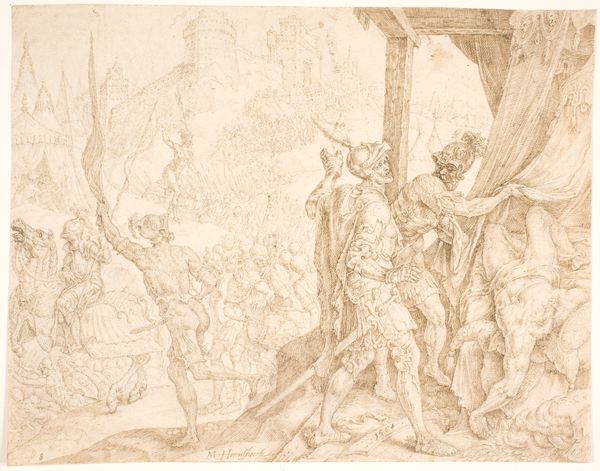
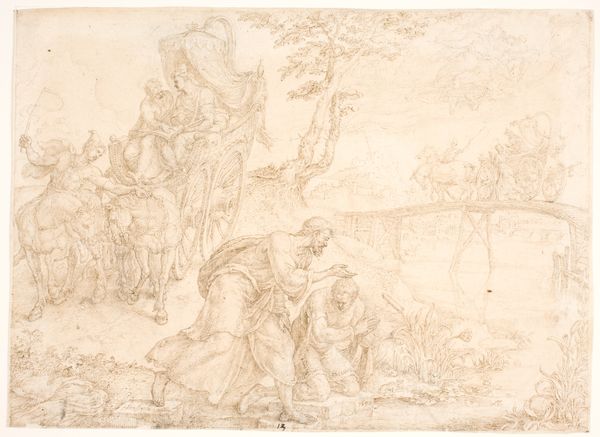
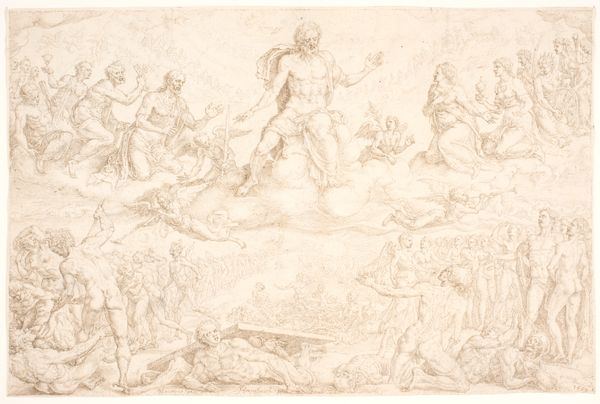
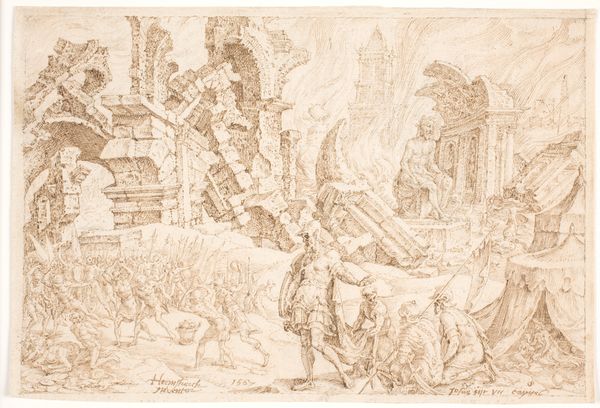
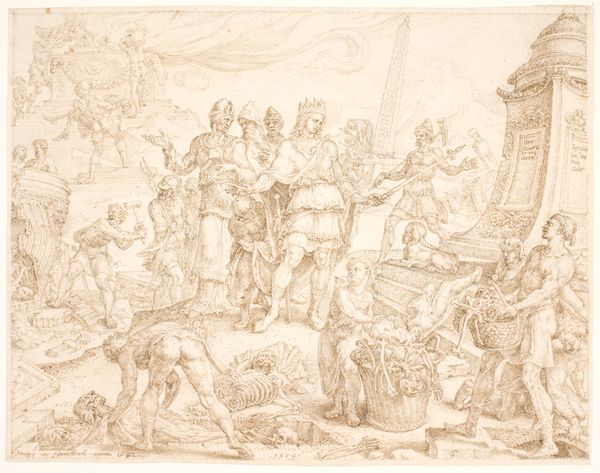
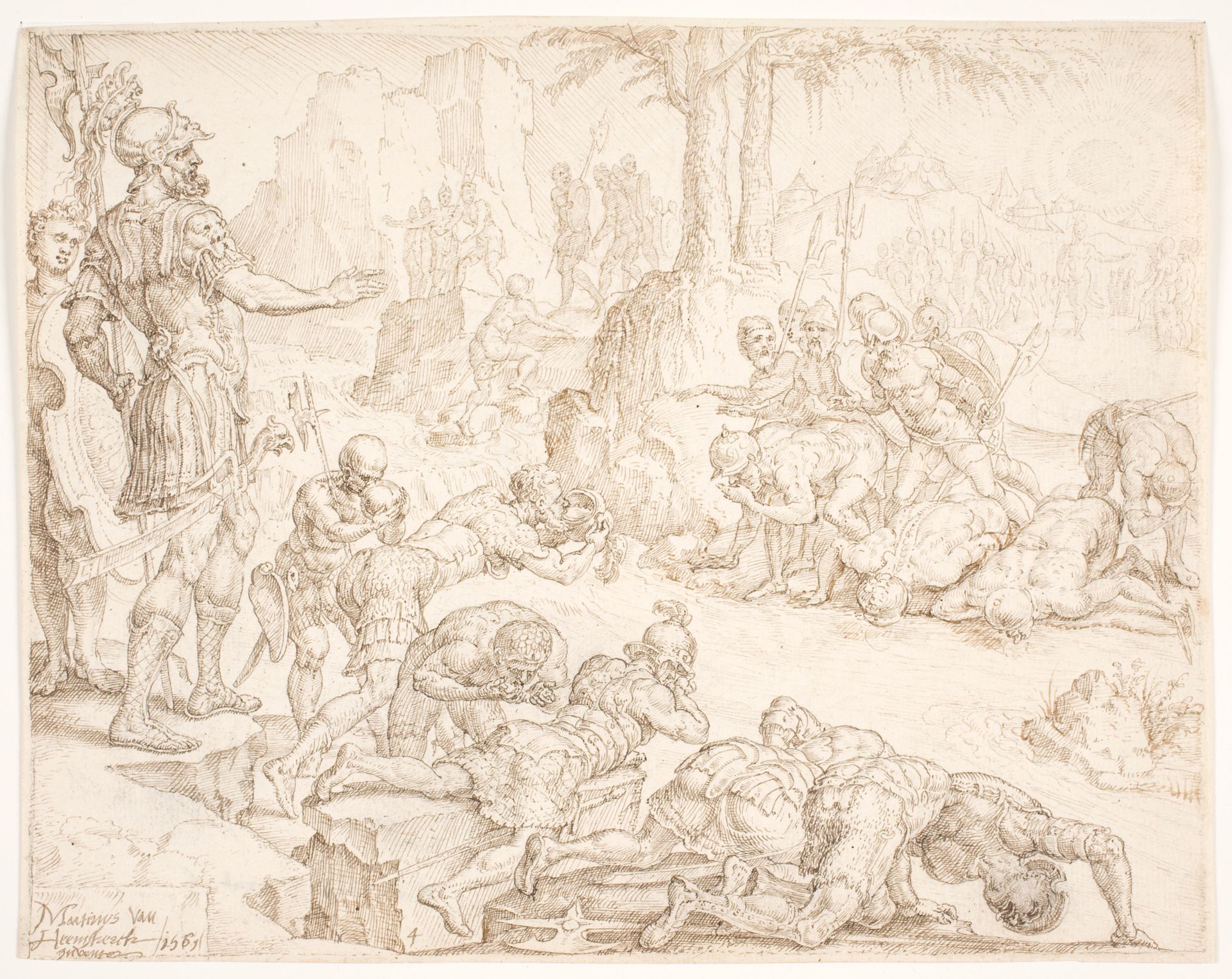
In this drawing, Maarten van Heemskerck depicts the biblical story of Gideon reducing the size of his army, and he does so in the Netherlands in 1561. We see Gideon, adorned in classical armor, presiding over his troops, the weary soldiers kneeling to drink from a stream. This biblical tale would have resonated with the people of the Netherlands, who were then engaged in their own struggle against the Spanish Empire. The reduction of Gideon’s army mirrors the need for discipline and dedication in their fight for independence. Heemskerck’s choice of attire for Gideon reflects the cultural fascination with classical antiquity during the Renaissance, but it also speaks to the artist’s sense of a continuous history of military might. To better understand Heemskerck’s image, we can consult historical texts, religious commentaries, and studies of Renaissance art and culture, all of which are resources available to the art historian. The drawing reminds us that art is never created in a vacuum; it is always a product of its time, reflecting the social, political, and cultural forces at play.
The Reduction of Gideon's Army
1561


Artwork details
- Medium
- drawing, etching, ink, engraving
- Dimensions
- 201 mm (height) x 253 mm (width) (bladmaal)
- Location
- SMK - Statens Museum for Kunst
Tags
drawing
ink drawing
ink painting
pen sketch
etching
landscape
etching
figuration
ink
history-painting
northern-renaissance
engraving
Comments
Be the first to share your thoughts about this work.
About this artwork
In this drawing, Maarten van Heemskerck depicts the biblical story of Gideon reducing the size of his army, and he does so in the Netherlands in 1561. We see Gideon, adorned in classical armor, presiding over his troops, the weary soldiers kneeling to drink from a stream. This biblical tale would have resonated with the people of the Netherlands, who were then engaged in their own struggle against the Spanish Empire. The reduction of Gideon’s army mirrors the need for discipline and dedication in their fight for independence. Heemskerck’s choice of attire for Gideon reflects the cultural fascination with classical antiquity during the Renaissance, but it also speaks to the artist’s sense of a continuous history of military might. To better understand Heemskerck’s image, we can consult historical texts, religious commentaries, and studies of Renaissance art and culture, all of which are resources available to the art historian. The drawing reminds us that art is never created in a vacuum; it is always a product of its time, reflecting the social, political, and cultural forces at play.
Comments
Be the first to share your thoughts about this work.