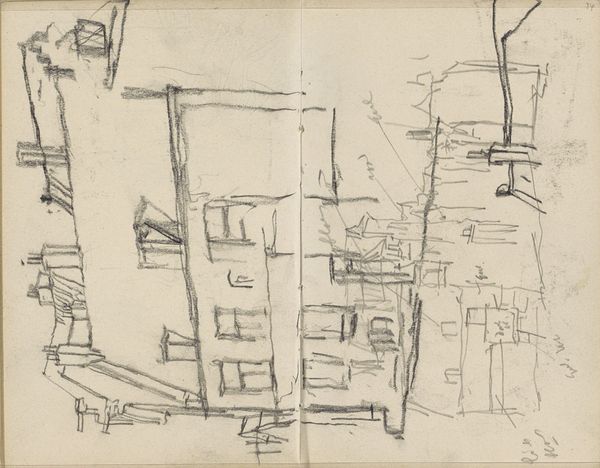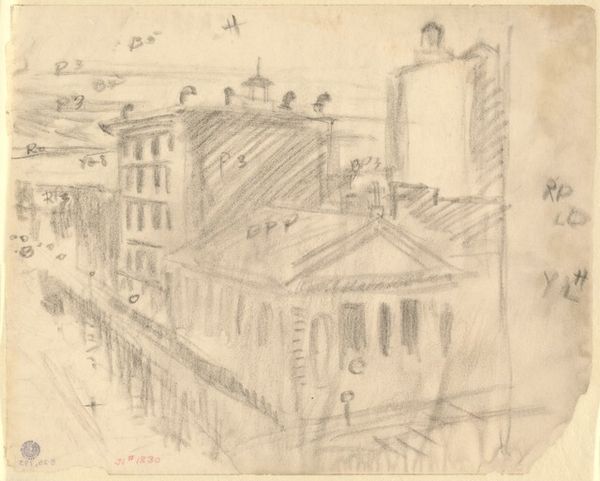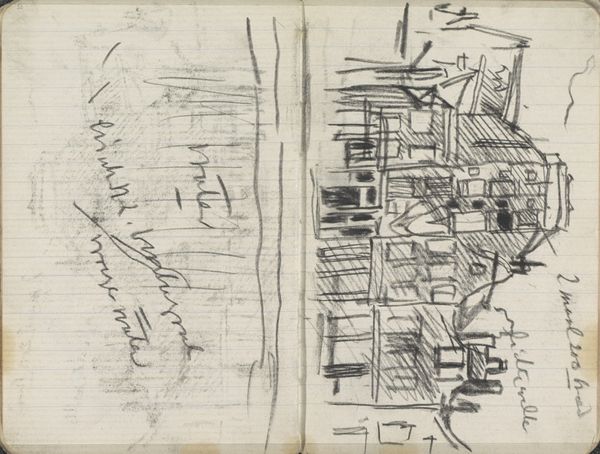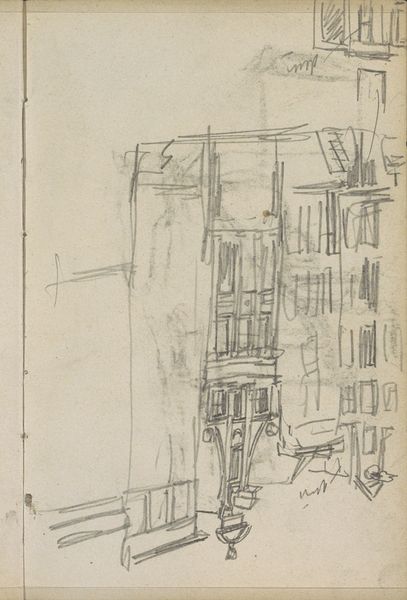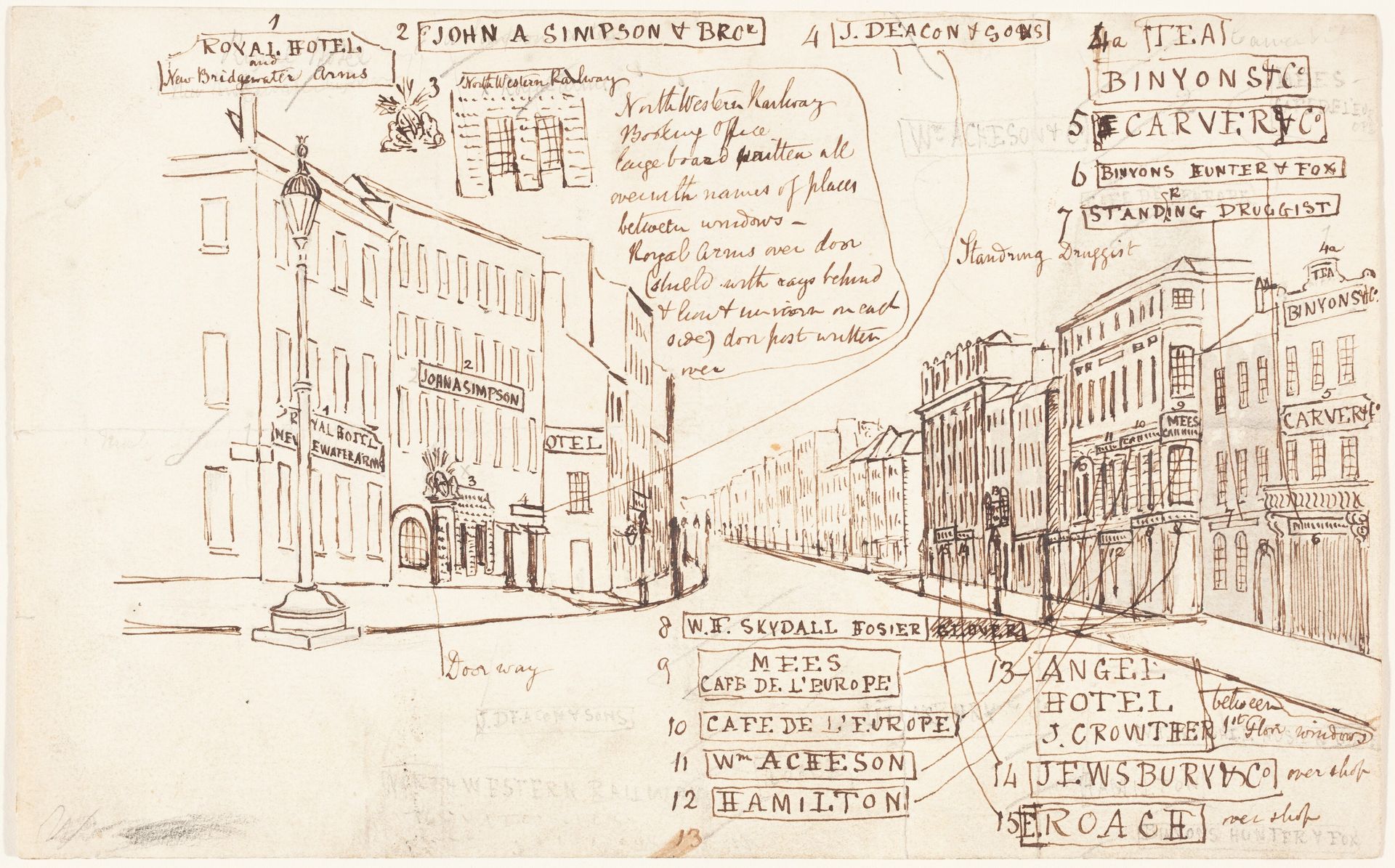
Street Perspective with Places of Business Labeled


Listen to curator's interpretation
Curatorial notes
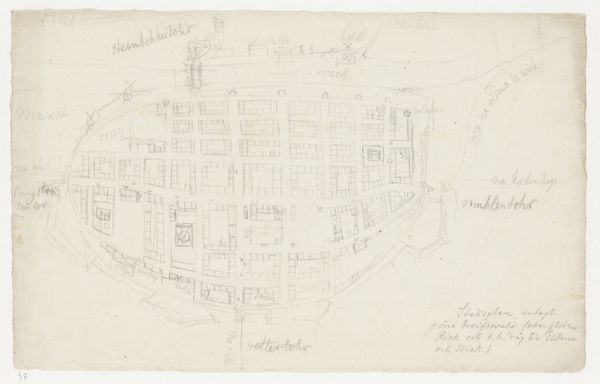
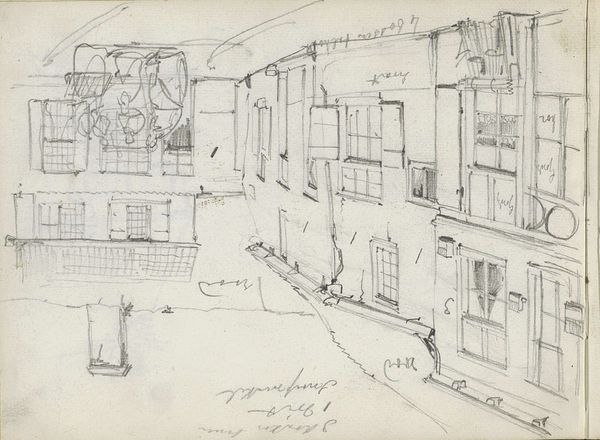
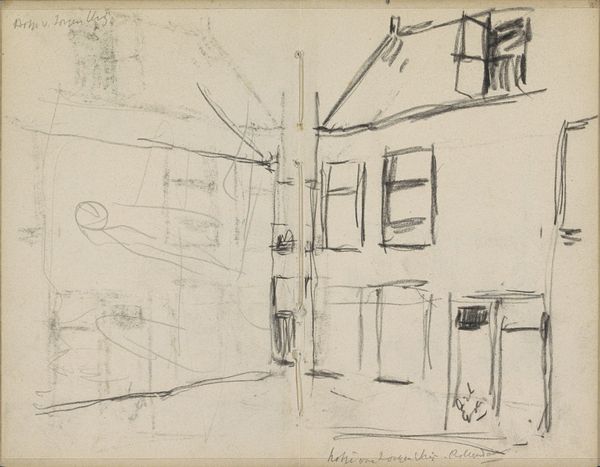
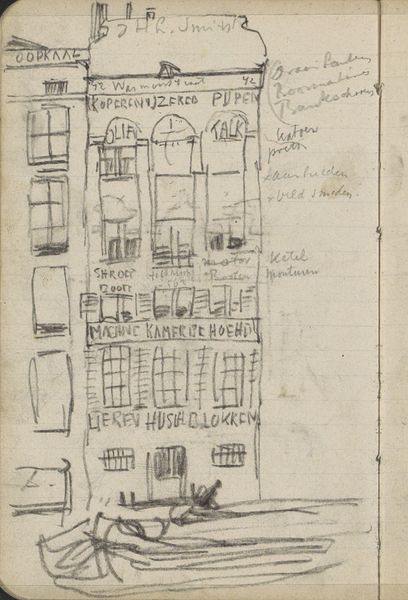
Curator: This charming street scene, rendered in pen, ink, and etching, offers a snapshot of a bygone era. Though undated, "Street Perspective with Places of Business Labeled" is attributed to George Cruikshank. What strikes you first about it? Editor: The meticulous detail! It’s almost overwhelming, isn't it? It reminds me of a hand-drawn map, and I immediately wonder who this street serves and who it excludes. Who gets to participate in the commerce depicted here, and whose labor supports it from behind the scenes? Curator: Exactly! Cruikshank’s drawing, in its careful rendering of shopfronts and hotels, really allows us to examine the socio-economic fabric of the time. Notice how the buildings are all carefully labelled, a seeming obsession with cataloguing commerce? It’s less a picturesque cityscape and more of an inventory. Editor: Right, and those labels are key to unlocking that inventory. "Standing Druggist", "Cafe de L'Europe"—each a potential site of social exchange, consumption, and also potentially sites of social tension based on class and accessibility. The hotels particularly, such as the “Royal Hotel,” point towards ideas of exclusive experiences, but this raises issues around labor. Who runs the place? Who are its guests? Curator: Indeed. And we must acknowledge Cruikshank’s own position. As a satirical illustrator, he often critiqued the very society he depicted. Do we see an implicit commentary on consumerism or the burgeoning capitalist system here? Editor: I see a framework, perhaps unconsciously, for understanding urban stratification. The drawing is undeniably charming, but its very charm belies deeper questions about access, labor, and the narratives being constructed—both visibly on the shop fronts, and invisibly within its historical context. We might look closer at "cafe de L’Europe," the use of language in the sign reveals that it catered to a certain group that appreciated it; What did that mean for the people and owners? What positionality and privileges did they experience? Curator: A keen reminder that even seemingly objective records like this drawing are laden with perspective and power. It also pushes us to seek stories behind each storefront—stories of aspiration, exploitation, and the everyday struggles of urban life. Editor: Precisely. The deceptively simple image becomes a lens through which we can begin to dissect the layered complexities of history.