1700 - 1868
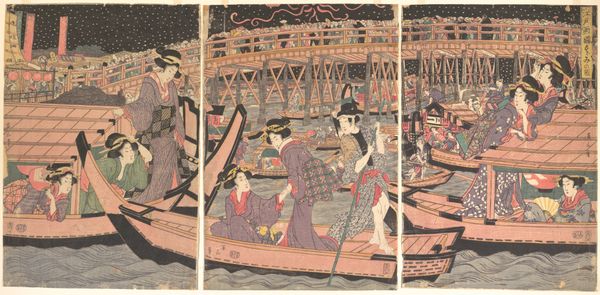
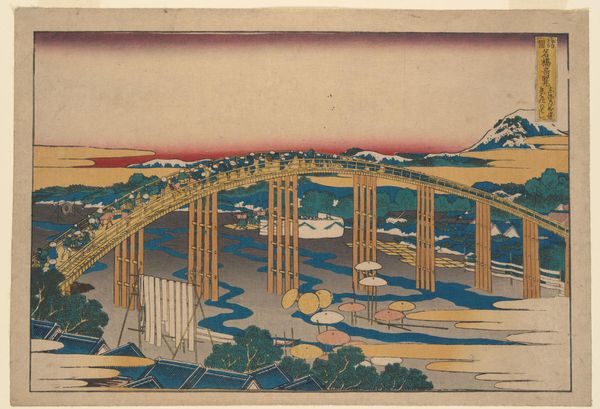
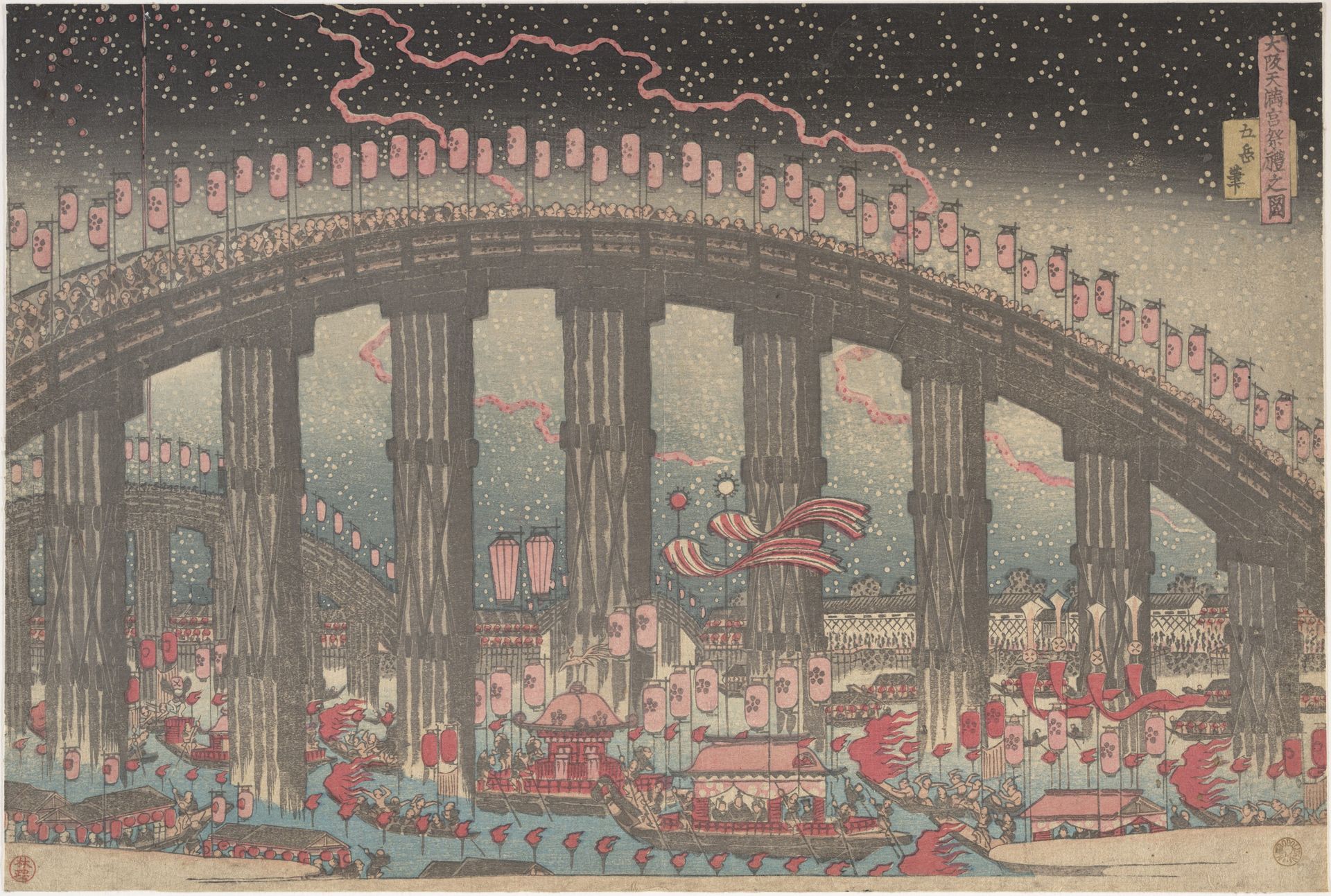
The Tenmangu Festival at Osaka

Yashima Gakutei 屋島岳亭
1786 - 1868
The Metropolitan Museum of Art
Metropolitan Museum of Art, New York, NYListen to curator's interpretation
Curatorial notes
Editor: So, this woodblock print is called "The Tenmangu Festival at Osaka," by Yashima Gakutei, dating somewhere between 1700 and 1868. The pink lanterns really create a festive mood, but the bridge looming over the scene is quite imposing. What strikes you most about this work? Curator: The bridge, indeed! Notice how it bisects the composition, a solid, unwavering structure against the ephemeral nature of the festival. Bridges, you see, often represent a crossing – a transition from one state to another, a link between the earthly and the spiritual. Editor: Like moving from the mundane to the sacred? Curator: Precisely! Festivals in Ukiyo-e often capture the vibrant energy of public life, but here, Gakutei elevates it. Consider the lanterns. What do they signify? Editor: Celebration, definitely. Illumination in the darkness... almost like guiding lights. Curator: Think deeper. In Japanese festivals, lanterns can represent ancestral spirits, guiding them and honoring their presence. This print becomes more than just a scene; it's an active invocation of cultural memory, a beautiful example of continuity expressed through visual symbols. Editor: That's fascinating! I was so focused on the surface, I didn't see the depth of historical and cultural symbolism. I see it now, thank you! Curator: My pleasure. Each element, from the bridge to the lanterns, works to create a layered visual language, speaking volumes about the culture that created it. We've merely scratched the surface today!