About this artwork
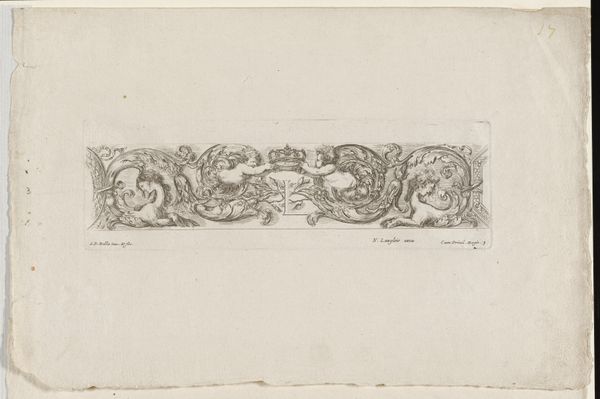
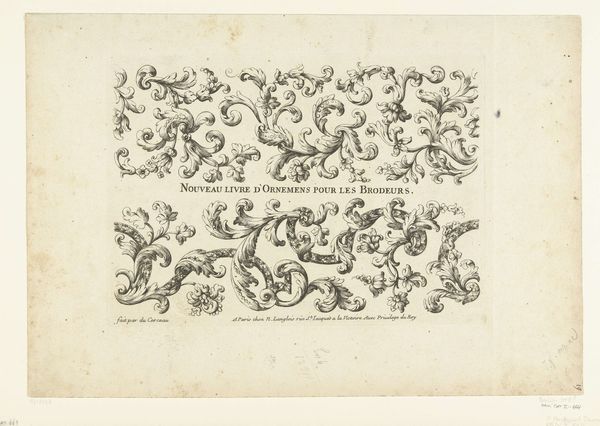
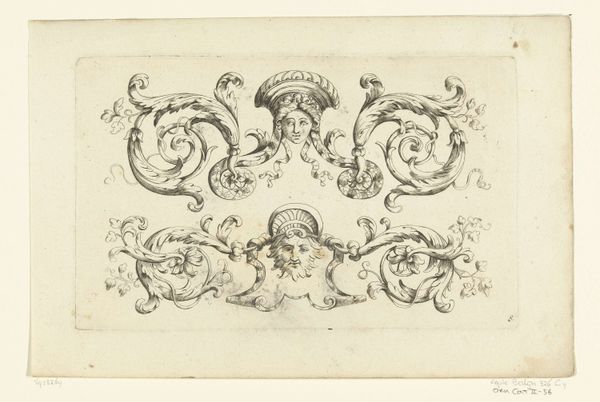
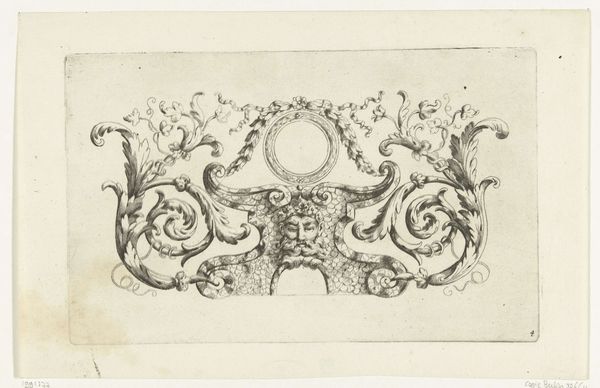
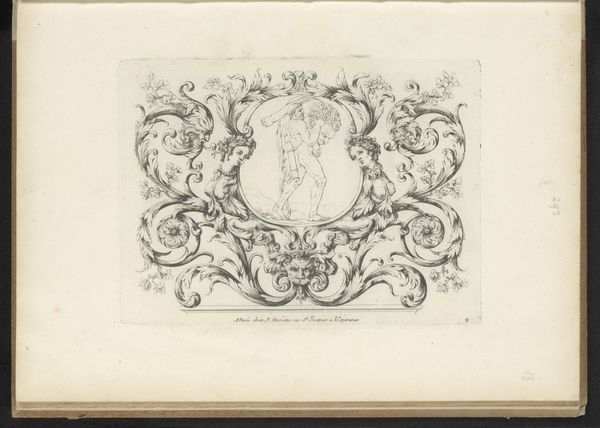
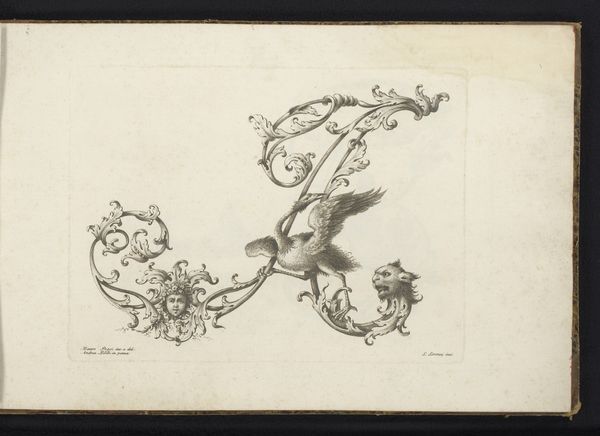
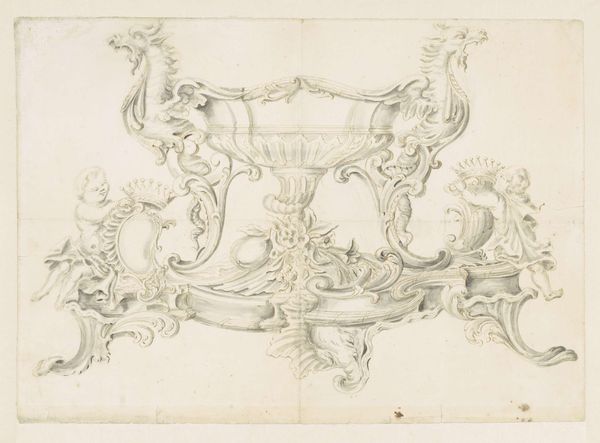
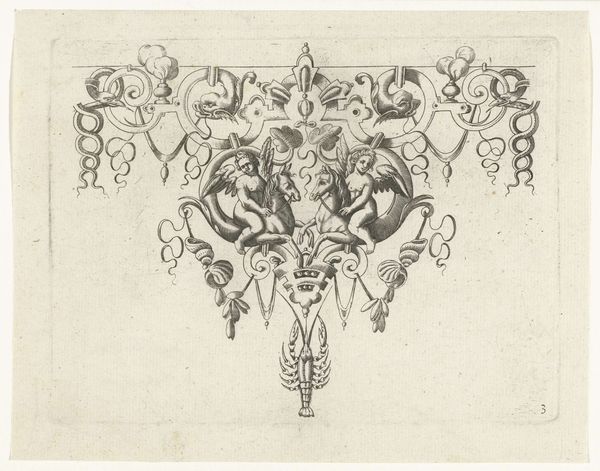
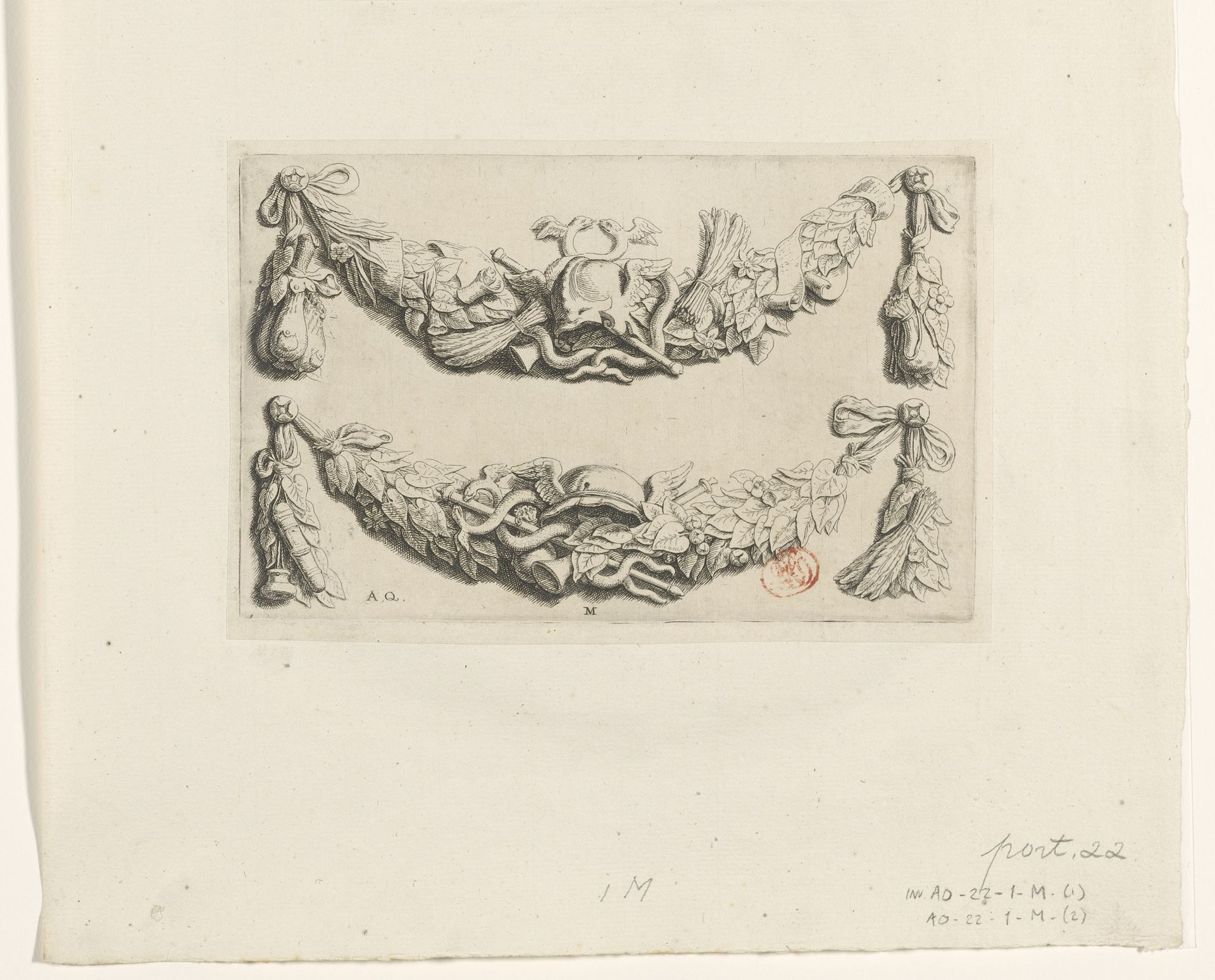
Hubert Quellinus made this print of festoons with the attributes of Mercury sometime in the 17th century. The technique used here, etching, is an indirect intaglio method, where a metal plate is coated with a waxy ground and then etched with a needle. As you can see, the linear quality achieved through etching lends itself well to depicting intricate detail, especially in the rendering of foliage, tassels, and the various symbolic objects associated with Mercury, the Roman god of commerce and communication. What's also interesting here is the implied relationship to the built environment. Quellinus, along with his brother Artus, was deeply involved in the design of Amsterdam’s Town Hall. These prints would likely have served as preparatory studies or records of their work. The act of translating three-dimensional sculptural ideas into two-dimensional prints speaks to a fascinating interplay between different modes of production and artistic expression. It also reminds us that even seemingly straightforward images are often the result of complex processes involving labor and skill.
Twee festoenen met attributen van Mercurius en bladeren in de zuidelijke galerij van het Stadhuis op de Dam
1655

Hubert Quellinus
1619 - 1687Location
RijksmuseumArtwork details
- Medium
- drawing, print, relief, engraving
- Dimensions
- height 134 mm, width 210 mm
- Location
- Rijksmuseum
- Copyright
- Rijks Museum: Open Domain
Tags
Comments
Share your thoughts
About this artwork
Hubert Quellinus made this print of festoons with the attributes of Mercury sometime in the 17th century. The technique used here, etching, is an indirect intaglio method, where a metal plate is coated with a waxy ground and then etched with a needle. As you can see, the linear quality achieved through etching lends itself well to depicting intricate detail, especially in the rendering of foliage, tassels, and the various symbolic objects associated with Mercury, the Roman god of commerce and communication. What's also interesting here is the implied relationship to the built environment. Quellinus, along with his brother Artus, was deeply involved in the design of Amsterdam’s Town Hall. These prints would likely have served as preparatory studies or records of their work. The act of translating three-dimensional sculptural ideas into two-dimensional prints speaks to a fascinating interplay between different modes of production and artistic expression. It also reminds us that even seemingly straightforward images are often the result of complex processes involving labor and skill.
Comments
Share your thoughts