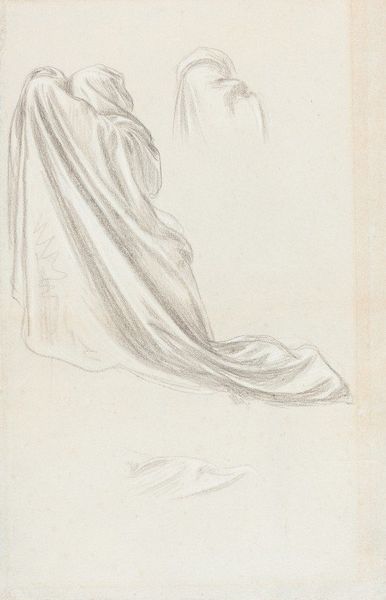
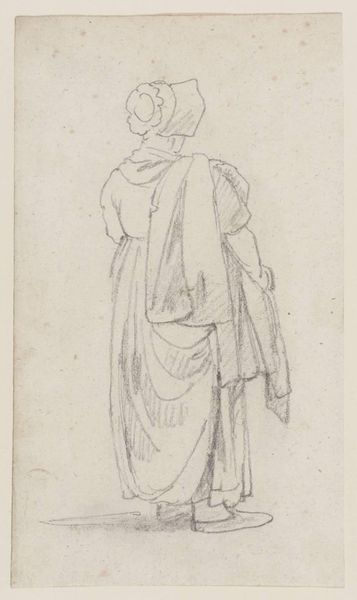
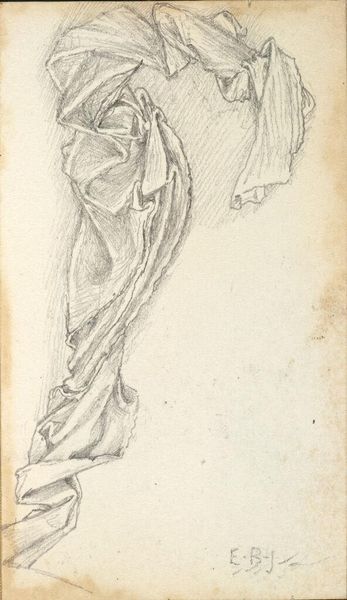
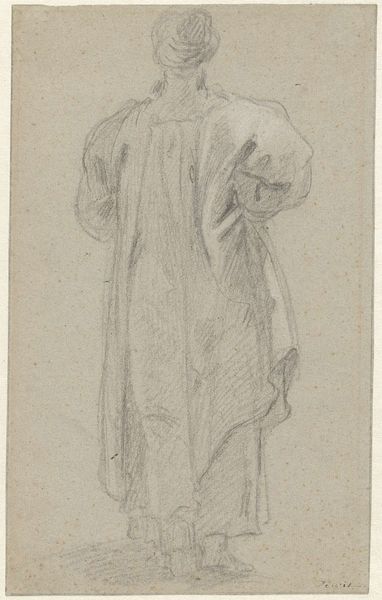
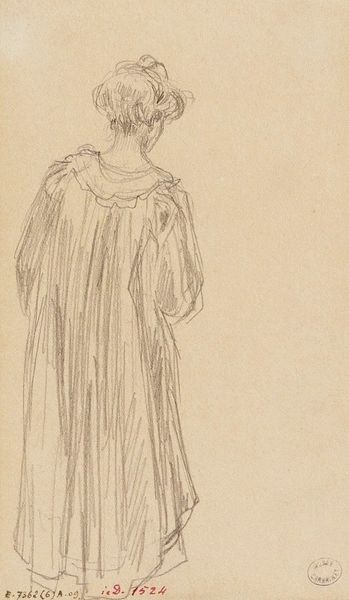
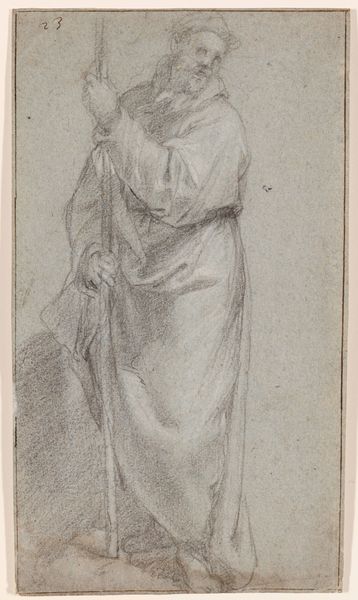
Draped Figure Seen from Behind; verso: Drapery Study with Foot c. 19th century
0:00
0:00


Dimensions: 13.4 x 9.4 cm (5 1/4 x 3 11/16 in.)
Copyright: CC0 1.0
Curator: This is Edward Burne-Jones’s “Draped Figure Seen from Behind,” a graphite sketch residing here at the Harvard Art Museums. Editor: There's a quiet melancholy about it, isn't there? The figure, turned away, almost seems to dissolve into those swirling lines of drapery. Curator: Indeed. Burne-Jones was deeply engaged with classical ideals of beauty and form. Notice how the folds aren't just fabric; they articulate the body beneath, lending it weight and presence. Editor: It's a very controlled chaos, all those lines. They build up this sense of volume, but also transience—like she could float away any second. Curator: His preparatory sketches such as these helped him work out visual ideas for larger paintings. These drapery studies explore line and form. Editor: What I like most is how this piece feels both so deliberate and so fleeting, like a half-remembered dream. Curator: Exactly. It embodies the artist's quest for the ideal form, glimpsed but never fully grasped.
Comments
No comments
Be the first to comment and join the conversation on the ultimate creative platform.
 Collect
 React
React Comment
More like this