About this artwork
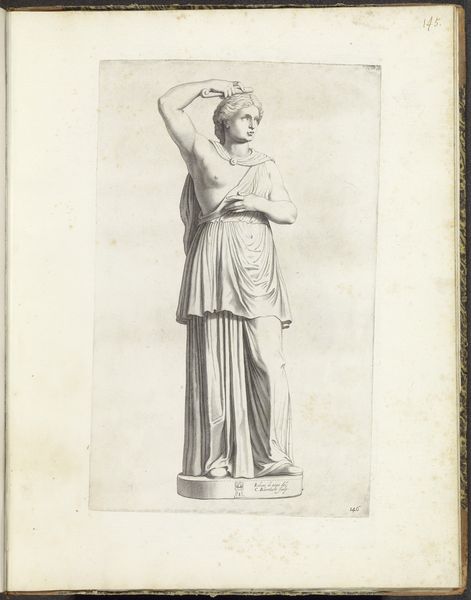
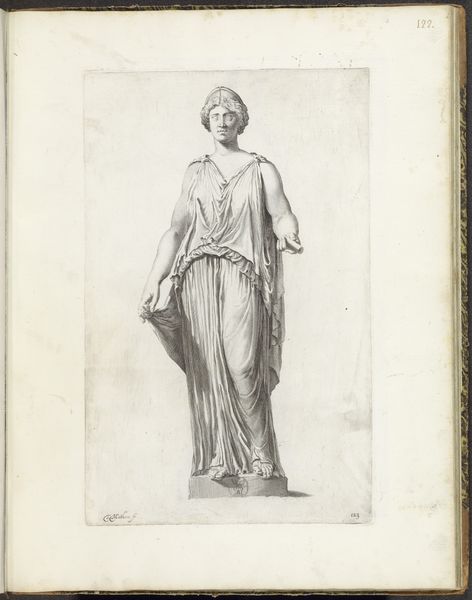
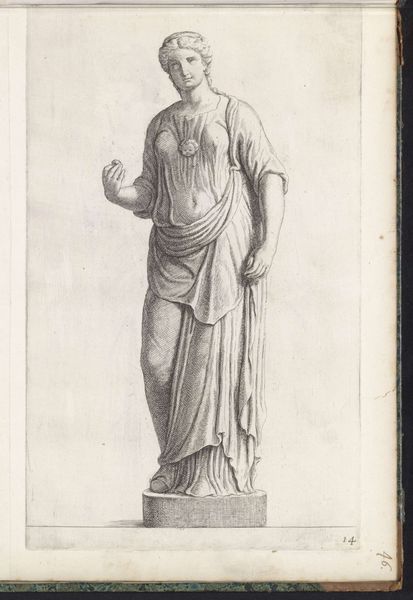
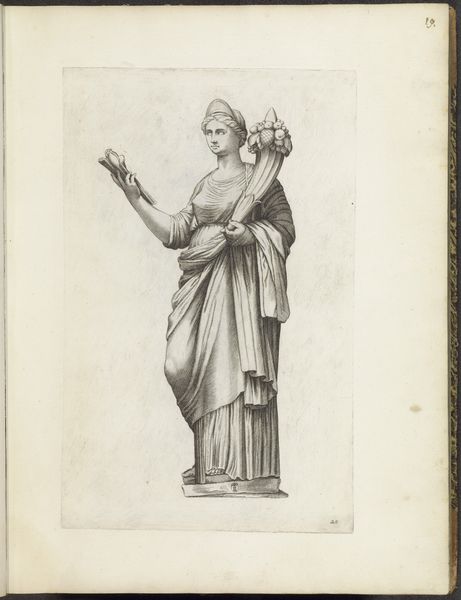
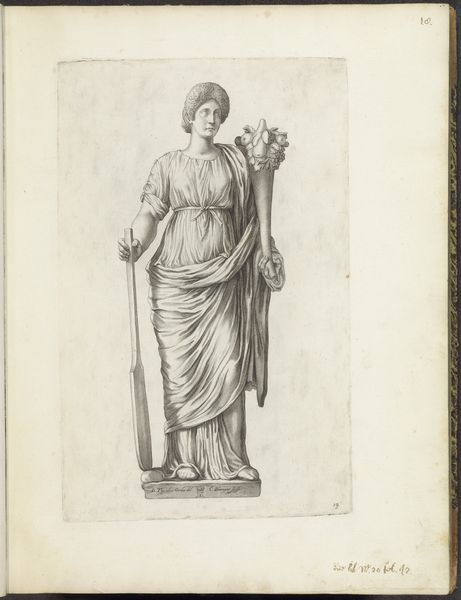
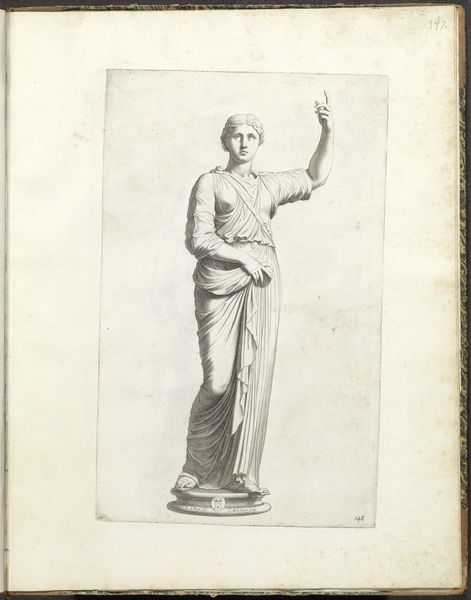
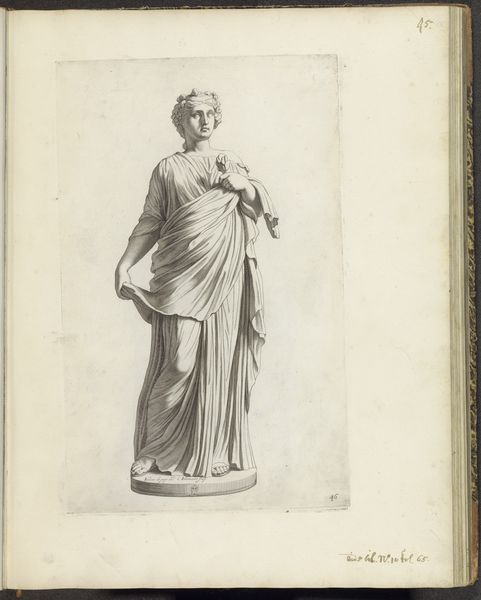
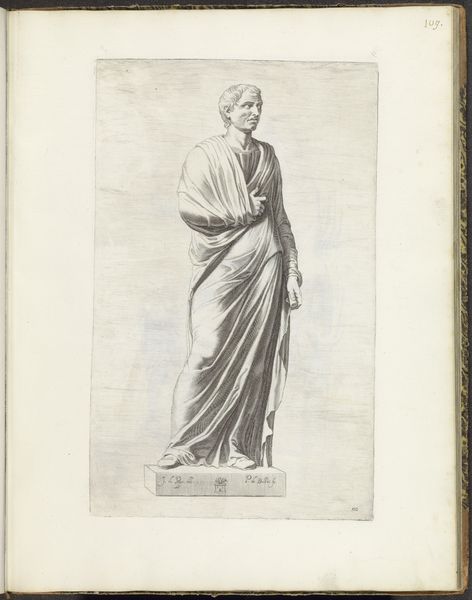
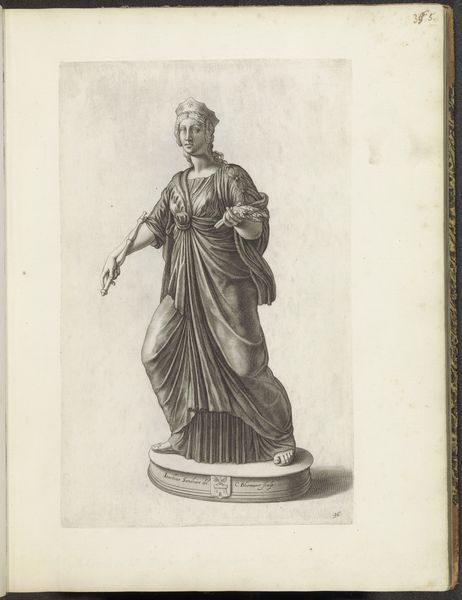
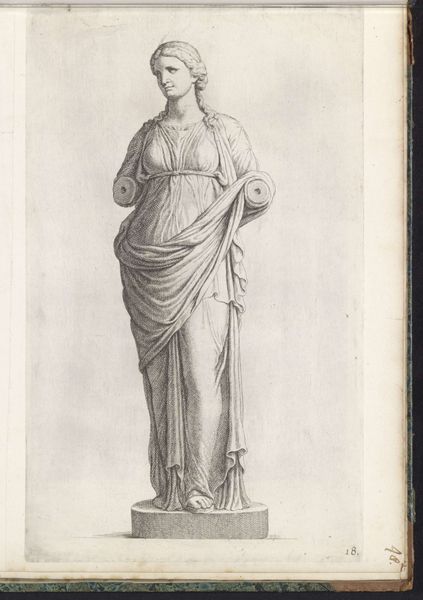
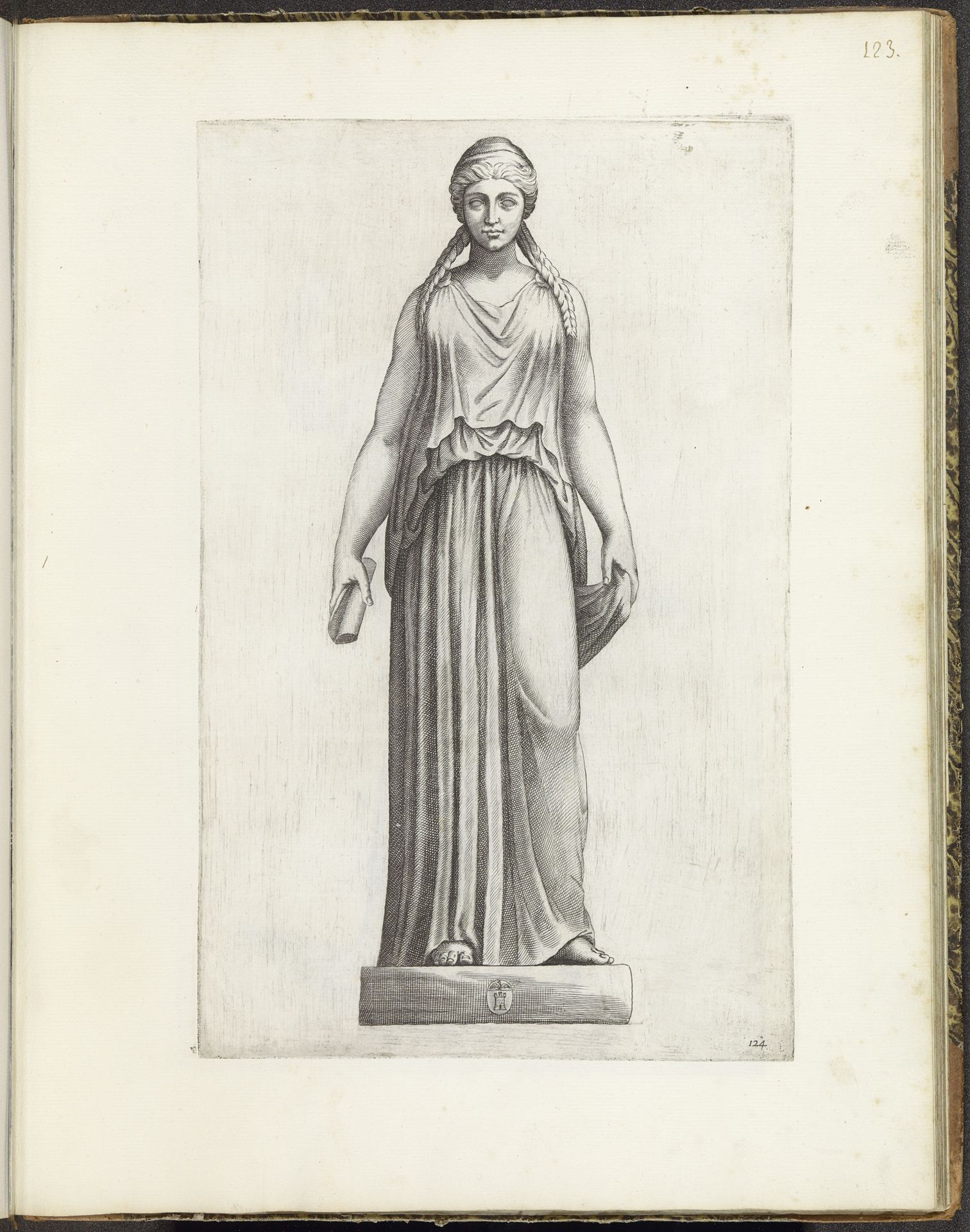
Luca Ciamberlano created this drawing of a statue of a woman with braided hair sometime between 1599 and 1641. What immediately strikes us is the classical contrapposto pose, rendered with delicate, controlled lines. The subject's serene face and draped clothing lend her a sense of timelessness and gravitas. Ciamberlano uses line and shading to give form to the figure, emphasizing the texture of the fabric and the smoothness of the presumed marble. The composition is vertically oriented, focusing our gaze on the figure’s dignified stance and balanced symmetry. The braids frame her face, drawing attention to her calm, almost stoic expression. The drawing uses the visual language of classical sculpture, echoing the values of order, reason, and an idealized human form. It invites us to consider not only the aesthetic beauty of the statue but also the cultural ideals it embodies. The act of drawing itself becomes a form of interpretation, one that is open to further readings as we bring our own perspectives to bear on this image.
Standbeeld van een vrouw met vlechten in het haar
1636 - 1647

Luca Ciamberlano
1599 - 1641Location
RijksmuseumArtwork details
- Medium
- drawing, paper, pencil
- Dimensions
- height 371 mm, width 236 mm
- Location
- Rijksmuseum
- Copyright
- Rijks Museum: Open Domain
Tags
Comments
Share your thoughts
About this artwork
Luca Ciamberlano created this drawing of a statue of a woman with braided hair sometime between 1599 and 1641. What immediately strikes us is the classical contrapposto pose, rendered with delicate, controlled lines. The subject's serene face and draped clothing lend her a sense of timelessness and gravitas. Ciamberlano uses line and shading to give form to the figure, emphasizing the texture of the fabric and the smoothness of the presumed marble. The composition is vertically oriented, focusing our gaze on the figure’s dignified stance and balanced symmetry. The braids frame her face, drawing attention to her calm, almost stoic expression. The drawing uses the visual language of classical sculpture, echoing the values of order, reason, and an idealized human form. It invites us to consider not only the aesthetic beauty of the statue but also the cultural ideals it embodies. The act of drawing itself becomes a form of interpretation, one that is open to further readings as we bring our own perspectives to bear on this image.
Comments
Share your thoughts