drawing, etching, paper, graphite
#
portrait
#
drawing
#
etching
#
classical-realism
#
figuration
#
paper
#
form
#
line
#
graphite
#
history-painting
Dimensions: height 369 mm, width 229 mm
Copyright: Rijks Museum: Open Domain
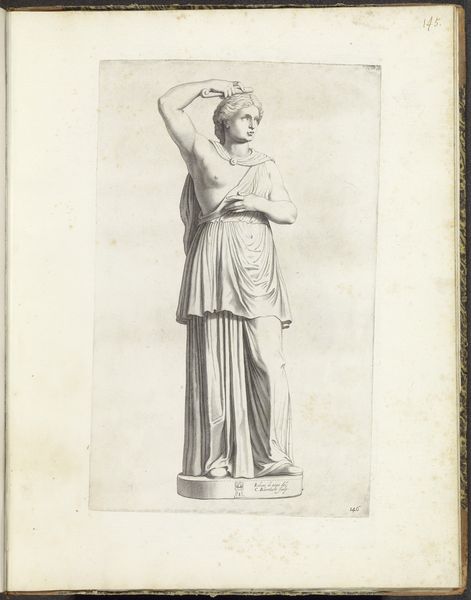
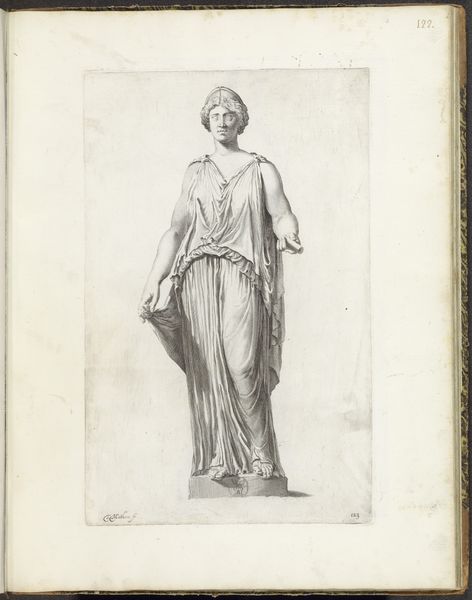
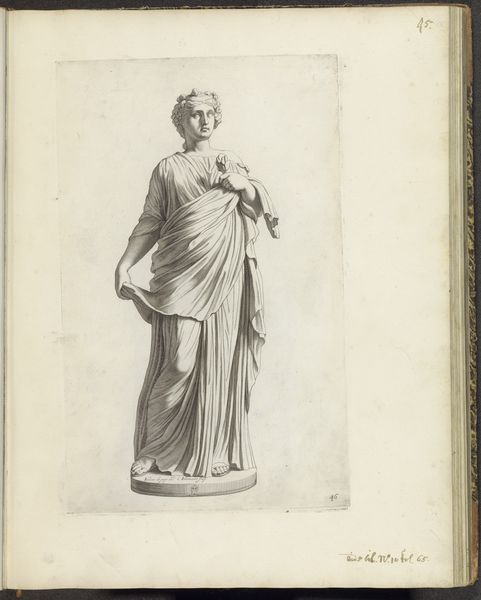
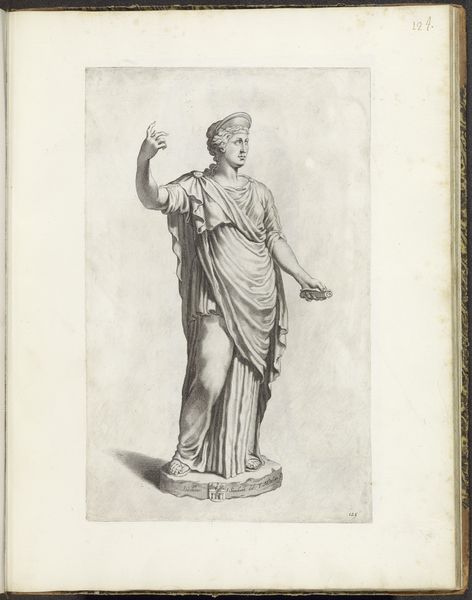
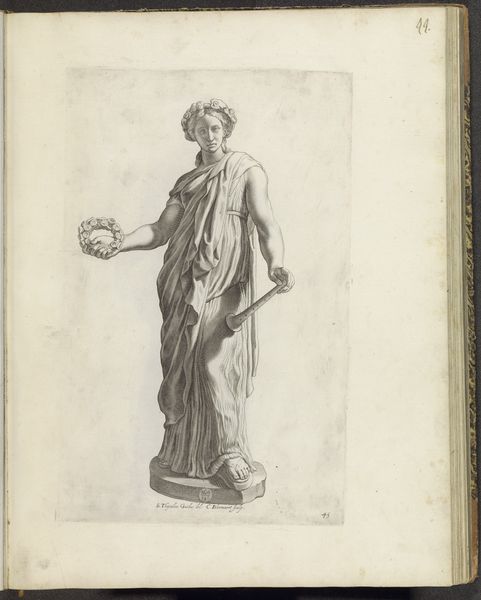
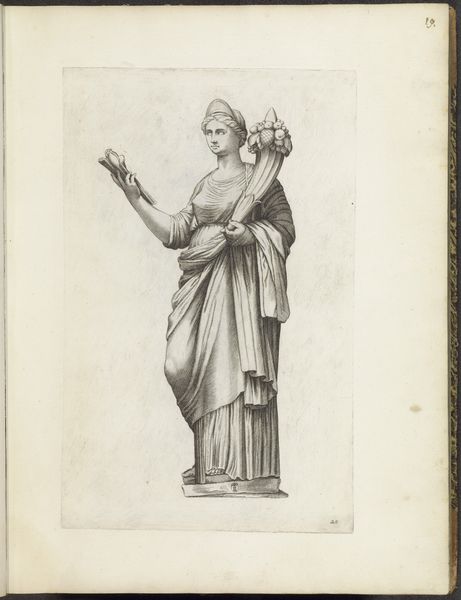
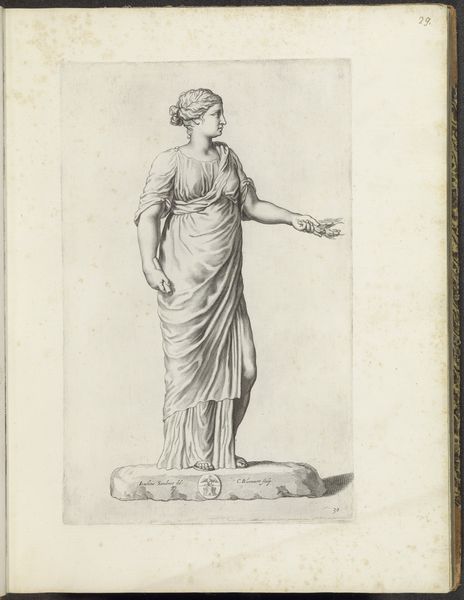
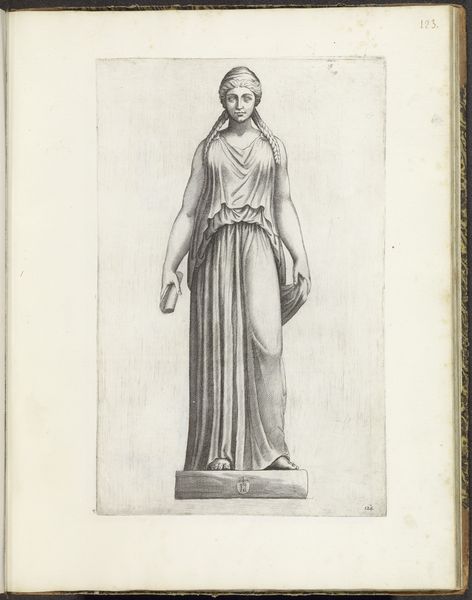
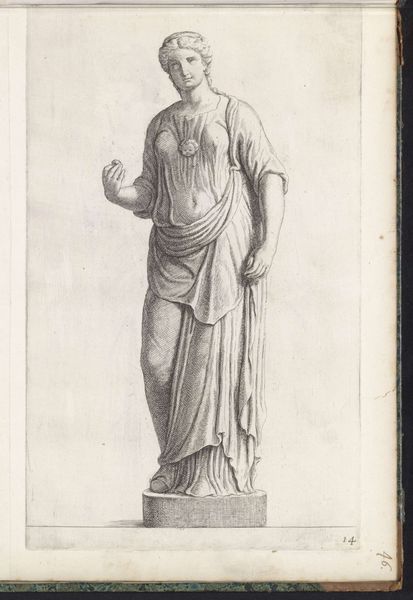
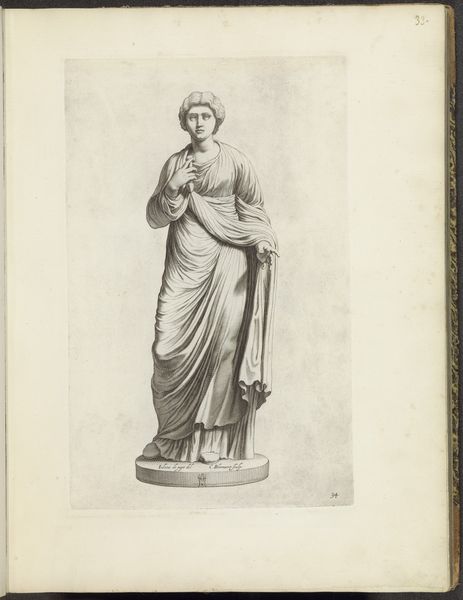
Editor: This drawing, attributed to Cornelis Bloemaert and created between 1636 and 1647, is called "Statue of a Standing Woman." It's a delicate work, mostly graphite and etching on paper. There's something both powerful and serene about the figure's pose. What symbolic elements stand out to you? Curator: Immediately, I see a figure deliberately invoking the classical world; it resonates deeply with notions of idealized beauty and virtue. But let's delve deeper than the surface aesthetics. Do you recognize any attributes or gestures that might signify something specific? Editor: I notice she's raising a finger, almost as if to make an announcement or impart wisdom, perhaps pointing to the heavens. Is there something more to this gesture? Curator: Precisely! The raised finger, combined with her serene expression and classical drapery, signals instruction or perhaps divine inspiration. The statue stands as a monument to these values. Given its period, can you hypothesize who might commission or appreciate such an image? Editor: Well, during the 17th century, a revival of classical ideals was common among the elite. Maybe someone wanted to associate themselves or their values with those ancient virtues. Curator: Excellent insight. Furthermore, such images played a role in shaping cultural memory, linking the present with a carefully constructed past. Consider also the power of reproducible images, disseminating these ideas beyond a single, privileged viewer. What lasting impressions do you have of this work? Editor: I’m struck by how much it communicates despite its simple composition, a testament to how effective symbols can be over long periods. I now realize how powerfully visual symbols transmit ideals. Curator: Indeed, recognizing the visual language of past cultures allows us to participate in an ongoing dialogue with history, seeing echoes of the past shaping our present understanding.
Comments
No comments
Be the first to comment and join the conversation on the ultimate creative platform.
 Collect
 React
React Comment
More like this