print, engraving
#
narrative-art
# print
#
mannerism
#
figuration
#
geometric
#
line
#
history-painting
#
engraving
Dimensions: height 42 mm, width 51 mm
Copyright: Rijks Museum: Open Domain
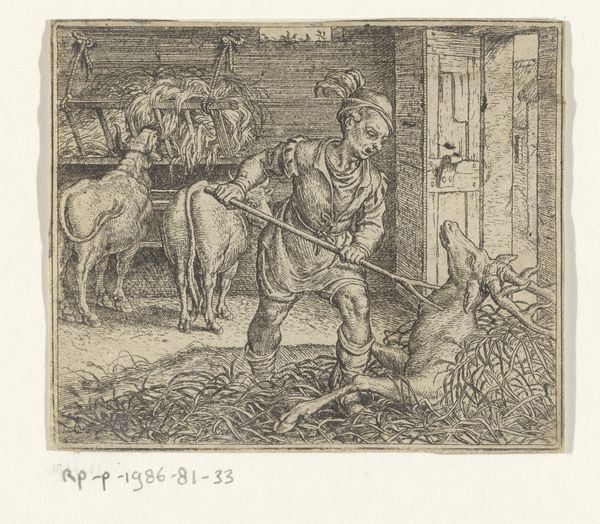
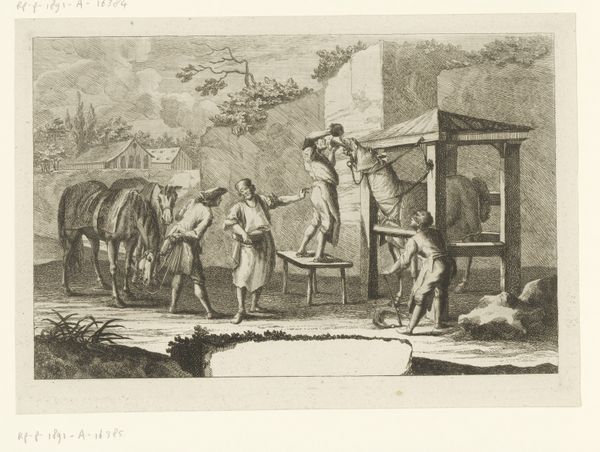
Abraham de Bruyn created this engraving, "Feast for the Prodigal Son," sometime in the late 16th century. The scene bursts with symbolism, the slaughtered calf taking center stage. Historically, the sacrificial animal is not merely food; it's a profound symbol of atonement and divine favor, seen in ancient rituals from Greece to the Levant. Here, in the context of the prodigal son's return, it represents forgiveness and renewed grace. The fatted calf, prepared for the returning son, echoes motifs of sacrifice and redemption found in earlier artworks. Consider how the motif of sacrifice evolves, echoing through time. The emotional weight of this act is palpable. It taps into our collective memory of loss, regret, and ultimately, acceptance. It’s a cycle of wandering and return, a universal theme that resonates deeply, engaging us on a subconscious level.
Comments
No comments
Be the first to comment and join the conversation on the ultimate creative platform.
 Collect
 React
React Comment
More like this