About this artwork
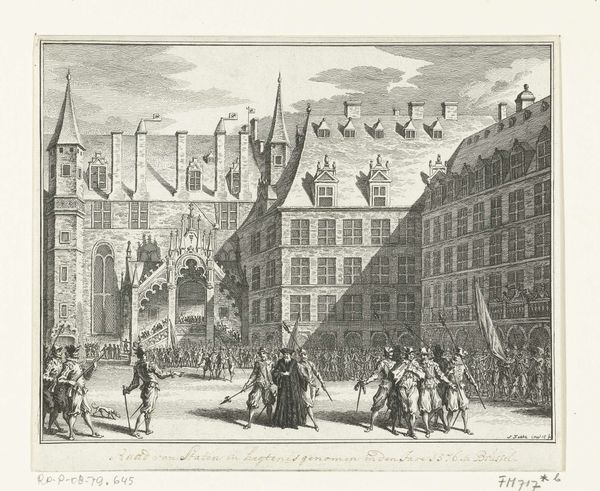
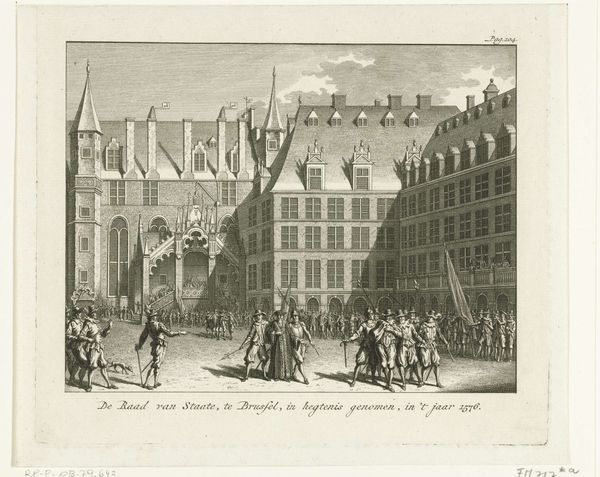
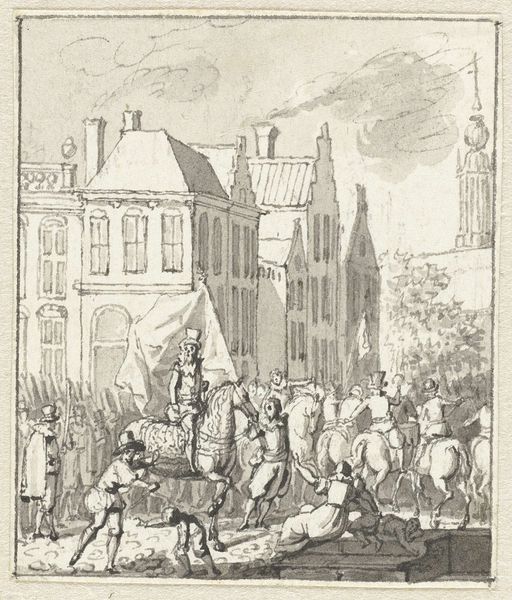
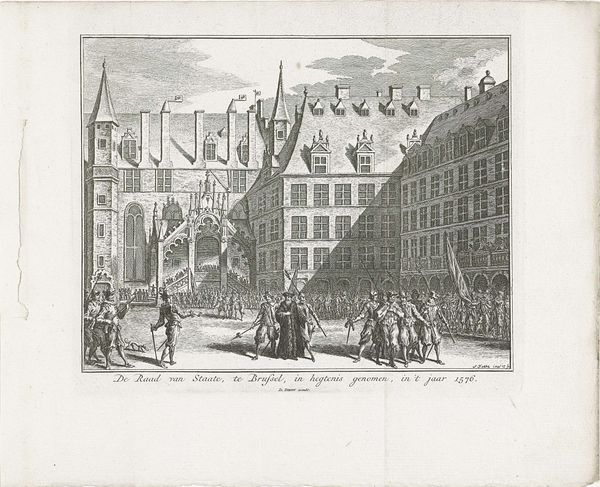
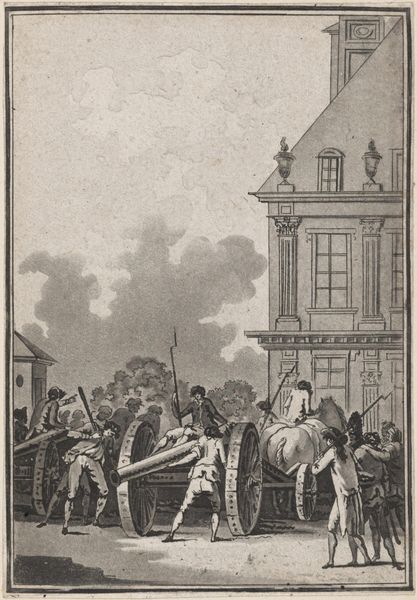
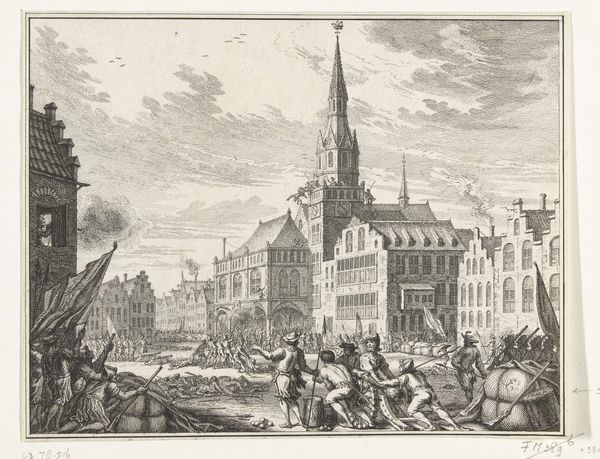
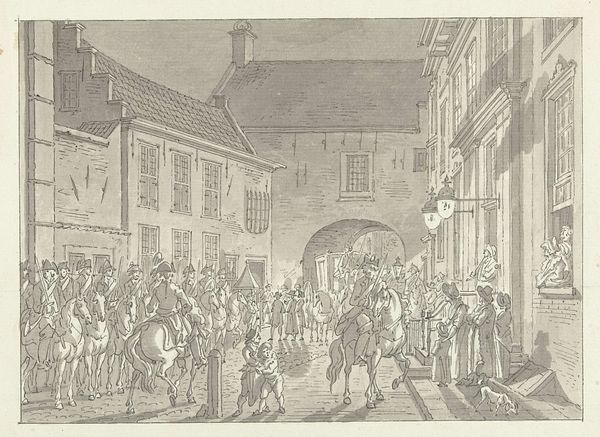
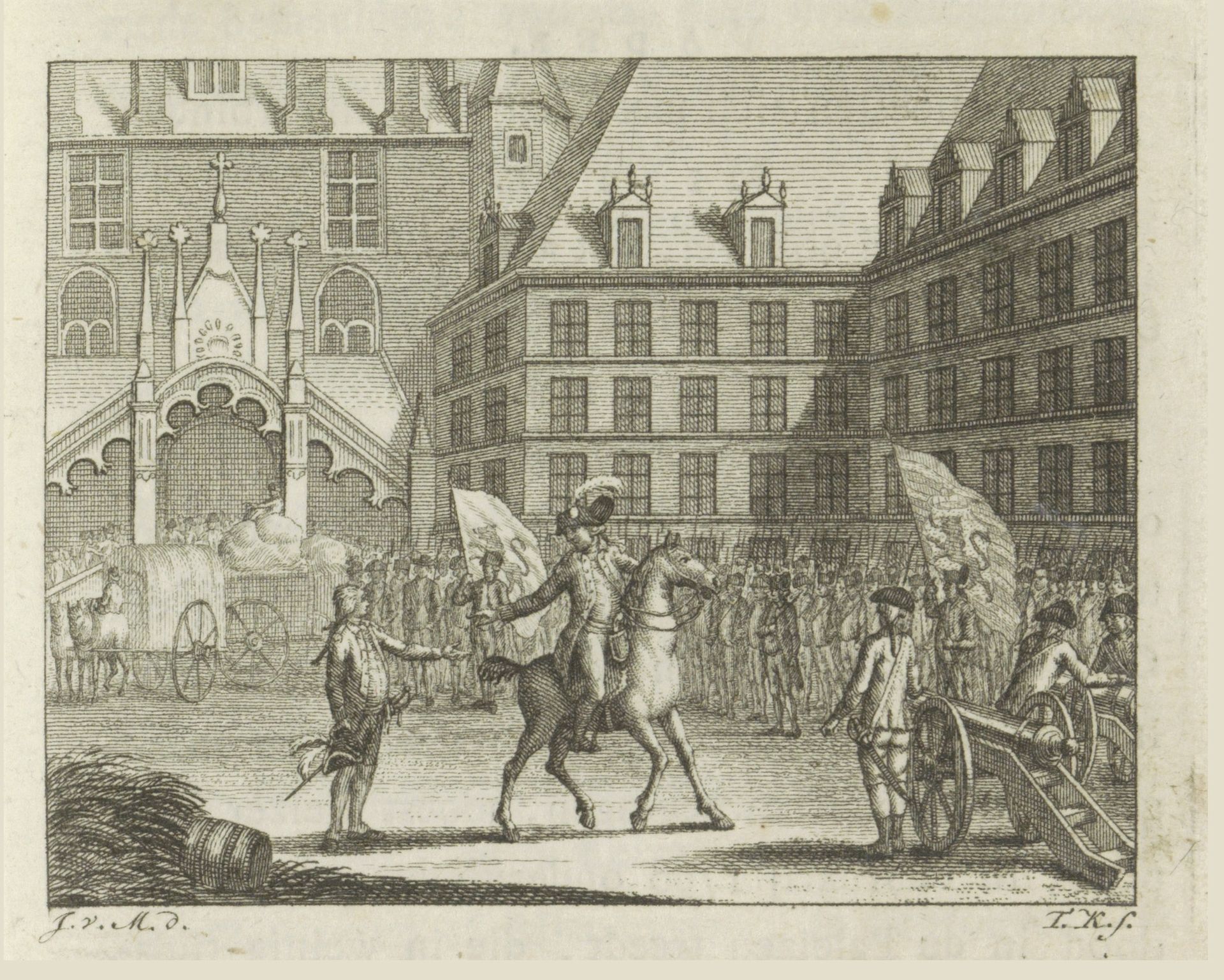
Theodoor Koning made this etching called 'Inname van Brussel door de Patriotten' or 'The Taking of Brussels by the Patriots' around 1790. It depicts a key moment in the Brabant Revolution. The print shows the Patriot army entering Brussels, with a commanding officer on horseback at the center. It's full of visual codes of revolutionary change: The troops are welcomed by the citizens of Brussels, and their flags are displayed. Even the cannon in the foreground symbolizes the military strength of the Patriots. This image would have been a powerful piece of propaganda, meant to inspire support for the revolution. To fully understand this work, we need to research the political context of the Austrian Netherlands in the late 18th century and the influence of enlightenment ideals. Prints like these are invaluable historical resources, helping us understand the social conditions that shaped the revolution.
Inname van Brussel door de Patriotten, 1790
1794 - 1796

Theodoor Koning
1748 - 1829Location
RijksmuseumArtwork details
- Dimensions
- height 68 mm, width 80 mm, height 160 mm, width 96 mm
- Location
- Rijksmuseum
- Copyright
- Rijks Museum: Open Domain
Comments
Share your thoughts
About this artwork
Theodoor Koning made this etching called 'Inname van Brussel door de Patriotten' or 'The Taking of Brussels by the Patriots' around 1790. It depicts a key moment in the Brabant Revolution. The print shows the Patriot army entering Brussels, with a commanding officer on horseback at the center. It's full of visual codes of revolutionary change: The troops are welcomed by the citizens of Brussels, and their flags are displayed. Even the cannon in the foreground symbolizes the military strength of the Patriots. This image would have been a powerful piece of propaganda, meant to inspire support for the revolution. To fully understand this work, we need to research the political context of the Austrian Netherlands in the late 18th century and the influence of enlightenment ideals. Prints like these are invaluable historical resources, helping us understand the social conditions that shaped the revolution.
Comments
Share your thoughts