About this artwork
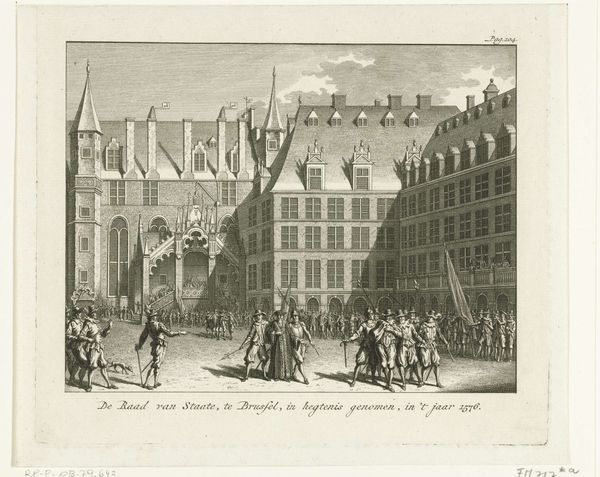
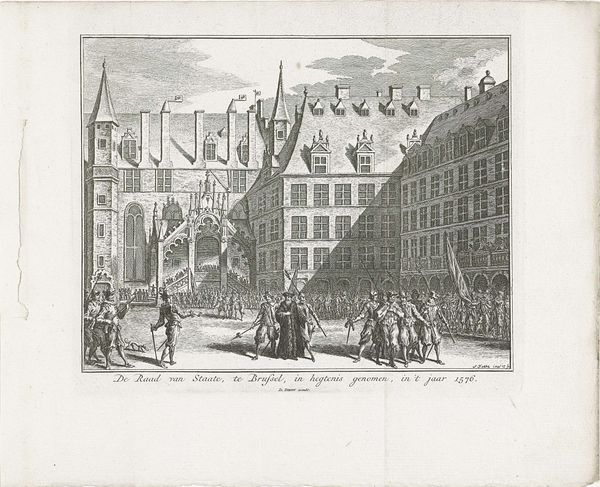
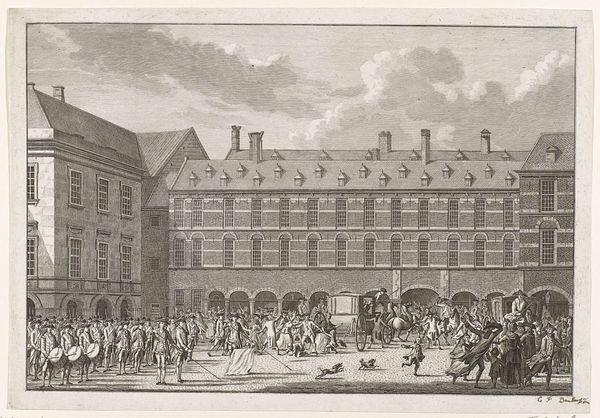
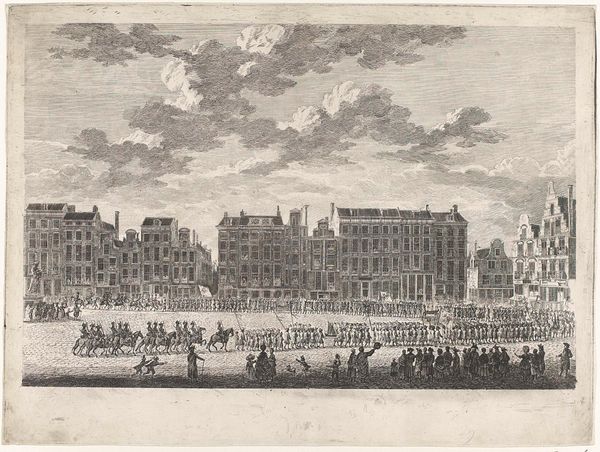
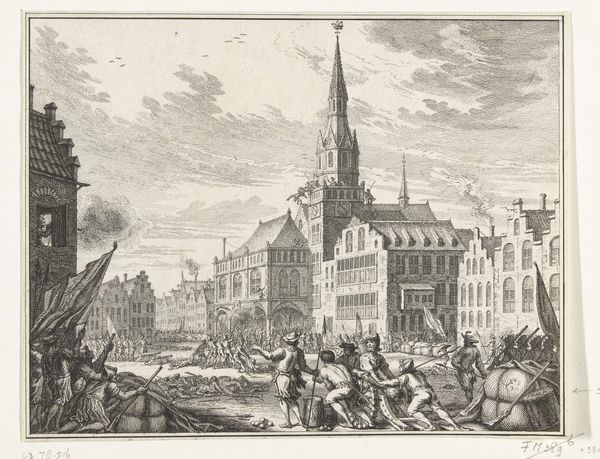
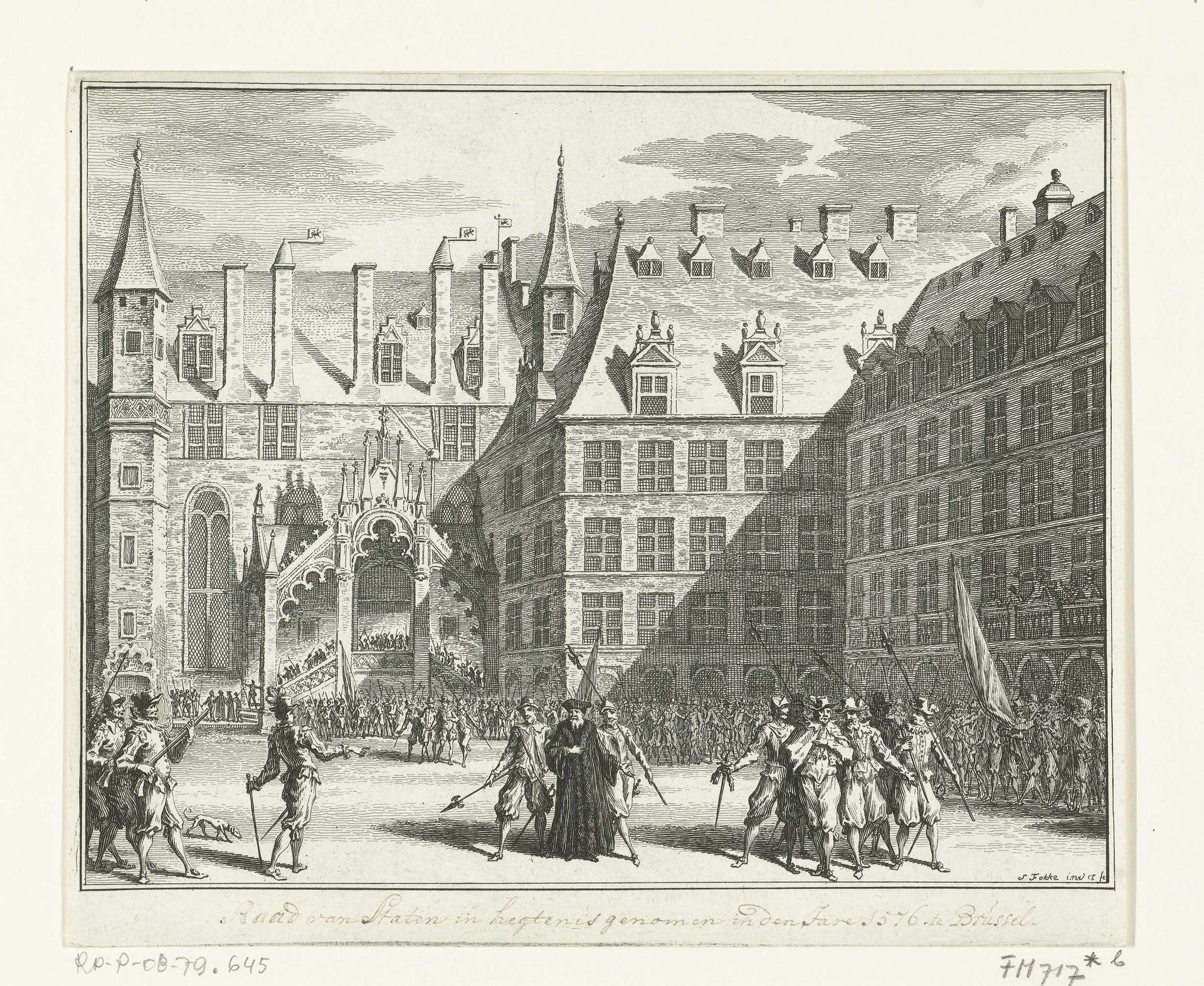
Simon Fokke created this engraving titled 'Members of the Council of State Imprisoned, 1576' in the eighteenth century, reflecting on events from over two hundred years prior. It illustrates a pivotal moment during the Dutch Revolt, when members of the Council of State were seized in Brussels. This event was a flashpoint in the conflict between the Netherlands and Spanish rule, driven by religious and political tensions. Fokke, working in a later era, offers a perspective shaped by the intervening history. The print evokes the drama and upheaval of the period, depicting the figures with a theatrical flair. The act of imprisonment is laden with symbolism about power, resistance, and national identity. Consider how Fokke's own identity as a Dutch artist might have influenced his depiction of this historical event. His work invites reflection on the legacies of conflict and the enduring quest for autonomy.
Leden van de Raad van State gevangengenomen, 1576 1747 - 1759

Simon Fokke
1712 - 1784Location
RijksmuseumArtwork details
- Medium
- print, engraving
- Dimensions
- height 165 mm, width 199 mm
- Location
- Rijksmuseum
- Copyright
- Rijks Museum: Open Domain
Tags
pen illustration
pen sketch
old engraving style
cityscape
history-painting
engraving
Comments
No comments
About this artwork
Simon Fokke created this engraving titled 'Members of the Council of State Imprisoned, 1576' in the eighteenth century, reflecting on events from over two hundred years prior. It illustrates a pivotal moment during the Dutch Revolt, when members of the Council of State were seized in Brussels. This event was a flashpoint in the conflict between the Netherlands and Spanish rule, driven by religious and political tensions. Fokke, working in a later era, offers a perspective shaped by the intervening history. The print evokes the drama and upheaval of the period, depicting the figures with a theatrical flair. The act of imprisonment is laden with symbolism about power, resistance, and national identity. Consider how Fokke's own identity as a Dutch artist might have influenced his depiction of this historical event. His work invites reflection on the legacies of conflict and the enduring quest for autonomy.
Comments
No comments